
Table of Contents:
Turkey’s Luxury Furniture Market: Key Styles and Materials
Turkey’s luxury furniture market is best understood as a meeting point between Ottoman visual heritage, skilled workshop production, and modern interior design. Buyers can move from carved wood and deep jewel tones to clean-lined forms, pale oak, and brushed metal without leaving the Turkish design landscape.
The key decision is not simply whether a piece looks expensive. It is whether its style, material, scale, and construction suit the room. A glossy, heavily ornamented suite may work in a grand villa but feel crowded in a compact apartment. In contrast, a restrained table with strong joinery can bring quiet luxury to a smaller space.
Traditional Turkish luxury often uses symmetry, bold profiles, turned legs, ornamental carving, and rich upholstery. Ottoman references may appear in divan-like seating, geometric motifs, framed panels, and dramatic headboards. These details are usually strongest when used selectively. Too many at once, and the room starts to look staged rather than lived in.
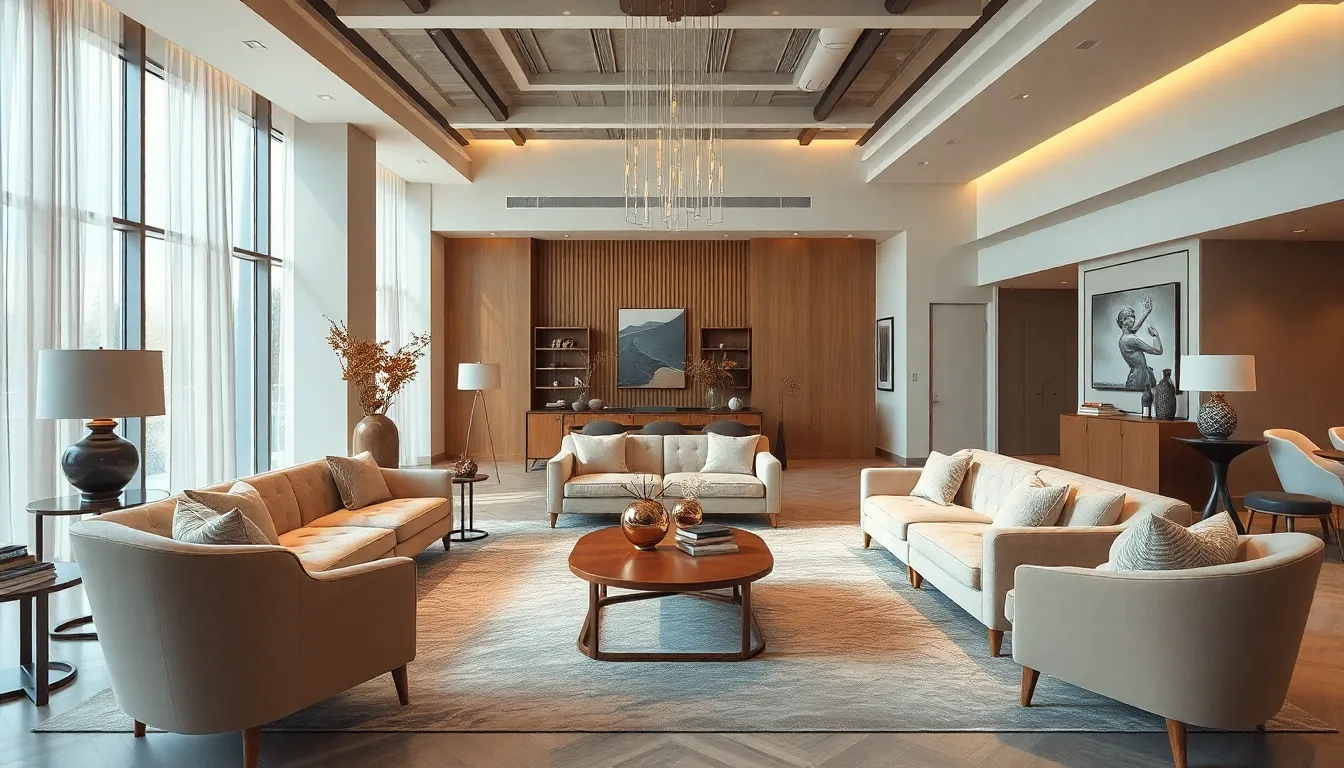
Contemporary Turkish design takes a lighter approach. Designers often combine rounded silhouettes with low seating, slim metal bases, ribbed surfaces, and neutral fabrics. Beige, stone, charcoal, walnut, and muted green are common anchors. A single curved sofa or sculptural chair can provide the room’s focal point without visual fuss.
Eclectic interiors bridge both directions. A modern marble table may sit beside a classic bergère chair. Textured boucle, velvet, leather, and woven textiles add contrast, while brass or aged bronze introduces a warm glint. This mix is especially useful for hospitality projects, where a room must feel distinctive but still comfortable.
Wood remains central to Turkish high-end furniture. Walnut brings depth and a soft brown grain. Oak offers a brighter, more relaxed character. Beech and ash are also used for frames and crafted components. Ask whether a piece uses solid wood, veneer, engineered panels, or a combination. Veneer is not automatically inferior; a well-made veneer can offer stable surfaces and consistent grain. The real warning sign is a vague material description.
Stone creates visual weight. Marble tops are valued for their natural veining, but each slab differs. Travertine gives a warmer, porous look, while dark stones make a sharper statement. Before buying, check the stone’s sealant, edge finish, care instructions, and weight. A large top can exceed 100 kilograms, which affects both delivery and floor loading.
Leather and fabric change the feel of a room. Full-grain leather develops patina and can last for many years with proper care. Corrected leather offers a more even surface but may show wear differently. For upholstered seating, inspect the rub count, foam density, seam quality, and frame warranty. A luxury appearance means little if the cushions lose their shape after a short period.
Metal, glass, and lacquer are often used as accents rather than the main event. Brass, bronze, and blackened steel can define a base or handle. Smoked glass adds drama, while lacquer gives cabinets a polished surface. Check whether the finish is plated, painted, powder-coated, or solid. That small distinction matters for repairs and long-term wear.
- Choose carved timber and velvet for a strong heritage mood.
- Choose walnut, stone, and textured linen for warm contemporary rooms.
- Choose pale wood, glass, and slim metal for an airy modern interior.
- Use one or two ornate pieces as anchors instead of decorating every surface.
For international buyers, confirm dimensions in centimetres, door and lift access, moisture limits, fire-safety requirements, packaging, replacement-part availability, and the complete landed cost. In hotels and restaurants, contract-grade fabrics, commercial fire ratings, and stronger hardware may be essential. The strongest Turkish luxury interiors balance heritage with restraint, tactile materials with useful proportions, and statement forms with everyday comfort.
Ottoman Heritage in Modern Turkish Furniture
Ottoman influence in Turkish furniture is not a fixed historical style. It is a design language that modern workshops edit, simplify, and sometimes boldly reinterpret.
The original Ottoman interior was shaped by court culture, Islamic art, trade, and daily ritual. Furniture was often arranged around hospitality rather than isolated display. Low seating, layered textiles, screens, chests, and richly decorated surfaces helped define rooms. The divan, for example, was both a seat and a social setting. Modern designers borrow this idea through generous modular seating, upholstered wall panels, and floor-conscious layouts.
Look closely and the heritage appears through details rather than labels. Common references include:
- arched or pointed profiles inspired by Ottoman architecture;
- jali-style lattice patterns that create filtered light and privacy;
- geometric inlay linked to regional woodcraft;
- arabesque curves and floral motifs;
- brass fittings, repoussé-style surfaces, and aged metal accents;
- kilim-inspired patterns used on cushions, rugs, or cabinet fronts.
One important distinction matters. Ottoman design was not limited to heavy ornament. Palace interiors also valued proportion, repeated rhythm, and carefully framed surfaces. A contemporary cabinet may therefore reference the period through one arched door, a restrained marquetry panel, or a small brass detail. The result feels connected to history without turning the room into a museum set.
Craft techniques remain especially valuable in this area. Hand carving can create depth in door fronts, chair backs, and bed panels. Marquetry uses contrasting veneers to form stars, borders, and floral compositions. Mother-of-pearl inlay, known in Turkish as sedef, adds a fine reflective layer to desks, chests, and occasional tables. These methods demand skilled hands, and small variations are often part of the object’s character.
Colour also carries the Ottoman reference. Garnet, sapphire, emerald, ivory, and antique gold can produce a courtly atmosphere. Yet many current interiors soften this palette with taupe, plaster white, smoked brown, or charcoal. Neutral architecture lets one historical accent stand out, while too much saturated colour can flatten the room.
Modern interpretations work best when they preserve the principle behind the old design, not just its surface pattern. Hospitality, balance, craftsmanship, and layered texture are more lasting than decorative copying. A slim console with geometric inlay may express the heritage more convincingly than a room filled with unrelated motifs.
For buyers, ask three direct questions before choosing an Ottoman-inspired piece:
- Is the historical reference clear, or is it only decorative styling?
- Which elements are handmade, and which are machine-produced?
- Can the piece live comfortably with modern lighting, flooring, and technology?
Turkish luxury furniture feels current when Ottoman memory supports modern use. The past should give the piece a backbone, not weigh it down.
Turkey’s Leading Luxury Furniture Brands
Turkey’s luxury furniture landscape is shaped by a small group of established design houses and newer studios. Their differences matter: some focus on heritage forms, others on experimental silhouettes, and a few aim to make premium design more accessible.
For buyers, the useful question is not simply “Which brand is the best?” It is “Which brand fits my project, room scale, and preferred level of ornament?” The answer changes between a private residence, a boutique hotel, and a formal dining room.
Bykepi represents a long-running Turkish furniture tradition. Established in 1931, the company is associated with refined joinery, classic lines, and made-to-order work. Its range covers seating, dining furniture, beds, and storage pieces. Buyers seeking a bridge between Ottoman-inspired detail and quieter contemporary design may find its two-part approach especially useful.
Macitler, founded in 1962, takes a more expressive route. Its design language often combines strong visual drama with natural references. Organic curves, prominent surfaces, and rich finishes suit large interiors where furniture must hold its own against generous architectural volume. Custom production is an important part of this high-end positioning.
Mudo Concept serves a different audience. Its collections lean toward eclectic interiors, mixing relaxed bohemian notes with glamorous accents. The brand is useful for buyers who do not want a single historical style repeated across every room. Instead, pieces can be combined with contemporary lighting, vintage objects, or quieter architectural finishes.
Kervan focuses more directly on Ottoman-inspired furniture. Its seating and bedroom ranges draw on traditional forms, including divan-like arrangements and decorative profiles. This makes it a natural choice for formal reception areas, majlis interiors, and rooms designed around cultural storytelling. The main challenge is proportion: ornate furniture needs enough visual space around it.
Norde, founded in 1998, occupies a more modern and price-conscious position within the premium segment. Its furniture uses familiar combinations such as wood, metal, glass, and upholstery. The appeal lies in clean design and easier integration into current homes. Buyers interested in sustainability should request specific evidence, such as recycled content, timber certification, finish data, or product-level environmental documentation.
These names do not represent the whole market. Turkey also has many export-focused manufacturers, regional workshops, contract suppliers, and independent designers. A showroom name alone proves little. The more reliable indicators are construction details, written specifications, warranty terms, production capacity, and a clear record of completed projects.
- Choose Bykepi for heritage-aware design with a restrained, established character.
- Consider Macitler when a room needs sculptural presence and a more opulent mood.
- Look at Mudo Concept for flexible, mixed-style interiors.
- Explore Kervan for a direct Ottoman reference in formal settings.
- Compare Norde when modern lines and a more approachable premium level matter.
Before placing an order, request a current catalogue, material schedule, technical drawings, finish samples, and a written quotation. Confirm whether the displayed price covers packaging, export preparation, delivery, duties, and installation.
Bykepi: Timeless Craftsmanship and Custom Design
Bykepi occupies a distinctive place in Turkey’s luxury furniture field because its identity is tied to long-term production rather than short-lived décor trends. Founded in 1931, the company is presented as a maker of furniture for living rooms, dining areas, bedrooms, and storage needs, with an emphasis on crafted detail and tailored production.
Its value lies in the ability to adjust a design to a specific interior. Custom work may involve dimensions, upholstery, timber tone, hardware, or decorative treatment. That flexibility is useful when a room has unusual proportions, strict architectural lines, or a coordinated interior scheme. Still, “custom” should be defined in writing. Does it mean changing fabric only, or can the workshop alter the frame, depth, height, and finish?
Bykepi’s design offer is commonly understood through two broad directions. The Classica Collection draws on historical Turkish and Ottoman references, while the Modern Collection reduces ornament and places greater focus on current proportions. These labels are helpful starting points, but they do not replace a technical review of the individual piece.
For a serious order, request the following before approving production:
- a dimensioned drawing with height, width, depth, and clearance requirements;
- an exact list of timber, veneer, metal, foam, and textile specifications;
- finish samples viewed in the lighting of the intended room;
- a statement on whether visible surfaces are solid wood or veneered;
- the proposed production timeline and approval stages;
- packaging details for doors, stairs, lifts, and international transit.
Seating deserves special attention. Ask about suspension systems, cushion filling, frame construction, and replacement covers. A deep sofa can look impressive in a showroom yet work poorly in a room with limited circulation. Leave roughly 75 centimetres for a main walking route, though the final layout depends on doors, tables, and accessibility needs.
Dining furniture requires a different check. Measure the distance between the tabletop and seat, confirm the number of chairs that fit without crowding, and inspect how the table handles daily movement. For bedroom furniture, check mattress compatibility, ventilation beneath the bed, drawer extension, and the route used to bring large panels indoors.
Bykepi may suit buyers who want one design language across several rooms but do not want every item to look identical. A carved accent can sit beside a calmer case piece; a formal dining table can be balanced by simpler upholstered chairs. More detail is not always more character.
The best way to assess a bespoke proposal is to compare the approved sample with the final inspection piece. Grain direction, stain density, stitching, and sheen should be checked before dispatch. Natural materials can vary, so the aim is not perfect sameness but consistency with the agreed specification.
Macitler: Nature-Inspired Forms and Opulent Materials
Macitler stands out for a more sculptural view of Turkish luxury furniture. Founded in 1962, the company is associated with bold forms, rich finishes, and a willingness to make furniture a central part of the interior rather than a quiet background element.
The Nature Collection takes its cue from the natural world. Curved edges, flowing outlines, and irregular visual rhythms can soften a large room and prevent formal furniture from feeling rigid. These shapes work especially well in open-plan settings, where a rounded sofa or organically shaped table can guide movement without creating hard visual barriers.
The Luxury Collection moves toward greater drama. Strong contrast, generous proportions, and polished surfaces create a more ceremonial mood. Such pieces need careful spacing. A large table should leave enough room for chairs to move freely, while a statement bed needs clear sightlines so its headboard does not overwhelm the room.
Macitler’s material language often combines several high-impact elements in one design. A dark timber surface may sit beside marble, leather, or reflective metal. This layering creates richness through contrast: soft against hard, matte against gloss, and warm against cool. The effect can be striking, but it also makes finish samples essential. Colours viewed online may shift under daylight, warm LEDs, or hotel lighting.
When reviewing an opulent piece, inspect the parts that are easy to overlook:
- how smoothly drawers open and close;
- whether marble edges are polished and protected;
- how seams meet at corners and curves;
- whether metal details are securely fixed;
- how the upholstery behaves across curved surfaces;
- which cleaning products are safe for each finish.
Custom production adds another layer of choice. A buyer may be able to change dimensions, upholstery, timber treatment, or selected details. However, every alteration can affect balance. Increasing the width of a curved chair, lowering a table, or changing the thickness of a top may alter comfort and visual proportion. A revised drawing should therefore be approved before fabrication begins.
Macitler is particularly relevant to projects that require a strong visual identity: executive residences, reception rooms, premium suites, and dining spaces designed for impact. It may be less suitable for a calm, minimalist interior unless the selected item is treated as a single focal point.
Stand back from the proposed layout and ask whether the furniture creates atmosphere or merely displays wealth. The better result usually comes from one confident gesture, not a room full of competing statements.
Mudo Concept: Eclectic, Boho, and Glamorous Interiors
Mudo Concept occupies the more flexible end of Turkey’s premium furniture market. Its appeal comes from combining relaxed, decorative, and polished elements instead of following one strict historical vocabulary. That makes it useful for interiors that need personality without becoming formally themed.
The Boho Collection is suited to layered rooms with a relaxed rhythm. Natural textures, informal shapes, patterned textiles, and mixed finishes can create warmth around a simple architectural shell. The look works best when repeated through small links, such as a shared wood tone or one recurring textile colour. Without that link, eclectic design can become cluttered rather quickly.
The Glam Collection takes a sharper direction. Reflective surfaces, elegant profiles, decorative lighting, and polished accents create a more theatrical atmosphere. It can suit dressing areas, private lounges, and hospitality interiors where the first impression matters. Control shine by combining glossy elements with matte walls, woven textiles, or softly grained surfaces.
Mudo Concept is especially useful for creating contrast between rooms. A relaxed lounge can use informal seating and tactile accessories, while a dining area introduces stronger symmetry and brighter accents. This approach avoids the showroom effect in which every item seems to come from the same visual recipe.
When building an eclectic scheme, use a simple hierarchy:
- select one dominant shape, colour, or material;
- add two supporting elements with a clear visual connection;
- keep minor accessories quieter so the main pieces remain legible;
- repeat scale carefully, not every pattern or finish;
- leave empty surfaces between decorative objects.
For commercial interiors, ask for fabric durability, stain resistance, cleaning instructions, finish samples, and replacement options. Decorative furniture in a hotel lobby or restaurant faces far more contact than the same item in a private sitting room.
Colour matching deserves care. A deep green, rust, or cobalt accent may appear rich in a catalogue image but stronger in a fully furnished space. Order physical samples where possible, then view them beside flooring, curtains, and artificial light. Screens often flatter colours that look quite different in person.
Custom production can make the brand’s eclectic approach easier to apply. Adjusting the size of a console, changing a textile, or selecting a different finish may help a piece sit naturally within an existing scheme. Get the revised specification, price, and delivery date in writing before approval.
Mudo Concept is a strong fit for buyers who value visual freedom. Its pieces can support a bohemian retreat, a glamorous apartment, or a mixed hotel concept. The finished room succeeds when the contrasts feel intentional rather than accidental.
Kervan: Traditional Ottoman Furniture and Bespoke Pieces
Kervan is best suited to buyers who want a clearly recognisable Ottoman mood rather than a lightly historical accent. Its furniture is associated with formal seating, bedroom pieces, and decorative case goods that use classic profiles and a strong sense of ceremony.
The Divan Collection draws on the social role of the divan: a setting for receiving guests, conversation, and display. In a modern project, that idea can guide the layout of a salon, majlis, executive lounge, or hotel suite. Seating should face one another comfortably, with enough space for movement and service tables. The arrangement matters as much as the furniture itself.
The Yatak Odası Collection carries the same heritage into the bedroom. Tall headboards, framed surfaces, coordinated bedside elements, and formal storage can create a composed setting. Because these pieces are often visually substantial, measure ceiling height, window positions, door swings, and bedside clearance before ordering.
Kervan’s bespoke approach is valuable for rooms with strict cultural, architectural, or hospitality requirements. A commission may need altered widths, matching upholstery, modified ornament, or a layout adapted to prayer areas and guest circulation. The design brief should define the purpose of every item, not only its appearance.
For an Ottoman-inspired commission, document these points:
- the historical references that should be included or avoided;
- the degree of ornament on visible and hidden surfaces;
- the intended seating capacity and user profile;
- the required cleaning and fire-safety performance;
- the position of electrical outlets, lighting, and service access;
- the acceptable variation in handmade decoration.
Hospitality buyers should separate residential appearance from commercial performance. A restaurant banquette needs easy-clean upholstery and robust fixing. A hotel room needs durable hinges, stable finishes, and parts that staff can maintain. A private majlis allows more delicate textile and decorative choices, provided the room is used gently.
There is also a cultural responsibility in using Ottoman references. Good design avoids treating history as a loose pile of exotic symbols. Repeated motifs should have a reason, and proportions should remain coherent with the building. A restrained interpretation can feel more respectful—and often more luxurious—than decorative overload.
Before production, approve a full-scale detail where possible. A small sample may hide how carving, piping, border width, or metallic accents behave across a large panel. Confirm the final drawings, finish codes, fabric direction, and installation sequence in one signed specification.
Kervan’s strength is its clarity. For clients building a formal Turkish interior, that clarity can turn a furniture order into a complete cultural statement. The room should feel gracious, not theatrical for theatre’s sake.
Norde: Modern Design with More Accessible Luxury
Norde represents the more contemporary and attainable side of Turkey’s premium furniture market. Founded in 1998, it is associated with practical modern pieces that use familiar materials in clean, adaptable forms. The appeal is straightforward: buyers can achieve a polished interior without committing to highly formal furniture or elaborate decoration.
Its material mix—wood, metal, glass, and upholstery—supports flexible room planning. Wood adds warmth, metal keeps tables and storage pieces visually light, while glass can help smaller rooms feel less crowded. Upholstered elements bring comfort without requiring a traditional suite or a fully coordinated scheme.
Norde is a useful option for apartments, first-class rental properties, offices, and hospitality spaces that need a consistent look but also face budget limits. Its products can act as dependable foundation pieces, leaving room in the budget for lighting, art, rugs, or custom accents. That is often the smarter form of luxury: not one expensive object, but a balanced room.
Buyers should examine the construction rather than rely on the price position. Check panel thickness, edge treatment, drawer runners, frame joints, glass safety, and the quality of powder coating or paint. A modern design has nowhere to hide poor detailing, because simple surfaces make flaws easy to see.
- Ask for the exact board or timber specification.
- Confirm whether glass is tempered or laminated.
- Check the weight limits of shelves and wall-mounted units.
- Request fabric performance data for busy areas.
- Review care instructions for mixed materials.
- Compare warranty coverage for domestic and contract use.
“Sustainable materials” can refer to certified timber, recycled fibres, lower-impact finishes, recycled metal, or a broader company policy. These claims are not interchangeable. Request product-level information, such as certification numbers, recycled content, or an environmental product declaration, when environmental performance affects the purchase.
Norde’s modern character makes it easier to update a room later. A neutral cabinet can remain in place while upholstery, artwork, or lighting changes around it. This reduces the risk of buying a fashionable piece that quickly dates. Still, neutral does not mean bland: proportion, shadow gaps, grain direction, and handle design do much of the visual work.
For buyers comparing suppliers, calculate the full cost, including delivery, assembly, wall fixing, care products, future replacement parts, and local taxes. A lower purchase price can lose its advantage if installation is complex or maintenance is unclear.
Norde suits clients who want modern Turkish design with sensible flexibility. It is less about ceremonial display and more about creating rooms that function every day, look composed, and leave a little breathing space for the people using them.
Custom Furniture and Complete Room Concepts
Custom furniture in Turkey is often planned as a connected interior system rather than as a collection of unrelated items. The goal is to make seating, storage, lighting, doors, and architectural surfaces work together from the start. This approach can reduce visual conflict, but it also demands a more exact brief from the client.
A complete room concept should begin with the building, not the catalogue. Share accurate floor plans, ceiling heights, window positions, electrical points, columns, radiators, air vents, and access routes. Even a small error can affect a large wardrobe, a built-in wall, or a dining layout. A laser-measured survey is worth the effort for major projects.
The design team should then establish a room schedule. This document lists each item, its location, dimensions, finish, quantity, and intended use. It can also identify items made by different workshops. That simple record prevents common problems, such as two whites that do not match or handles placed at different heights.
Custom does not always mean fully bespoke. Many Turkish suppliers offer three levels of adjustment:
- Configured: a standard design with selected fabric, colour, or hardware.
- Adapted: altered dimensions or small construction changes.
- Fully bespoke: a new design developed for the specific project.
These levels have different prices, lead times, and risks. A fully bespoke item needs drawings, prototypes, approvals, and stronger project management. The client should know which level is included before comparing quotations.
Room concepts are especially useful in hospitality projects. A hotel may need bedroom furniture, corridor consoles, lounge seating, restaurant pieces, and reception desks that share a visual language while meeting different performance needs. Private homes benefit too, particularly when several rooms use the same timber tone, metal finish, or textile family.
Ask for a finish board before production. It should show the actual wood treatment, paint, metal, stone, glass, and upholstery proposed for the project. Label every sample and record the lighting conditions under which it was approved. A finish can look calm in daylight and much stronger beneath warm evening lamps.
Good coordination also covers services. Furniture may need cable routes, ventilation gaps, integrated lighting, charging points, access panels, or concealed speakers. These details should appear in the drawings, not be left to installers on delivery day.
For a reliable order, include these contract points:
- approved drawings and sample references;
- production milestones and inspection dates;
- tolerances for handmade components;
- responsibility for site measurements;
- delivery sequence and storage conditions;
- damage reporting and replacement procedures;
- payment stages linked to clear approvals.
There is a trade-off in complete room planning. It creates unity, yet too much coordination can make a home feel sealed in one moment. Leave space for books, art, inherited objects, and future changes. A room should have a backbone, not a straitjacket.
The strongest bespoke projects combine Turkish workshop skill with disciplined documentation. Design creates the atmosphere; precise drawings, samples, and responsibilities make sure that atmosphere survives production and installation.
3D Planning and Virtual Room Preview for Luxury Projects
3D planning can reduce costly guesswork in luxury furniture projects. It turns dimensions, furniture footprints, finishes, and circulation routes into a visual model before production begins. This is valuable when a room includes large pieces, layered lighting, built-in elements, or narrow delivery paths.
A useful model should be more than a pretty image. It should reflect the measured room, ceiling height, doors, windows, columns, fixed lighting, and major services. If the digital room is based on rough measurements, its realism may be misleading. A sofa can appear perfectly placed on screen and still block a door in real life.
The planning process usually works best in clear stages:
- Survey: record the room with dimensions, photographs, and access notes.
- Layout: place furniture by scale, function, and circulation.
- Material setup: apply proposed fabrics, finishes, stone, timber, and metals.
- Review: inspect views from entrances, seating positions, and key sightlines.
- Revision: mark changes on one shared version of the model.
- Approval: freeze the design before fabrication or purchasing.
Virtual room preview adds a simpler, client-facing layer. A customer uploads a photograph of the room, selects a catalogue item, and views the furniture at an intended scale. It can help answer practical questions: Does the chair dominate the corner? Is the rug large enough? Does a dark cabinet make the wall feel heavy?
These previews are useful for proportion and mood, but they are not a substitute for technical drawings. Camera angle, lens distortion, lighting, and image editing can affect perception. Colour accuracy is also limited by screens. A digital rendering should lead to physical samples, not replace them.
For international projects, ask the design team to show at least three views:
- the plan view, which checks movement and clearances;
- the eye-level view, which shows the room’s visual balance;
- the access view, which tests doors, lifts, corridors, and turning space.
Accessibility should be included early. Keep routes wide enough for the intended users, avoid sharp projections near main paths, and confirm reach ranges for handles, switches, and storage. Local building rules may set different requirements, so the digital model should support—not replace—review by the project architect.
Version control is a small detail with a big effect. Name files by date and revision, record approved materials, and identify who can authorise changes. Without this discipline, a factory may work from an earlier fabric, size, or electrical plan.
A strong 3D workflow connects design decisions to real procurement. The final approval package should include rendered views, dimensioned plans, finish codes, item numbers, and notes on installation. Used this way, virtual preview helps clients see risk early, compare options clearly, and order with greater confidence.
Global Delivery, Installation, and After-Sales Support
International furniture buying succeeds or fails in the details after production. A polished design can still become a costly problem if the export documents, packaging, delivery terms, or installation plan are vague. Buyers should treat logistics as part of the specification, not as an afterthought.
Start by identifying the delivery model. Under EXW, the buyer usually carries most transport and export responsibilities. Under FCA, the seller hands the goods to a named carrier after agreed export steps. Under DAP, delivery reaches the named destination, while import clearance and duties may remain with the buyer. Under DDP, the seller takes broader responsibility, although local tax and customs rules can limit how smoothly this works.
The quotation should state the chosen Incoterm, named place, currency, insurance, packing standard, customs documents, and unloading method. “Worldwide delivery” is too vague on its own. Does it include room-of-choice placement, stair carrying, assembly, waste removal, and connection of lighting or electrical items?
Large or delicate pieces need a shipment plan. Ask whether furniture travels in crates, cartons, or reinforced soft packaging. Confirm moisture protection, corner guards, shock indicators, and whether marble or glass is packed separately. A container may cross several climate zones, so timber and upholstery need suitable protection against condensation and rapid temperature changes.
Before dispatch, request:
- the commercial invoice and packing list;
- the shipment dimensions and gross weights;
- the country-of-origin documents where required;
- material or treatment certificates for regulated goods;
- the insurance value and claims procedure;
- photographs of packed items and crate labels.
Installation should be planned at site level. Measure truck access, loading bay, lift, stair turns, door openings, and temporary storage. Confirm who protects floors and walls. For wall-mounted furniture, the installer must know the wall type and locate structural fixing points. Never assume that a decorative panel can carry the same load as a masonry wall.
At delivery, inspect every package before signing. Record crushed corners, open crates, moisture marks, broken glass, missing cartons, and incorrect labels. Take dated photographs. If damage is visible, write it on the delivery document rather than relying on a later phone call. Hidden damage should be reported within the contract deadline.
After-sales support has several parts:
- replacement components and hardware;
- repair guidance for finishes and upholstery;
- care instructions in the buyer’s language;
- warranty duration, exclusions, and response times;
- access to approved local technicians;
- a clear process for colour, size, or manufacturing disputes.
For commercial projects, keep a spare-parts schedule. Hinges, drawer runners, upholstery panels, lamps, and specialist fasteners may be difficult to source later. A small reserve can prevent one damaged component from taking an entire room out of service.
Finally, clarify responsibility for local compliance. Fire ratings, electrical safety, timber treatment, chemical limits, and consumer warranties vary by destination. A supplier can provide useful documents, but the importer, architect, or local compliance adviser may still carry the legal duty.
Reliable international service is measurable: it appears in precise terms, traceable documents, careful packing, trained installation, and a response process that remains active after payment.
Conclusion: Match Your Style, Space, and Project Needs
Choosing Turkish luxury furniture comes down to fit, not prestige alone. The right choice should suit the room’s proportions, the way people use it, the level of care available, and the project’s delivery limits.
For a private home, begin with daily habits. A formal piece may look impressive but fail in a busy family room. For a hotel or restaurant, check cleaning, durability, fire performance, and replacement access before focusing on decoration. For a representative residence, allow more room for personal expression, but keep the architecture in charge.
Use a short decision filter:
- Style: choose the visual language that feels natural, not merely fashionable.
- Scale: match furniture volume to ceiling height, circulation, and sightlines.
- Use: select materials for the actual level of contact, spills, sunlight, and wear.
- Budget: calculate the complete landed cost, including taxes, handling, assembly, and care.
- Risk: prefer suppliers with clear specifications, realistic lead times, and written responsibilities.
Before signing, create one final purchase file. Add the approved drawings, finish references, quantities, delivery terms, warranty, and contact details for service. This file becomes the project’s point of truth if a question appears months later.
It is also wise to separate emotional decisions from technical ones. Fall in love with the silhouette, perhaps—but verify the frame, dimensions, material origin, maintenance needs, and compliance documents before payment. Luxury should feel exciting, not mysterious.
Turkey’s furniture scene offers several routes: historical character, expressive modern design, mixed interiors, and practical premium pieces. Your best match will be the one that supports the room’s purpose while leaving enough space for real life. Choose with a clear brief, inspect the details, and let craftsmanship earn its place.
Frequently Asked Questions About Turkey’s Luxury Furniture Scene
What styles define Turkey’s luxury furniture scene?
Turkey’s luxury furniture scene combines Ottoman heritage, traditional craftsmanship, contemporary design, and eclectic interiors. Common features include carved wood, geometric inlay, divan-inspired seating, curved silhouettes, rich upholstery, marble, brass, walnut, and modern combinations of glass and metal.
Which materials are commonly used in Turkish luxury furniture?
Frequently used materials include solid wood, veneer, walnut, oak, beech, ash, marble, travertine, leather, velvet, linen, glass, brass, bronze, and blackened steel. Buyers should request precise material specifications, finish details, care instructions, and information about the construction.
Which Turkish luxury furniture brands are well known?
Notable names include Bykepi, Macitler, Mudo Concept, Kervan, and Norde. They represent different positions within the market, ranging from Ottoman-inspired and classic furniture to sculptural, eclectic, modern, sustainable, and more accessible premium designs.
Can Turkish luxury furniture be customised for individual projects?
Yes. Depending on the supplier, customisation may include dimensions, upholstery, timber tone, hardware, decorative details, and complete room concepts. Buyers should clarify whether the offer is a configured standard product, an adapted design, or a fully bespoke commission.
What should international buyers check before ordering Turkish luxury furniture?
International buyers should verify dimensions, access routes, materials, finish samples, warranty terms, production times, packaging, insurance, Incoterms, customs documents, taxes, delivery, installation, and after-sales support. For hotels and restaurants, contract-grade fabrics, fire-safety ratings, durability, and replacement parts may also be required.