
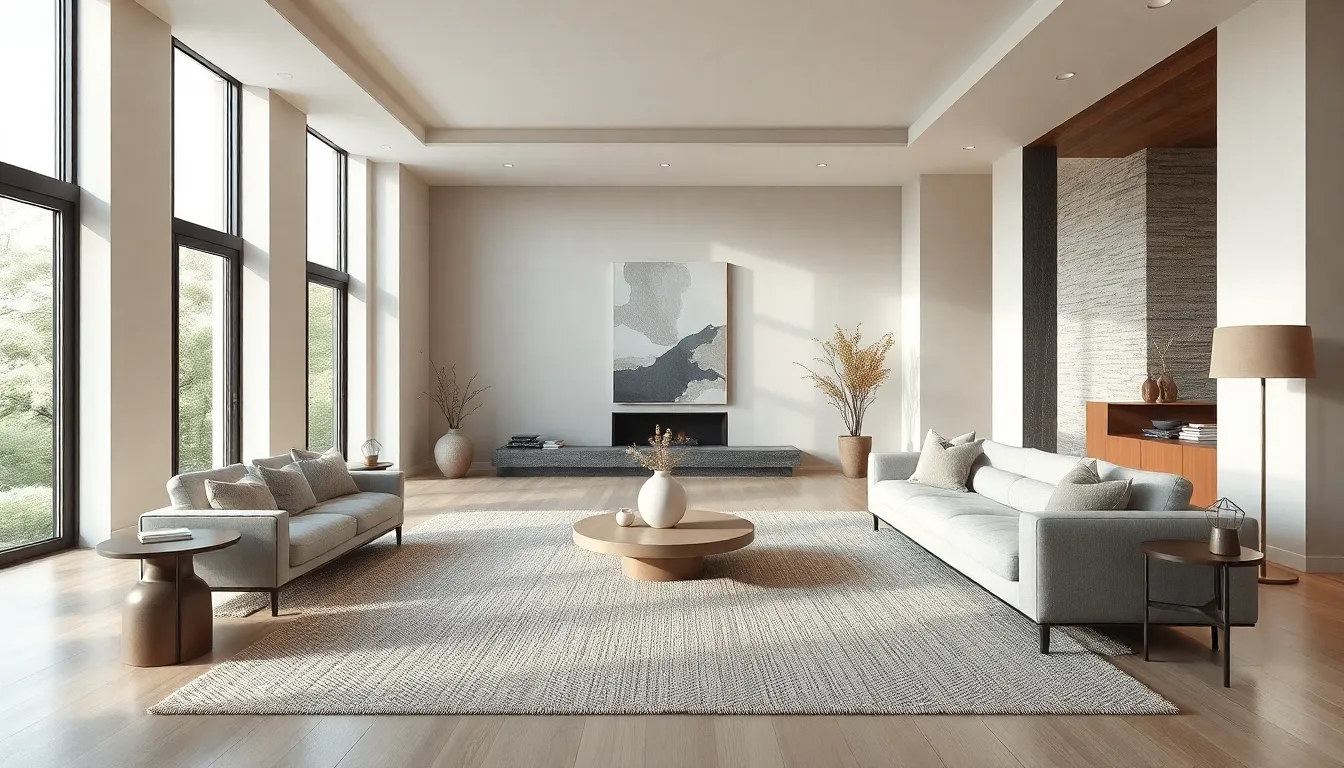
Table of Contents:
The Quiet Luxury Palette: Warm Neutrals and Moody Tones
Quiet luxury begins with a measured palette. In 2024, warm neutrals move beyond plain beige, while deeper tones add character without making a room feel theatrical. Think chalk, oat, putty, mushroom, camel, tobacco, olive, oxblood, and softened navy. Used together, these shades create a room that feels collected rather than decorated in one afternoon.
The most successful schemes usually rely on a tonal base. Start with one dominant shade across the largest surfaces, then introduce two or three close companions. A warm greige wall, for example, can sit comfortably beside limestone upholstery, walnut furniture, and a muted bronze accent. The eye notices variation, but the overall impression stays calm.
Moody colors work best when they are treated as atmosphere, not spectacle. A deep olive study, a tobacco-toned library, or a blue-gray bedroom can feel intimate and composed. Matte paint is especially useful here because it absorbs light and softens edges. In rooms with limited daylight, test large samples at different times before committing; a color that looks elegant at noon may turn flat or overly cool by evening.
Contrast should be quiet but deliberate. Pair a pale plaster tone with dark wood, or set a smoky wall against pale linen curtains. The difference in value gives the room structure without relying on bright color. For a more nuanced result, repeat one undertone throughout the space. Yellow-based neutrals feel sunnier; pink or red undertones feel warmer and more enveloping, while green-gray shades bring a restrained, almost botanical note.
- Use warm whites instead of stark optical white.
- Choose low-sheen finishes for walls and built-in surfaces.
- Limit strong colors to one architectural feature or a small group of objects.
- Check paint and fabric samples in daylight, lamplight, and shadow.
- Balance dark tones with reflective details such as glass, polished stone, or aged metal.
The result is not a room without color. It is a room where color has been edited carefully. That distinction gives quiet luxury its sophistication: the palette supports the architecture, the artwork, and daily life rather than competing with them.
Natural Stone as a Refined Focal Point
Natural stone gives quiet luxury a sense of permanence. Its appeal is not limited to a dramatic marble slab. Limestone, travertine, soapstone, and honed granite can shape a room through subtle veining, tactile surfaces, and gentle shifts in tone.
In 2024, the strongest applications favor restraint. A single stone element can carry more visual weight than several decorative pieces. Consider a deeply veined island, a limestone fireplace surround, or a travertine console with softened edges. The goal is to create one deliberate focal point, not a showroom effect.
Finish matters as much as the stone itself. Polished surfaces reflect light and sharpen pattern, while honed finishes look quieter and hide small marks more effectively. Brushed or leathered treatments add grip and a dry, tactile quality. For busy kitchens, a honed surface may offer a more forgiving everyday experience than high polish, although each material still needs care suited to its porosity.
Scale is another mark of sophistication. Bookmatch a strong slab only where its natural pattern can be read clearly, such as behind a range or across a fireplace. On smaller surfaces, use cut pieces with disciplined joints. Oversized tiles can reduce visual interruption, but narrow grout lines require a stable substrate and careful installation.
- Choose limestone for a soft, architectural appearance.
- Use soapstone where heat resistance and a dark, velvety surface are useful.
- Select travertine for organic pits, movement, and a relaxed old-world note.
- Consider honed granite when a durable work surface must still feel refined.
- Request a full slab sample whenever veining will define the composition.
Responsible specification belongs in the design conversation, too. Ask where the stone was quarried, how far it will travel, and whether a local alternative can deliver a similar effect. Proper sealing, neutral cleaning products, and regular maintenance preserve the material far better than aggressive treatments.
The most compelling stone interiors allow the material to remain recognisable. Edges may be eased, patterns may be carefully framed, and hardware may be kept discreet, but the surface should not be disguised. That quiet honesty is what turns a practical finish into a refined architectural gesture.
Layered Textures for Subtle Depth
Layered texture gives a quiet room its sense of depth. Instead of adding more decoration, combine surfaces that respond differently to touch and light: brushed wool, washed linen, boucle, suede, ribbed timber, pleated cotton, and finely woven cane. Each material contributes a small change in rhythm. Together, they keep a restrained scheme from feeling flat.
Begin with the largest tactile fields. A wool rug can anchor the floor, while linen curtains soften the windows and a tightly woven fabric defines the sofa. Add smaller contrasts only after these foundations feel balanced. A nubby cushion beside a smooth leather chair, for instance, creates interest without turning the room into a pile of competing textures.
Texture also influences comfort in practical ways. Dense wool helps insulate a cold floor, lined curtains reduce glare, and upholstered wall panels can temper echoes in large rooms. In a bedroom, a quilted coverlet, crisp sheets, and a lightweight throw create useful layers for changing temperatures. It is a modest luxury, but a very real one.
- Mix matte, brushed, napped, and gently reflective surfaces.
- Keep patterns quiet when several tactile materials already share the space.
- Repeat one fabric in different forms, such as a curtain, cushion, and small bench.
- Use texture at different heights, from a floor rug to wall upholstery.
- Leave breathing room between tactile objects so each one remains legible.
Scale deserves careful attention. Large boucle loops can overwhelm a slim chair, while a fine weave may disappear on a generous sectional. Always assess samples at their intended distance. What looks luxurious in a hand sample might read as visually busy when repeated across several metres.
The most polished interiors balance softness with structure. Pair a tactile textile with clean joinery, a woven shade with a simple silhouette, or a carved timber surface with smooth upholstery. Texture should be discovered gradually, not announced from across the room.
Tailored Upholstery and Sculptural Seating
Tailored upholstery turns seating into architecture. In quiet luxury interiors, a sofa or chair is valued for its line, proportion, and comfort rather than a conspicuous label. Clean piping, precise seams, and a well-shaped back create polish that remains visible even when the fabric is understated.
Look for silhouettes with a clear point of view: a gently curved lounge chair, a low sofa with an elongated seat, or a compact ottoman with softened corners. These forms bring movement to a room without requiring ornate decoration. The best pieces also support real habits. A deep sofa may suit relaxed evenings, while firmer cushions and upright arms work better for conversation.
Tailoring is more than appearance. Ask about frame construction, suspension, cushion filling, and whether covers can be removed for cleaning. High-resilience foam, feather-and-fiber blends, and spring-supported seats each feel different. A showroom test is useful, but sit for several minutes; comfort often reveals itself slowly.
- Choose seat depth according to how the furniture will be used, not only by visual appeal.
- Specify double-needle seams or welted edges where sharper definition is needed.
- Use contrast piping sparingly to clarify a graceful outline.
- Check fabric rub ratings for heavily used sofas and family rooms.
- Allow enough clearance around sculptural chairs so their shape remains readable.
Scale can make or break the composition. A generous sectional may dominate a small sitting room, while a petite chair can look lost in a large plan. Measure doorways, lifts, turning areas, and final placement before ordering. Custom work is expensive to correct, and a beautiful chair that cannot enter the house is not much of a triumph.
For a more personal result, combine one distinctive seat with quieter companions. A curved reading chair might sit beside a restrained bench, or two asymmetrical lounge chairs may frame a central table. This creates hierarchy without matching every item. The room feels composed, not copied from a catalogue.
Custom Millwork with Minimal Ornament
Custom millwork brings order, proportion, and purpose to a quiet luxury interior. Rather than acting as decoration, it can solve practical problems while giving the architecture a more intentional character. Wall-to-wall cabinetry, recessed shelving, concealed doors, and built-in desks all help reduce visual noise.
The finest examples begin with the room’s geometry. Align cabinet tops with door heads, window lines, or existing cornices. Consistent reveals—often around 3 to 6 millimetres—create a calm visual rhythm. Even small inconsistencies become noticeable across a long run, so detailed shop drawings and an experienced installer matter.
Minimal ornament does not mean lifeless surfaces. A shadow gap, fluted panel, inset door, or carefully recessed handle can provide definition without relying on elaborate moulding. The detail should reward close attention. From across the room, the composition reads as one clean architectural plane; nearby, its craftsmanship becomes apparent.
Function should lead the design. Include adjustable shelves for changing collections, cable routes for media equipment, ventilation for appliances, and dedicated drawers for items used every day. In a study, a concealed printer bay can preserve the room’s calm. In an entry, shallow storage can handle keys, bags, and shoes without adding a bulky freestanding unit.
- Map electrical outlets, heating vents, and service access before fabrication.
- Use full-height doors to make storage feel integrated with the wall.
- Choose durable hinges and runners rated for frequent daily use.
- Keep handle placement consistent across adjacent cabinets.
- Reserve open shelving for objects that genuinely deserve display.
Material continuity can make bespoke work feel especially assured. Matching veneer direction across neighbouring doors, or carrying one timber detail into a nearby doorway, creates a subtle sense of authorship. Yet perfect uniformity is not always desirable; a small shift in grain or a hand-finished edge can keep the result from feeling factory-made.
Good millwork quietly improves how a home operates. It hides clutter, frames important views, and gives necessary technology a place to disappear. That is its real luxury: not ornament for ornament’s sake, but craftsmanship that makes everyday living feel unusually composed.
Soft Lighting for a Calm, Polished Mood
Soft lighting shapes the room after sunset. In quiet luxury interiors, the aim is not maximum brightness but a layered lighting plan that supports different moments: reading, dining, conversation, and winding down.
Start with the colour temperature. Bulbs between 2,700K and 3,000K usually create a warm residential glow, while 2,200K can suit accent lamps or evening areas. Avoid mixing very warm and cool sources in the same sightline; the shift can make carefully designed rooms feel accidental.
Use three lighting levels where possible. Low lamps and concealed strips provide intimacy, middle-height sconces illuminate walls, and discreet ceiling fixtures supply general light. Dimmers are essential because a fixed output rarely suits every hour. Place controls at entrances and beside seating or beds for easier use.
- Choose lampshades that diffuse light rather than expose harsh bulbs.
- Use wall washers to reveal artwork or architectural details gently.
- Hide LED strips behind pelmets, shelves, or recessed edges.
- Select high-colour-rendering lamps, ideally with a CRI of 90 or above.
- Keep decorative fixtures proportionate to the ceiling height and room volume.
Glare deserves special attention. Position downlights away from mirrors, glossy screens, and direct lines of sight. In kitchens, specify task lighting beneath wall cabinets so worktops remain useful without flooding the whole room. In bedrooms, adjustable bedside fixtures are more comfortable than a bright central pendant.
Light switches can contribute to the finished impression. Slim plates, consistent placement, and finishes that sit quietly against the wall prevent small controls from becoming visual interruptions. Smart systems may add convenience, but a simple dimmer remains reliable, intuitive, and pleasantly low-key.
The final test is simple: turn off every unnecessary source. If the room still feels balanced, the lighting plan is doing its job. A polished atmosphere should unfold in layers, not arrive like a spotlight.
Antique Accents with a Personal Story
Antique accents add memory without demanding attention. A 19th-century mirror, a hand-painted box, or a small ceramic vessel can give a quiet room a sense of lineage. The strongest pieces are not chosen only for age or price; they matter because they connect the home to a person, place, or moment.
Choose one meaningful object before searching for more. Perhaps it is a desk inherited from a grandparent, a framed map from a memorable journey, or a silver bowl found at a local estate sale. Its imperfections become part of the composition. A softened edge or visible repair can feel more convincing than a flawless reproduction.
Placement should allow the object to breathe. Display a small collection in an uneven arrangement rather than filling every shelf. Leave space around a portrait, offset a mirror from the centre of a wall, or place a modest vessel beside a stack of books. These pauses help personal belongings look intentional rather than staged.
- Mix periods carefully, linking them through shape, material, or scale.
- Use patinated brass, aged timber, painted enamel, or worn leather as quiet historical notes.
- Group three related objects when a single piece feels visually lost.
- Keep valuable antiques away from direct sun, damp areas, and unstable temperatures.
- Document provenance when an object has a known maker, date, or family history.
Authenticity also requires practical judgment. Inspect furniture for active woodworm, unstable joints, odours, and old finishes that may need specialist care. For textiles, ask about light sensitivity and cleaning methods. A beautiful antique should enrich daily life, not become a fragile ornament that nobody dares to touch.
The most convincing rooms include objects that could not have been selected from one catalogue. Their stories may be private, even ordinary. That is precisely why they work. Quiet luxury becomes personal when the room records a life rather than performing an idea of wealth.
Artful Restraint in Wall Decor
Artful wall decor gives a restrained interior its point of view. The aim is not to fill every available surface, but to select works that improve the room’s proportions and invite a closer look. A large abstract canvas, a small charcoal study, or a finely made textile can all work when the scale feels deliberate.
One substantial work often has greater impact than a crowded gallery wall. In a living room, align its centre with the primary seating zone rather than simply placing it at eye level from the doorway. In a hallway, a sequence of modest works can guide movement, provided their spacing follows a clear rhythm.
Framing offers another layer of control. A deep wooden frame can give a delicate drawing visual authority, while a narrow metal profile may keep a bold work from feeling heavy. Mounting also matters: a generous mat creates breathing room around paper-based art and protects it from touching the glazing.
- Match artwork scale to the wall, furniture, and viewing distance.
- Use a restrained frame family when displaying several works together.
- Leave enough margin around art so each piece remains distinct.
- Hang valuable works away from direct sun, humidity, and heat sources.
- Use museum-grade glazing for sensitive works on paper.
Quiet luxury also welcomes unexpected formats. A handwoven wall hanging can soften a rigid corridor; a carved panel can introduce shadow and relief; a vintage architectural drawing can echo the character of an older building. These choices feel richer when they relate to the home’s location or the owner’s interests rather than following a fixed trend.
Before drilling, make paper templates and place them on the wall. This simple step reveals awkward proportions, blocked sightlines, and crowded corners. It may feel slightly old-school, but it saves costly mistakes. The finished arrangement should look considered at first glance and reveal its finer decisions over time.
Monochromatic Bedrooms with Hotel-Level Comfort
Monochromatic bedrooms feel especially refined when comfort leads the design. Rather than matching every item exactly, build the room around one quiet hue and vary its depth through bedding, window treatments, and selected furnishings. A muted clay scheme, soft ivory, or dusty blue can feel cohesive without becoming predictable.
Hotel-level comfort starts with the bed itself. A mattress should suit the sleeper’s preferred position and firmness, while a supportive base prevents premature sagging. For bedding, a practical arrangement might include a fitted sheet, a breathable top sheet, a duvet with a medium-weight insert, and one light coverlet for seasonal flexibility. Crisp percale feels cool and dry; sateen offers a smoother, warmer hand.
Proportion makes the bed look settled in the room. A headboard should usually extend beyond the mattress width, with its height related to the ceiling and nearby windows. Bedside surfaces need enough room for a lamp, a glass of water, and a book without becoming cluttered. Small details change the whole morning routine.
- Use two or three values of the same hue instead of one exact shade.
- Select breathable natural-fibre bedding for better moisture control.
- Keep mattress protectors quiet, fitted, and washable.
- Add blackout lining where early light disrupts sleep.
- Provide a clear landing place for personal items beside the bed.
Acoustic comfort is easy to overlook. A padded headboard, lined drapery, and a properly sized floor covering can reduce hard reflections, especially in rooms with timber or stone floors. For healthier sleep, keep electronics away from the pillow zone and avoid decorative lighting that cannot be fully switched off.
A monochromatic bedroom should also work in daylight. Check the selected fabrics near the window, since artificial light can conceal differences in undertone and weave. When every layer supports rest, storage is discreet, and the palette remains coherent, the room gains that rare hotel quality: polished, private, and genuinely easy to live in.
Serene Kitchens with Discreet Function
Serene kitchens make function feel almost invisible. In 2024, the quiet luxury approach favors calm sightlines, purposeful storage, and carefully chosen hardware over a long list of visible features. The kitchen still works hard; it simply does not need to announce every appliance, utensil, or cable.
Begin with the working triangle—or, in a larger kitchen, separate zones for preparation, cooking, cleaning, and serving. Keep frequently used items within one easy step, while occasional appliances can move into an appliance garage or pantry. This reduces counter clutter and makes the room feel calmer during busy periods.
Cabinet planning deserves particular care. Full-height doors can conceal refrigeration and pantry storage, while deep drawers often offer better access than low cupboards. A drawer around 150 millimetres high suits cutlery and tools; deeper drawers of roughly 300 to 400 millimetres can hold pans, dishes, or small appliances. Exact dimensions depend on the cabinet system, so confirm them before ordering.
Discreet function also means comfortable function. Include task lighting beneath wall units, landing space beside the oven, and durable work zones near the sink. A sink should have enough clear counter space on both sides where possible. Place waste and recycling close to preparation areas, but use ventilated, easy-clean compartments to prevent odours.
- Hide small appliances behind lift-up or pocket doors.
- Use integrated handles or slim pulls to preserve a clean cabinet rhythm.
- Plan at least one uninterrupted work surface for preparation.
- Keep strong extraction close to the cooking zone to protect finishes.
- Add charging points inside a drawer or dedicated utility compartment.
The island should support the room, not crowd it. Allow about 1,000 to 1,200 millimetres between opposing work surfaces for comfortable movement, and increase that clearance where two people cook together. Seating also needs room: allow approximately 600 millimetres of width per person and enough knee space beneath the overhang.
Quiet sophistication appears in the details people rarely notice at first: soft-close hinges, aligned doors, concealed bins, balanced circulation, and storage that opens exactly where it should. A serene kitchen is not precious or fussy. It is generous, efficient, and—when everything is working properly—almost wonderfully uneventful.
Elegant Dining Spaces Designed for Gathering
Elegant dining spaces are designed around conversation, not display. A quiet luxury dining room should feel ready for a long lunch, an impromptu supper, or a festive evening without needing a complete transformation between occasions.
Table shape has a direct effect on social ease. A round or oval table removes a dominant head position and lets guests see one another clearly. Rectangular tables suit larger rooms, but softened corners can improve circulation and make the arrangement feel less formal. As a practical guide, allow at least 600 millimetres of table width per guest and roughly 900 millimetres behind each occupied chair.
Choose a centrepiece that preserves sightlines. A low branch in a shallow vessel, a row of small candlesticks, or a single sculptural object can mark the table without blocking conversation. For everyday use, keep the arrangement easy to move. Flexibility is part of elegance—especially when dinner begins a little earlier than planned.
- Place the dining table where guests can move easily between kitchen, living areas, and outdoor space.
- Use chairs with supportive backs and sufficient width for extended meals.
- Combine a statement table with simpler seating to avoid a matched-set effect.
- Provide a nearby surface for serving dishes, glassware, and used plates.
- Use washable or replaceable table linens for relaxed, frequent hosting.
Acoustics can define the atmosphere as much as the furniture. Hard walls and large windows may cause voices to bounce, so consider curtains, upholstered seating, a rug, or discreet acoustic treatment. The aim is not silence. It is the ability to hear the person across the table without leaning forward.
Storage should support hospitality without taking over the room. A slim sideboard can hold linens and serving pieces, while a nearby drinks cabinet keeps traffic away from the table. Keep everyday objects accessible, but avoid displaying every item at once. The room should suggest generosity, not preparation work.
The most memorable dining rooms leave space for ritual. A drawer for candles, a hook for cloth napkins, or a small ledge for seasonal flowers may seem minor, yet these details make hosting smoother. When furniture, movement, and service are considered together, refinement becomes something guests feel—not merely something they see.
Conclusion: Choose Quality, Comfort, and Lasting Design
Quiet luxury is best understood as a design discipline, not a shopping list. The lasting result comes from decisions that remain useful when fashions change: choosing repairable pieces, planning for maintenance, and allowing the home to reflect its residents rather than a preset image of refinement.
Before investing, assess each proposal through three simple questions: Will it serve a real daily need? Can it age with dignity? Is its environmental cost reasonable for its expected lifespan? This approach can lead to fewer, better-considered purchases and a home that feels more individual over time.
- Prioritize products with replaceable components and accessible care instructions.
- Request material samples, warranties, and lead-time information before ordering.
- Consider local craftspeople for repairs, alterations, and made-to-measure work.
- Keep an inventory of finishes, paint colours, and fabric details for future upkeep.
- Introduce new pieces gradually, so the interior develops through lived experience.
Longevity also depends on adaptability. A room should accommodate changing routines, guests, technology, and accessibility needs without requiring a full redesign. Movable furniture, flexible storage, and clear circulation make refinement practical rather than fragile.
The most sophisticated outlook is therefore not the most expensive one. It is the one that feels coherent, comfortable, and honestly inhabited. When every choice earns its place, quiet luxury stops being a trend and becomes a durable way to shape home.
Quiet Luxury Interior Design: Frequently Asked Questions
What is quiet luxury interior design?
Quiet luxury interior design is a refined approach based on timeless furnishings, high-quality materials, subtle colors, thoughtful craftsmanship, and a calm atmosphere rather than conspicuous decoration or visible branding.
Which colors are commonly used in quiet luxury interiors?
Common colors include warm white, chalk, oat, putty, mushroom, camel, tobacco, olive, softened navy, and oxblood. Tonal combinations create depth while keeping the overall mood composed and sophisticated.
Which materials support the quiet luxury look?
Natural stone, walnut, aged timber, linen, wool, leather, boucle, brushed metals, and finely crafted joinery support the quiet luxury look. The emphasis is on tactile quality, durability, and restrained visual variation.
How can lighting create a quiet luxury atmosphere?
Use layered lighting rather than a single bright source. Combine table lamps, wall sconces, concealed lighting, and discreet ceiling fixtures with warm bulbs, high color rendering, and dimmers to create a calm, flexible mood.
How can quiet luxury interior design remain personal?
Personalize the interior with meaningful antiques, collected artwork, inherited furniture, handmade objects, and pieces connected to travel or family history. Select fewer, more significant items so the home feels authentic rather than staged.