
Table of Contents:
Choose the Right Wall Light for Each Room
The best wall light depends on what happens in the room. Start with the task, then choose the beam, height, finish, and control method. A decorative sconce may suit a hallway, while a movable reading light works better beside a sofa or bed.
- Bathroom: Choose enclosed fittings with a suitable IP rating for their position. Place matching lights on both sides of the mirror when possible to reduce shadows on the face. For grooming, a neutral white light around 3,000–4,000 K often gives clearer colour than a very warm lamp.
- Bedroom: Pick a reading light with a focused beam, an accessible switch, and a shade that hides the bulb from the pillow. A swing-arm design is useful when two people read at different angles. Mount it so the light reaches the book without shining into the other person’s eyes.
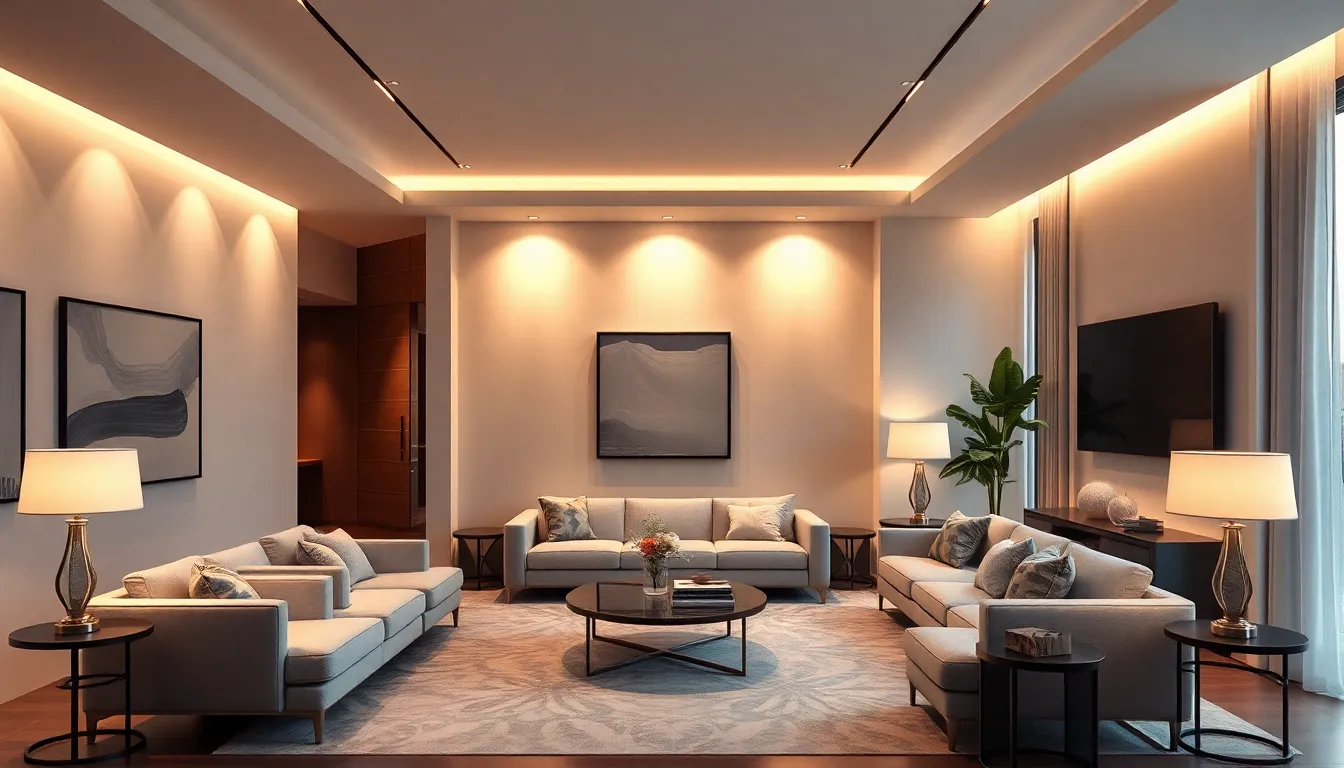
- Living room: Use wall lights to wash a wall, frame a fireplace, or create a soft pool beside a chair. Frosted glass and indirect light feel calm; adjustable heads give more control near a reading seat. Keep the fixture away from curtain folds and tall furniture that could block the beam.
- Dining room: Select a compact pair or a repeated series along a long wall. A warm source near 2,700 K supports a relaxed meal. If the lights share a dimmer with the ceiling fixture, you can shift from bright dinner service to a quieter evening mood.
- Kitchen: Look for strong, practical light over counters and beside food-preparation areas. A colour-rendering index of at least 80 is a sensible baseline; 90 or higher is preferable when accurate food colour matters. Avoid placing a bare lamp where it creates glare on glossy cabinets.
- Hallway and entry: Slim up-and-down fixtures can make a narrow passage feel taller and more deliberate. Keep a consistent mounting line through the corridor. In an entry, choose a durable shade and leave enough clearance for coats, bags, and passing shoulders.
- Library or home office: A directional fitting can light a page or shelf without flooding the whole room. Check that the arm does not cast a shadow from your writing hand. For screen work, place the lamp beside the monitor rather than directly behind it to limit reflections.
- Artwork: Use a picture light with a beam that covers the artwork evenly. The fixture should complement the frame, not overpower it. LED sources with good colour rendering help preserve the way paintings, prints, and textiles look under light.
Before buying, measure the wall, nearby furniture, and cable route. For a hardwired fitting, consult a qualified electrician and follow local electrical rules. In damp areas, check the product’s marked protection rating instead of relying on appearance.
Explore Sconces for Style and Everyday Function
A sconce can be the quiet detail that makes a room feel finished. Its value is not only visual: the shade controls glare, the backplate hides the connection point, and the arm or stem determines how far light reaches into the room. Choose the shape with the daily routine in mind, not just the showroom view.
Traditional sconces often use fabric shades, opal glass, or aged metal. They soften the light and suit bedrooms, dining rooms, hallways, and classic interiors. Cleaner designs with exposed bulbs, slim metal frames, or geometric forms create a sharper look. For a richer scheme, match the finish to one existing detail, such as a cabinet handle, tap, or picture frame. Matching every metal surface can feel overly staged.
The Melange Elongated Wall Sconce is a useful example of a longer vertical profile. It can add visual height beside a doorway, mirror, or tall artwork. The Camille Sconce brings a more decorative presence, while the Hampton Wall Light fits spaces that call for a clear, architectural silhouette. These designs belong to the Visual Comfort & Co. collection, which includes work by Thomas O’Brien, Kelly Wearstler, Sean Lavin, and J. Randall Powers.
Look closely at the construction before deciding. A metal shade usually gives a more directed effect than translucent glass. A closed shade hides the lamp and reduces sparkle, while clear glass can cast stronger highlights across polished surfaces. If the fixture has a visible bulb, check its shape and brightness too; the bulb becomes part of the design.
- For a calm, tailored room: choose a shaded sconce with a soft diffuser.
- For a bold focal point: select sculptural arms, unusual proportions, or a contrasting finish.
- For a compact wall: use a shallow fixture with a small backplate.
- For a long corridor: repeat one design at equal intervals rather than mixing several unrelated styles.
- For a heritage interior: consider aged brass, bronze, ribbed glass, or a pleated shade.
- For a contemporary interior: look for simple lines, matte surfaces, and concealed hardware.
Confirm the bulb base, maximum wattage, dimmer compatibility, replacement-bulb access, and installation method before ordering. Some sconces need a junction box and permanent wiring; others plug into a nearby outlet. Hardwired versions should be installed by a qualified electrician.
Use Swing-Arm Wall Lights for Flexible Task Lighting
Swing-arm wall lights are useful when one fixture must serve more than one position. Their hinged arm can extend over a desk, turn toward a chair, or fold close to the wall when it is not needed. That movement adds flexibility without taking floor or table space.
Study the arm’s reach rather than its appearance alone. Measure the distance from the mounting point to the centre of the work area. A short arm may suit a narrow bedside table, while a longer reach works better above a deep desk or lounge chair. Also check whether the joints hold their position firmly. A beautiful arm that slowly droops is a nuisance.
- Reading corners: Choose a shade that directs light onto the page and a pivot that lets you change the angle without moving the chair.
- Home offices: Look for a wide range of movement, a stable locking joint, and a switch that you can reach while seated.
- Kitchen work zones: Select a model with heat-resistant materials and enough clearance from steam, splashes, and cupboard doors.
- Bedside use: A folding arm keeps the wall profile neat during the day and brings the light closer at night.
- Living rooms: Use the arm to shift light between a book, a board game, and a nearby side table.
The shade matters as much as the mechanism. An opaque shade sends light down or forward, while a translucent shade spreads it more gently. A deep shade can reduce glare when the fixture sits near eye level. For detailed tasks, choose a replaceable LED bulb with a suitable lumen output rather than judging brightness by wattage alone. Wattage shows energy use; lumens show light output.
Plan the movement before installation. Open cabinet doors, pull out desk drawers, and sit in the chair where the light will be used. The arm should not block a passage or collide with artwork. If the lamp plugs in, secure the cable along the wall with neat clips and keep it away from heat. Hardwired versions require particular care where the wall contains hidden cables or plumbing.
For a polished arrangement, install two matching swing-arm lights at equal heights and let each arm face inward. In a work area, one adjustable fixture may be enough; in a shared room, two independent lights give each person control.
Highlight Art with Picture Lights
Picture lights are designed to make artwork the visual centre of a wall. Their narrow, controlled beam can reveal brushwork, paper texture, and subtle colour shifts without washing the whole room in light. They work especially well above paintings, framed prints, photographs, and small gallery groupings.
Choose the fixture by the artwork’s width. A light that is too short may leave the outer edges dull, while an oversized fitting can dominate a delicate frame. As a practical guide, select a picture light that spans roughly half to three-quarters of the frame width, then adjust for the beam angle and the distance between the fitting and the surface.
- For oil paintings: use a broad, even beam that reveals texture without creating a bright hot spot.
- For photographs and prints: choose low-glare illumination to protect fine details and pale areas.
- For a gallery wall: use one light per major piece or a carefully aimed linear fitting rather than flooding every frame equally.
- For deep frames: select an arm with enough projection to clear the upper edge and light the image face.
- For valuable or light-sensitive work: prefer dimmable LED technology and avoid unnecessary long exposure.
Colour quality matters more than raw brightness. Look for an LED with a high colour-rendering index, ideally CRI 90 or above, so reds, blues, skin tones, and muted pigments remain convincing. A colour temperature around 2700–3000 K often suits domestic interiors, but the artwork itself should decide. Cool white light can make some paintings feel stark; very warm light may turn cream paper yellow.
Glare is the main technical trap. Stand where viewers normally sit and look for reflections in glass or varnish. If a bright patch appears, alter the mounting angle, move the fitting slightly forward, or choose a wider beam with lower intensity. Anti-reflective glazing can help, but it does not replace careful aiming.
When installing a picture light, protect the frame and wall from heat, vibration, and pressure. LED models usually produce less heat than older lamps, yet the manufacturer’s clearance guidance still matters. Concealed wiring gives the cleanest finish, while plug-in models are easier to change later. The light should support the artwork—not compete with it.
Create a Refined Library with Library Lights
A refined library needs light that supports reading while preserving the calm, ordered character of the room. Library lights are often slim, directional fixtures mounted above bookcases or between shelving bays. Their purpose is precise: illuminate titles and page edges without turning the entire wall into a bright glare.
Start with the shelf layout. A long bookcase may need several evenly spaced fittings, while a single narrow unit can use one centred light. Keep the visual rhythm consistent across the wall. Uneven spacing looks accidental, especially when the fixtures have exposed stems or visible backplates.
- Above tall shelving: choose a fitting with enough projection to clear the cornice and direct light down the book spines.
- Inside a reading alcove: use a compact library light with a controlled beam and a discreet switch.
- For glass-front cabinets: select low-glare lighting that will not create harsh reflections on the doors.
- For dark wood shelves: use slightly stronger output, since deep finishes absorb more light than pale paint.
- For open shelving: consider adjustable heads so the beam can follow changing book arrangements.
Proportion is crucial. The fixture should relate to the width of the shelving below it, but it does not need to match it exactly. A small reading lamp can disappear above a broad case; an oversized fitting may make a delicate shelf look top-heavy. Brass, bronze, and aged finishes suit traditional joinery, while black or brushed metal gives modern shelving a crisp edge.
Use warm, comfortable light for a domestic library. Around 2700–3000 K usually works well with timber, leather, and painted cabinetry. Choose a high colour-rendering LED so coloured book jackets and decorative objects remain clear. Dimming is valuable: bright light helps during searching and sorting, while a lower setting creates a quieter evening atmosphere.
Mark the shelf centre lines before drilling, and check that the fitting will not interfere with doors, cornices, or adjustable shelves. Concealed wiring produces the cleanest result in a new build or renovation. For existing bookcases, surface-mounted cable channels or plug-in fittings may be less disruptive. Keep heat-producing lamps away from paper, timber, and fabric, and follow the manufacturer’s clearance instructions.
The strongest library schemes treat the lights as part of the joinery. A repeated fixture can give a wall of books a measured, almost architectural rhythm. The result feels practical, but also a little magical—the shelves seem to glow from within.
Compare Designer, Modern, and Budget-Friendly Options
The right price level depends on how often the light will be used, how difficult it is to replace, and how much visual weight it carries in the room. A low purchase price is not always the lowest total cost. Include the bulb, dimmer, electrician, mounting hardware, and future replacement parts in your calculation.
- Designer options: These suit rooms where the fixture is part of the architecture. You pay for refined proportions, distinctive finishes, stronger material quality, and a recognisable design language. They make sense when the light will remain in place for many years or when a pair must look especially balanced.
- Modern mid-range options: These often offer the best compromise. You can find LED technology, metal or glass construction, contemporary finishes, and useful controls without paying for a collector-level name. This tier works well for a renovation with several matching fixtures.
- Budget-friendly options: These are practical for rentals, temporary layouts, children’s rooms, or spaces where you need several lights at once. IKEA offers examples such as the NYMÅNE, SKURUP, and NÄVLINGE ranges at accessible price points. Check the switch, cable length, bulb access, and mounting method carefully before buying.
Visual Comfort & Co. is the strongest choice when the fitting itself should read as a design object. Its collection includes the Melange Elongated Wall Sconce, Camille Sconce, and Hampton Wall Light, with work associated with Thomas O’Brien, Kelly Wearstler, Sean Lavin, and J. Randall Powers. Sofary Lighting takes a more contemporary route, with modern products using crystal, glass, brass, metal, gold, and chrome finishes. Its range also includes open-box offers and a 2026 collection section, but stock and promotions can change, so confirm the current price before ordering.
Budget does not mean careless. Some affordable lights perform well, while an expensive fitting may still disappoint if its light source is poor or its installation is awkward. Compare these details side by side:
- Light source: Check whether the LED is replaceable. Integrated LEDs can look neat, but a failed module may require a full fitting replacement.
- Controls: Confirm dimmer compatibility, remote functions, and the location of the on/off switch.
- Construction: Inspect the shade, joints, backplate, and finish. Thin metal and loose fittings may show wear quickly.
- Warranty: Read the length, exclusions, and return conditions rather than relying on a badge or star rating.
- Installation: A plug-in fixture may reduce labour costs, while a hardwired model can give a cleaner permanent result.
Assign more money to lights that are used every day or placed at eye level. Save on secondary areas, temporary rooms, or hidden service lighting. A mixed scheme can feel intentional: one carefully chosen designer fixture as the focal point, paired with simpler lights where function matters more.
Discover Standout Designs from Visual Comfort & Co.
Visual Comfort & Co. is best known for wall lights that function as architectural details, not just light sources. The collection gives designers room to work with scale, symmetry, and contrast across both classic and modern interiors.
The Melange Elongated Wall Sconce has a tall profile that can strengthen a vertical composition beside a doorway, mirror, or artwork. The Camille Sconce offers a more decorative character, making it suitable where the fitting should add ornament as well as illumination. The Hampton Wall Light has a cleaner presence and can sit comfortably within a more restrained scheme.
These three examples show why proportion deserves close attention. A narrow wall may need a compact silhouette, while a tall room can handle a longer fixture. The backplate, shade, and projection should relate to nearby doors, trim, furniture, and wall panels. When those parts align, the light feels built into the room rather than attached afterward.
The collection also reflects different design viewpoints. Thomas O’Brien is associated with relaxed, layered interiors; Kelly Wearstler is known for expressive forms and strong material contrasts; Sean Lavin brings a broad lighting vocabulary; and J. Randall Powers is recognised for tailored residential design. Their differing approaches help shoppers compare mood and shape, not only finish.
- Choose a vertical model when the wall needs added height or a clear visual anchor.
- Choose a decorative model when the light will be seen from several angles and should contribute to the room’s personality.
- Choose a restrained model when artwork, millwork, or furniture already provides the main visual statement.
- Use a matched pair beside a central feature when balance matters more than variety.
Before ordering, confirm the exact dimensions, lamp type, voltage, finish, and installation requirements for the selected version. Product names can cover several configurations, and availability may vary by market. For a permanent installation, verify the junction-box position and have fixed wiring completed by a qualified electrician.
A standout wall light should still belong to the room. The most successful choice repeats one existing line, texture, or metal tone while adding a fresh note: distinctive enough to notice, disciplined enough to last.
Find Modern Finishes and Materials at Sofary Lighting
Sofary Lighting’s modern range is useful when you want a wall light to connect with existing hardware, furniture, and architectural details. The main finish families include gold, chrome, brass, black-toned metal, and glass. Each one changes how the fixture sits in the room, even when the shape stays similar.
- Gold finishes: Add warmth and visual richness. Use them with timber, cream paint, stone, or dark cabinetry. A muted or brushed gold usually feels calmer than a highly polished surface.
- Chrome: Gives a sharper, cooler effect and works well with mirrors, stainless steel, and contemporary bathrooms. It reflects nearby colours, so test it against the actual wall rather than judging it from a product image.
- Brass: Brings a softer metallic tone than chrome. It can bridge modern furniture and traditional details, particularly when the finish has a satin or aged appearance.
- Glass: Spreads light and keeps a fixture visually light. Clear glass shows the bulb, while opal or frosted glass creates a quieter glow.
- Crystal: Adds sparkle and catches movement from nearby lamps or daylight. Use it selectively; several highly reflective pieces can make a small room feel busy.
- Metal: Provides structure and durability. Matte black creates contrast, while a fine metallic coating can echo handles, taps, or picture frames.
Material choice should follow the room’s visual temperature. Warm materials such as brass and amber-toned glass suit beige, walnut, terracotta, and olive interiors. Chrome and clear glass sit naturally with white, grey, concrete, and cool blue palettes. This is not a strict rule, but it helps prevent a finish from looking like an afterthought.
For a layered contemporary scheme, consider a Sofary Lighting wall fixture beside one of the brand’s matching pendant or ceiling designs. Repeating one material across different fixture types creates cohesion without making every piece identical. A crystal wall light near a crystal pendant can feel deliberate; placing both beside many reflective surfaces may be too much sparkle.
Inspect the technical specification before choosing the finish. Surface colour does not reveal whether the lamp uses an integrated LED, a replaceable bulb, or a dimmable driver. Also check voltage, mounting hardware, dimensions, and care instructions. Fingerprints show quickly on polished chrome and glass, while textured or brushed surfaces are more forgiving in busy rooms.
Sofary Lighting also lists open-box products, which may reduce the purchase cost for shoppers who accept cosmetic packaging marks or limited stock. Confirm the item’s condition, included parts, warranty, and return terms before checkout. Promotions can change, so treat the displayed 6% code “HOLIDAY” and the 2026 collection label as time-sensitive rather than permanent.
Select IKEA Wall Lights by Function and Budget
IKEA wall lights cover several useful price points, from simple task lights to smart, dimmable fixtures. Choose by control, installation, and daily use rather than by price alone. A low-cost fitting can be a smart buy when the room needs practical light, while a more advanced model may earn its higher price through flexible controls.
- Under $30: The SKURUP, HEKTAR, NÄVLINGE, TERTIAL, and sensor night lights suit desks, bedsides, shelves, and small dark areas. These are sensible choices for renters, guest rooms, and quick upgrades.
- $30–$60: Models such as the NYMÅNE, VARPTROSS, MÅNALG, RANARP, SOLKLINT, ÅRSTID, MUSIK, and ANKARSPEL offer more decorative presence or useful mounting flexibility.
- Over $60: VARMBLIXT options add a stronger design statement, dimming, smart functions, or mirror-focused use. They make more sense when control and appearance matter every day.
For a desk or craft area, compare the NÄVLINGE and TERTIAL options with the NYMÅNE reading lamp. The first two are compact and practical, while the NYMÅNE has a more deliberate reading-light character. A clamp version is especially helpful when drilling is not allowed.
For atmospheric lighting, consider the VARPTROSS, MÅNALG, or SINNERLIG designs, which use natural-looking materials and softer visual forms. They can add texture to a plain wall, but check the cleaning instructions because woven surfaces collect dust more easily than painted metal or glass.
The VARMBLIXT range is worth considering when you want a wall light that also works as a decorative object. Some versions are dimmable or smart, while the round mirror light offers a more specialised solution. Check whether the selected model is designed for permanent wiring, plug-in use, or both before planning the installation.
Use the listed ratings as a starting point, not as a final verdict. A review count gives useful context, but it does not show whether a lamp suits your wall, switch setup, or preferred brightness. Pay close attention to recent availability, included bulbs, cable length, assembly steps, and return conditions.
Buy the most affordable suitable fixture for secondary areas, then spend more on the one wall light you see and use most. That keeps the budget sensible without making the whole home feel purely utilitarian.
Build Balanced Lighting with Ambient, Task, and Accent Layers
A balanced lighting plan gives each light source a clear job. Ambient light sets the general brightness, task light supports a specific activity, and accent light directs attention to a chosen feature. When these layers work together, the room feels comfortable instead of flat or overlit.
Begin with the room’s darkest areas. Note where shadows collect, where people read or work, and which surfaces deserve attention. Then assign a different lighting role to each need. A wall light should fill a real gap, not simply add another bright object to the wall.
- Ambient layer: Use broad, indirect light to soften strong contrasts and make movement through the room easier.
- Task layer: Add focused light where people read, prepare food, write, dress, or handle detailed work.
- Accent layer: Direct a narrower beam toward shelves, architectural details, textures, or decorative objects.
Control is as important as placement. Separate switches let you use only the layer you need. A dimmer can lower ambient brightness while keeping an accent light visible, or reduce task light after the practical work is finished. For smart systems, group fixtures by purpose rather than by wall location. This makes scenes easier to understand and prevents one command from turning every lamp on at once.
Light distribution also affects comfort. Uplight can make a low ceiling appear less heavy, while downlight gives stronger definition to nearby surfaces. Diffused light reduces harsh shadows; directional light creates contrast and depth. Combining both can make a room feel richer without increasing the total number of fixtures.
Keep the colour temperature consistent within one visual zone. Mixing very warm and cool sources close together can make walls and furniture appear uneven. If a room connects directly to another, a small shift may be acceptable, but abrupt changes near a doorway often look accidental.
Use the lighting levels as a starting point, not a rigid formula. A living area may need roughly 100–200 lux for relaxed use, while detailed desk work may require around 300–500 lux at the work surface. Dark finishes, high ceilings, and older eyes can all increase the amount of light needed. The most useful plan is adjustable, because one fixed setting rarely suits every hour of the day.
Check the room after sunset. Stand in the usual seating positions and look for glare, dark corners, and distracting reflections. Make small changes first—dimming, aiming, or switching layers—before adding another fixture.
Plan Your Wall Light Placement with Practical Examples
Placement becomes easier when you mark the furniture, walking lines, and door swings first. A wall light may look balanced on an empty elevation but feel awkward once a chair, mirror, or cabinet is in place. Use painter’s tape to outline the fixture and leave the room for a day before drilling.
- Beside a bed: Centre each fitting over the usable width of the bedside area, not over the entire headboard. Keep the switch reachable from a lying position. If the headboard is tall, mount the lights above its upper edge so the beam is not trapped behind it.
- Along a hallway: Keep fixtures clear of door casings and corners. On a long passage, align them with a repeated architectural feature, such as a row of frames or the centre of each wall panel.
- Above a console: Leave enough space between the tabletop and the bottom of the fitting for flowers, artwork, or a mirror. A shallow design prevents coats and bags from catching when the console sits near an entry path.
- Beside a bathroom mirror: Set the two lights at equal heights and keep them close enough to illuminate the face from both sides. The exact position depends on the mirror width, basin, wall studs, and the fixture’s beam.
- Above a fireplace: Check the mantel depth and heat exposure before selecting a fitting. Keep cables and fixtures within the manufacturer’s stated temperature limits, especially above working fireplaces.
- In a dining area: Centre a single light on the wall feature or use a measured pair around it. Do not centre it automatically on the room if the table sits off-axis.
- Near a sofa: Place the fixture far enough from the seat edge to avoid shoulder contact, but close enough to serve the person reading. Mark the full arm movement before fixing a swing-arm model.
Mounting height should respond to the fixture and the people using it. As a starting point, many decorative wall lights sit with their centre around 60–66 inches above the finished floor. Lower placement can work in a reading nook; higher placement may suit a tall stair wall. Avoid placing a shade directly in the normal eye line.
Check the wall structure before choosing the final position. Heavy fittings may need a suitable junction box, solid blocking, or the correct anchor for masonry or plasterboard. Never assume that a visible switch or outlet shows where hidden cables run. A qualified electrician can verify the route and complete fixed wiring safely.
For pairs, measure from a common reference line rather than estimating by eye. Record the distance from the floor, nearby trim, and the central feature, then transfer those measurements to the second side. Small errors become surprisingly obvious when two lights face each other across a mirror or fireplace.
Place a temporary lamp at the intended height and view it from standing, sitting, and walking positions. If the light feels intrusive from any normal angle, raise it, reduce the projection, or choose a shielded shade before installation.
Conclusion: Match Function, Style, and Budget Before You Buy
Before you buy, reduce the choice to three questions: What must the light do, what visual role should it play, and what is the complete project cost? This check prevents a common mistake—buying a striking fixture that does not suit the room’s wiring, scale, or routine.
- Function: Decide whether the fitting is mainly decorative, practical, adjustable, or a combination of these roles.
- Style: Compare its silhouette, finish, and material with the room’s existing architecture rather than choosing from an isolated product photograph.
- Budget: Include delivery, installation, controls, bulbs, and possible replacement parts in the final amount.
- Longevity: Check warranty terms, spare-part access, and whether the light source can be replaced or serviced.
- Safety: Confirm voltage, certification, environmental rating, and installation requirements for the intended location.
A practical shortlist should contain no more than three candidates. Record each model’s dimensions, projection, light output, colour temperature, control method, and return policy. This makes comparison clearer and exposes hidden differences that product photos often conceal.
For a premium focal point, a carefully selected Visual Comfort & Co. design may justify its cost through proportion and finish. For a contemporary scheme, Sofary Lighting offers a broad choice of glass, metal, crystal, brass, gold, and chrome styles. IKEA can be a sensible route for affordable upgrades, temporary rooms, or places where easy replacement matters. The best choice is the fixture that meets the room’s demands without adding needless complexity.
Save the product page, installation instructions, and receipt after purchase. Photograph the wiring before closing the wall, and keep spare components in a labelled place. These habits make future repairs far less frustrating.
When the light finally works, judge it at night and during the activity it was chosen to support. Does it feel comfortable at eye level? Does it leave enough clearance? Does the control make sense? If the answer is yes, you have found the right wall light—not merely an attractive object, but a useful part of the home.
Wall Lighting: Frequently Asked Questions
How do I choose the right wall light for each room?
Choose the wall light according to the room’s function. Use enclosed, suitably rated fittings in bathrooms, focused reading lights in bedrooms, adjustable fixtures in living rooms or offices, and decorative or picture lights for hallways, dining rooms, and artwork.
What is the difference between sconces, swing-arm lights, picture lights, and library lights?
Sconces provide decorative or general wall lighting. Swing-arm lights have movable arms for flexible task lighting. Picture lights are designed to illuminate artwork evenly, while library lights typically direct light onto bookshelves, cabinets, or reading areas.
What should I consider when planning wall light placement?
Measure the wall, furniture, door swings, walking paths, and cable route before installation. For many decorative fixtures, a centre height of approximately 60–66 inches above the finished floor can be a useful starting point, but the final position should suit the fixture, room, and users.
Which wall lighting brands and styles are worth considering?
Visual Comfort & Co. offers designer wall lights such as the Melange Elongated Wall Sconce, Camille Sconce, and Hampton Wall Light. Sofary Lighting focuses on modern glass, crystal, brass, gold, and chrome designs, while IKEA provides accessible options including NYMÅNE, SKURUP, and NÄVLINGE.
How can I create comfortable and effective wall lighting?
Combine ambient, task, and accent lighting. Use warm light around 2,700–3,000 K for relaxed areas, select high-colour-rendering LEDs for artwork and detailed tasks, and choose dimmable fixtures where possible. Always check voltage, bulb compatibility, environmental ratings, and installation requirements.