
Table of Contents:
Choosing a Designer Furniture Style for Your Dream Home
Start with the feeling you want your home to create. A calm room may need pale oak, soft upholstery, and rounded shapes. A bolder space can use dark timber, strong geometry, and one vivid accent. Designer furniture works best when every piece supports that mood instead of competing for attention.
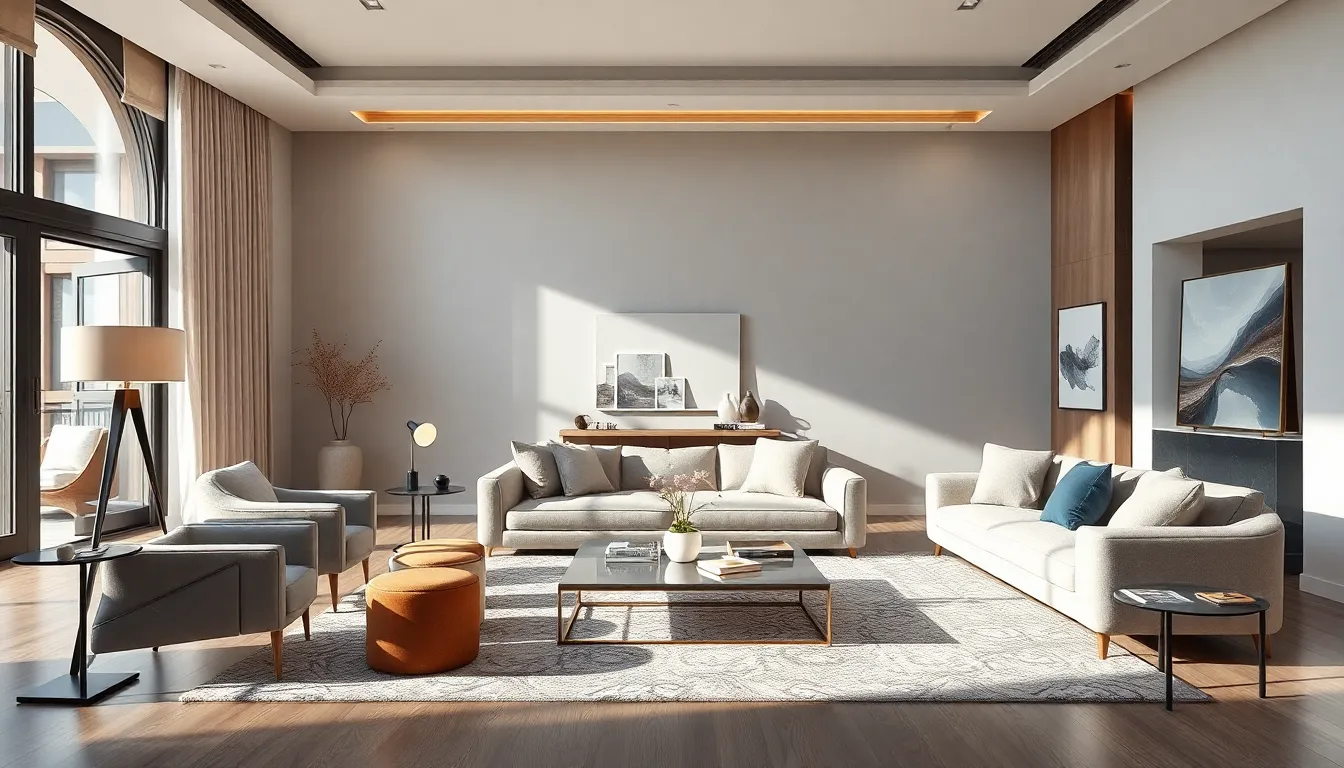
Before you shop, record the room’s length, width, ceiling height, door swings, and outlet positions. Leave at least 30–36 inches for main walkways. For a living room, keep the front legs of seating on the rug when possible; this simple move makes the layout feel connected rather than scattered. A sofa that looks elegant in a showroom can feel bulky at home, so scale matters more than label.
Choose one dominant style, then add small contrasts. These combinations tend to stay coherent:
- Warm modern: natural wood, low profiles, linen, and soft curves.
- Contemporary: clean lines, glass, metal, and restrained color.
- Mid-century inspired: tapered legs, walnut tones, compact forms, and textured fabrics.
- Modern rustic: visible grain, leather, stone, and practical silhouettes.
- Quiet luxury: balanced proportions, dense fabrics, subtle finishes, and fewer but better-chosen objects.
Material balance gives a room its character. Pair a smooth surface with something tactile: boucle beside walnut, brushed metal beside stone, or matte paint beside polished glass. Aim for two or three main materials, not a showroom full of samples. The same rule applies to color. Use a base shade for roughly 60 percent of the room, a secondary tone for 30 percent, and an accent for the remaining 10 percent. It is not a law, just a useful compass.
Think about daily life before choosing a finish. Homes with children, pets, or frequent guests need stain-resistant upholstery, rounded corners, and stable frames. A pale fabric may look wonderful, but a removable, washable cover can be the smarter designer choice. In a sunny Tulsa room, ask about fade resistance; direct light can quietly change fabric and wood tones over time.
Comfort should be tested, not guessed. Sit fully back, check whether your feet touch the floor, and notice if the seat pushes against your knees. For dining chairs, allow about 24 inches of table width per person. For coffee tables, leave roughly 16–18 inches between the table and sofa. These small measurements prevent a beautiful room from becoming awkward to use.
Finally, decide where to spend more. Put the largest share of the budget into pieces you touch every day, such as the sofa, mattress, dining chairs, and desk chair. Save on easily changed layers like side tables, lamps, and decorative objects. A dream space does not need one dramatic purchase. It needs a clear point of view, sensible proportions, and furniture that still feels right on an ordinary Tuesday.
Modern Sofas and Seating at Urban Furnishings
Urban Furnishings is a practical stop for homeowners who want seating to shape the room, not merely fill it. Its Tulsa showroom at 2312 E Admiral Blvd focuses on modern sofas and chairs, with Natuzzi Italia among the named collections. The store has served local shoppers for more than two decades and also works with lighting, art, and room planning.
When assessing a modern sofa, look beyond its silhouette. Check the frame, suspension, cushion filling, and fabric rating. A kiln-dried hardwood frame can offer better long-term stability than softwood or particleboard. High-resilience foam around 1.8–2.5 pounds per cubic foot is a useful benchmark for everyday seating, while feather or fiber wraps add softness but may need regular reshaping.
- For deep lounging: choose a seat depth of about 23–26 inches.
- For upright conversation: a depth near 20–22 inches often feels easier to use.
- For small rooms: select raised legs and slimmer arms to preserve visual space.
- For open-plan rooms: use a sectional or sofa-and-chair pairing to define the sitting zone.
- For busy households: ask about removable covers, cleanability codes, and replacement cushions.
Natuzzi Italia is associated with leather seating, so examine the hide rather than judging it only by color. Full-grain leather usually shows natural variation; corrected leather has a more uniform surface. Ask how the material will age, how it reacts to sunlight, and which cleaning products are safe. A sample viewed under showroom lights may look quite different beside a window at home.
Bring a floor plan, fabric samples, and photographs of the room. Measure elevators, stair turns, hallways, and door openings before placing an order. Delivery problems are rarely glamorous, and a perfect sofa is useless if it cannot reach the living room.
The store’s broader approach can help when seating, lighting, and artwork must work together. Ask for a simple furniture plan that shows viewing angles, lamp positions, and clearances. This is especially useful when a sofa will face a television, fireplace, or large window. The goal is balance: comfortable seats, clean circulation, and enough breathing room for the pieces to look intentional.
Custom Solid-Wood Pieces from Louis Alan Design Gallery
Louis Alan Design Gallery at 8421 E 61st S, Suite S, is a strong choice when a room needs the warmth and presence of solid wood. The gallery combines furniture and home accessories with an in-house workshop, allowing shoppers to explore pieces that feel less generic than mass-produced storage or bedroom furniture.
Custom work is most valuable when standard dimensions create a compromise. A made-to-order bed, console, dining table, or cabinet can be adjusted for wall length, mattress size, storage needs, and preferred height. Before requesting a quote, prepare the exact measurements and note practical details such as baseboards, vents, outlets, and door clearance. Small details here prevent expensive surprises later.
Ask the craftsperson specific questions about the wood and construction:
- Which species is used, and where was it sourced?
- Are panels edge-glued, or is veneer used in selected areas?
- What joinery supports the frame: mortise and tenon, dovetails, or dowels?
- Will the surface show knots, mineral streaks, or color variation?
- Which finish protects the piece, and how can it be repaired?
- What are the lead time, delivery terms, and inspection process?
Solid timber moves with changes in humidity. Tulsa homes can experience damp summers and dry, heated winters, so a stable indoor environment matters. Keep furniture away from direct heat vents, leave a little breathing room against exterior walls, and use coasters beneath drinks. Minor seasonal movement is normal; splitting, rocking, or persistent joint gaps deserve prompt attention.
For a modern look, request restrained detailing rather than excessive ornament. A clean slab front, a visible grain pattern, or a slim recessed pull can make substantial wood feel contemporary. Mixing one strong timber piece with painted walls, wool textiles, or smooth stone also keeps the room from becoming visually heavy.
Custom furniture costs more because design time, material selection, skilled labor, finishing, and delivery all enter the price. The investment makes the most sense for a high-use piece or an awkward space that standard furniture cannot solve. Review a drawing or sample before production begins, and confirm every dimension in writing. That little bit of paperwork is unglamorous, but it protects the result.
Complete Design Guidance at Luxe Furniture & Design
Luxe Furniture & Design, at 10545 S Memorial Dr, offers a useful middle ground between buying one item and planning an entire home. Its service combines furniture, interior design, and home staging, so the conversation can cover how rooms connect rather than treating each purchase as an isolated decision.
Bring a short project brief to the consultation. Include the rooms involved, the people who use them, your target budget, and any pieces you intend to keep. Add photos taken in daylight. This gives the designer a clear starting point and reduces guesswork about finishes, scale, and traffic flow.
- For a new home: begin with the rooms that control the layout, such as the living area, dining zone, and primary bedroom.
- For a renovation: identify what cannot change, including flooring, built-ins, windows, and electrical points.
- For a staged property: favor broad appeal, clear pathways, and fewer visual distractions.
- For a mixed budget: separate essential purchases from later additions before selecting products.
A strong design plan should show more than attractive furniture. Ask for a written scope that identifies product names, quantities, finishes, estimated delivery dates, design fees, and return conditions. Also confirm whether assembly, room placement, and removal of packaging are included. These details can change the real cost of a project.
Budget planning deserves plain numbers. Reserve a contingency of about 10–15 percent for delivery changes, replacement items, installation needs, or last-minute adjustments. If several rooms are involved, divide the budget by function instead of splitting it evenly. A high-use family room may deserve more funding than a rarely used formal area.
Staging calls for a different test than personal decorating. A staged room should show purpose within seconds: a dining table looks ready for meals, a bedroom feels restful, and a hallway remains easy to cross. Personal collections, oversized objects, and furniture that blocks windows may need to leave, even if they matter to the owner.
Use the consultation to build a decision trail. Keep approved samples, measurements, invoices, and delivery notes in one folder. That may sound fussy, but it makes revisions much easier when a finish is discontinued or a room plan changes. The result should feel personal, coordinated, and practical—not copied from a showroom.
Modern Home Collections at west elm
west elm, located at 1926 Utica Square in Tulsa, focuses on contemporary furniture and home accessories. Its range can help create a coordinated look across several rooms, from occasional furniture to decorative details such as candles and room sprays.
The useful distinction here is between a collection look and a fully matched room. Repeating the same finish everywhere can make a home feel flat. Instead, select one shared element—such as warm wood, black metal, or a muted textile—and vary the shapes around it. This keeps the space connected without making it look like a catalog page.
- Living areas: pair a clean-lined table with varied seating textures and one sculptural object.
- Dining spaces: balance a visually light table with chairs that provide enough back support for long meals.
- Bedrooms: combine a simple bed frame with layered textiles and storage that keeps surfaces calm.
- Entryways: use a narrow console, mirror, and a small tray for keys rather than overcrowding the passage.
Pay close attention to construction details during a showroom visit. Open and close drawers, inspect the underside of tables, and check whether shelves are adjustable. For upholstered pieces, look at seam alignment and cushion recovery after sitting. Product photography often hides these details; your hands will not.
Finishes also deserve a closer look. Wood tones may range from pale and sandy to deep and smoky, while painted surfaces can show subtle differences between batches. Take home a physical sample when possible and view it during morning, afternoon, and evening light. Artificial lighting can make cool gray appear warmer, or make beige look unexpectedly yellow.
Accessories are most effective when they perform a small visual job. A mirror can reflect daylight, a low bowl can organize loose items, and a textured throw can soften a hard-edged chair. Candles and room sprays add atmosphere, but fragrance should remain restrained in shared spaces. Strong scent is personal; not everyone wants the room to announce itself.
Public review scores can offer context, yet a small number of reviews rarely predicts your exact experience. Treat them as one signal. Inspect the furniture in person, confirm stock and delivery timing, and read the current warranty and return terms before ordering. A polished collection is appealing, but the final test is whether each piece earns its place in your house.
Finding the Right Bed and Mattress at Denver Mattress
Denver Mattress at 1750 S Sheridan Rd is the most focused option in this Tulsa shortlist for building a better sleep setup. Its 5.0/5 Yelp rating comes from six reviews, so treat that score as a useful signal, not a guarantee. The store centers on mattresses and beds, which makes it easier to compare support systems without wading through a broad furniture floor.
Do not choose by firmness alone. A mattress must support your body while keeping your spine in a neutral position. Side sleepers often need enough cushioning at the shoulders and hips. Back sleepers usually benefit from even support beneath the waist and pelvis. Stomach sleepers may prefer a firmer surface that limits the hips from sinking too far.
- Memory foam: reduces motion transfer and cushions pressure points, but some sleepers find it warmer.
- Latex: feels springy, responds quickly, and often allows easier movement.
- Innerspring: offers airflow and a more buoyant feel; coil design affects support and noise.
- Hybrid: combines coils with foam or latex, often balancing ventilation, response, and pressure relief.
Test a mattress for at least 10–15 minutes in your usual sleep position. Wear comfortable clothing, remove bulky coats, and try turning from one side to the other. If your partner will share the bed, test it together. Pay attention to edge support, movement across the surface, and whether one person feels every shift. A quick sit on the edge tells you very little.
Bed height changes more than appearance. Add the mattress thickness to the frame height and check whether you can sit down with your knees near a right angle. A very tall combination may look grand but feel awkward for shorter sleepers. Leave space for drawers, cleaning, and air circulation beneath the frame.
Before buying, ask for the trial period, return fee, warranty exclusions, foundation requirements, and delivery terms in writing. Mattress warranties often cover manufacturing defects, not normal softening or comfort preferences. Also confirm whether an adjustable base, platform, or box foundation is required. The wrong base can affect both feel and warranty coverage.
Bring information about your current mattress, typical sleep position, allergies, and temperature preferences. A clear conversation is more useful than chasing the highest review score. The right choice should support consistent rest, fit the room’s dimensions, and leave enough budget for suitable pillows and protectors.
Adding Lighting, Art, and Accessories to Your Space
Lighting, art, and accessories give a furnished room its final layer of meaning. They can guide the eye, mark a focal point, and make a large space feel more intimate. The trick is to create hierarchy. If everything demands attention, nothing feels special.
Build the lighting plan around three functions:
- Ambient light: provides the room’s general brightness through ceiling fixtures, wall lights, or diffuse lamps.
- Task light: supports reading, cooking, working, or dressing with focused illumination.
- Accent light: highlights artwork, shelving, plants, or architectural features.
Use warm bulbs in living and sleeping areas, often around 2700K to 3000K. A cooler range near 3500K can suit a home office or utility space, though personal preference matters. Dimmers are worth adding where possible. They let one room shift from energetic in the afternoon to quiet at night without changing the furniture.
Place wall art by its visual relationship to nearby objects, not only by the empty wall. Artwork above a console usually looks more settled when its center sits close to eye level. Over a sofa, leave roughly 6–10 inches between the frame and the upholstery. For a gallery wall, keep the gaps consistent and arrange the pieces on the floor first. A paper template saves a surprising amount of wall damage.
Scale matters more than the price of a decorative object. One large artwork can give a blank wall more force than six tiny prints. On a shelf, mix vertical, horizontal, and organic forms. Leave open space between groups so the arrangement can breathe. Odd numbers often feel relaxed, but proportion is the real rule.
Mirrors need careful placement. A mirror opposite a window can spread daylight, while one facing a cluttered corner simply doubles the mess. Avoid positioning reflective surfaces where they create glare on a television or send headlights into a bedroom at night.
Choose accessories that relate to the people who live there: a ceramic vessel from a local maker, a framed map, collected books, or a textile with a memorable pattern. Personal objects prevent a designer room from feeling anonymous. Rotate seasonal pieces instead of adding more and more; otherwise the room becomes a storage unit wearing perfume.
Before final installation, view the space from its main entrances and from seated eye level. Check shadows, glare, cable visibility, and whether artwork competes with the room’s strongest feature. Small adjustments—raising a lamp, lowering a picture, or removing one object—often create the polished finish that expensive furniture alone cannot deliver.
Comparing Local Furniture Stores by Reviews and Distance
Reviews and distance answer different questions. A rating hints at customer satisfaction, while mileage affects travel time, delivery coordination, and the ease of returning for a second visit. Use both signals, but do not treat either one as a final verdict.
The review counts in this local search are small. A 5.0/5 score based on one review has far less evidence behind it than a 3.9/5 score based on 30 reviews. Look for repeated themes instead of chasing the highest number. Comments about delivery, product quality, staff knowledge, damage, and problem solving are more useful than vague praise.
- 2.7 miles: Louis Alan Design Gallery is the closest highlighted option and may suit shoppers who want a nearby visit for custom or solid-wood work.
- 3.1 miles: west elm is also close, making an in-person look at contemporary collections relatively convenient.
- 3.9 miles: Nordstrom Rack has the largest review count among the named non-specialist options, but its home selection is broader and less focused.
- 4.4 miles: Urban Furnishings offers a manageable trip for shoppers comparing modern seating.
- 4.9 miles: Denver Mattress is within a similar range for a dedicated mattress visit.
- 6.8 miles: Luxe Furniture & Design requires a longer drive, but its combined furniture and design service may justify the extra time.
- 9–10.1 miles: Macy’s, Bob Mills Furniture, and other larger retailers make more sense when variety or a single broad shopping trip matters.
Distance becomes especially important for large purchases. Before driving across Tulsa, call to confirm showroom stock, floor samples, appointment needs, and current opening hours. A listing may show a store location, but not whether the exact sofa, bed, or finish is available to view.
Separate the shopping trip from the delivery decision. A nearby store is not automatically cheaper to deliver from, and a distant retailer may use a regional delivery network. Request the full delivered price, including stairs, assembly, haul-away, taxes, and possible storage charges.
For a fair comparison, create a short scorecard. Give each store a rating from one to five for product fit, evidence from reviews, travel effort, service clarity, and total cost. Weight the category that matters most to your project. Someone buying a custom table may value craftsmanship; someone replacing a mattress may value trial terms and delivery more.
Review platforms change over time, so check the business profile shortly before visiting and read recent comments first. Yelp is useful for customer signals, while the retailer’s own website is better for addresses, services, and stock policies. Used together, these sources can turn a quick search into a more dependable buying plan.
Shopping Tips for Quality, Budget, and Personal Service
Set a complete spending limit before you fall in love with a single piece. Include the item price, sales tax, delivery, assembly, protection plans, and any required accessories. A useful reserve is 10 percent for small surprises, such as replacement hardware or an unexpected delivery charge.
Compare value, not only the ticket price. A low-cost cabinet may need replacement sooner, while a better-built piece can remain useful through several moves. Ask about frame materials, hardware, load limits, fabric performance, and repair options. If the salesperson cannot explain how the item is made, pause before paying.
- Inspect hidden areas: check drawer runners, cabinet backs, underside panels, and corner joints.
- Test moving parts: open doors and drawers several times; listen for rubbing, wobbling, or uneven motion.
- Request material details: confirm whether a surface is solid wood, veneer, laminate, engineered board, leather, or synthetic upholstery.
- Calculate the full cost: include delivery, setup, removal of old furniture, and possible storage fees.
- Read the paperwork: review warranty limits, cancellations, deposits, return rules, and damage reporting deadlines.
Personal service has a measurable value when a purchase is complex. Ask who will handle questions after the sale, whether one person manages the order, and how delays are communicated. A clear answer is reassuring. Vague promises are a yellow flag, even when the showroom feels impressive.
For custom or special-order furniture, request a written specification before production. It should list dimensions, finish, fabric, quantity, price, deposit, estimated completion date, and approval points. Do not rely on a sample alone. Natural timber and textiles vary, and the final piece may have small differences from the display model.
Negotiate with care. Instead of demanding a lower price, ask whether the store can adjust delivery, include assembly, offer a floor model, or provide a different finish at the same cost. These options may create more value without weakening the product or the maker’s work.
Buy in stages when the budget is tight. Complete one functional zone first, live with it for a few weeks, then assess what the room truly lacks. This prevents rushed purchases and leaves room for better decisions. Actually, a partly finished room with one excellent anchor often feels more intentional than a fully decorated room filled with compromises.
Keep receipts, photographs of the delivered condition, care instructions, and order confirmations. Report defects promptly and follow the retailer’s stated process. Good records protect your purchase and make service conversations much simpler.
Fazit: Build Your Dream Space with the Right Tulsa Furniture Store
The right Tulsa furniture store should match the job you need done, not simply offer the highest rating. Choose a specialist for a focused purchase, a design-led retailer for several connected rooms, or a workshop when the room demands a piece that standard sizes cannot provide.
- For a whole-home project: start with Luxe Furniture & Design and ask for a clear service scope.
- For contemporary seating: compare the comfort, materials, and order terms at Urban Furnishings.
- For a distinctive timber statement: discuss a tailored piece with Louis Alan Design Gallery.
- For a coordinated modern collection: inspect west elm items in person before ordering.
- For sleep equipment: make Denver Mattress the dedicated stop rather than treating a mattress as a simple furniture add-on.
One further point matters: confirm each retailer’s current inventory, hours, delivery area, and policies before visiting. Store listings and review counts can change, and a showroom display does not prove that the same item is ready for immediate delivery. The practical winner is the shop that can meet your timeline, room requirements, and service expectations in writing.
Use a simple final test. Can the store explain what you are buying, how it will arrive, what happens if it is damaged, and who will help after payment? If the answer is clear, you are close to a sound decision. If it is vague, keep looking—there is no prize for rushing a purchase that will shape your home for years.
A dream space is built through a sequence of deliberate choices: one suitable retailer, one well-understood order, and one room at a time. In Tulsa, the available options cover custom craftsmanship, modern seating, complete design support, broad collections, and specialist sleep products. Match the store’s strength to your immediate need, then let comfort, construction, and dependable service—not showroom excitement alone—decide the final piece.
FAQs About Choosing Designer Furniture for Your Home
How do I choose the right designer furniture style for my home?
Start with the atmosphere you want to create, then choose one dominant style, such as warm modern, contemporary, mid-century inspired, modern rustic, or quiet luxury. Support the look with complementary materials, colors, proportions, and textures rather than mixing too many competing styles.
What should I consider before buying designer furniture?
Measure the room, ceiling height, doorways, outlets, and walkways before shopping. Also consider the furniture’s scale, construction, materials, maintenance requirements, comfort, delivery access, warranty, and total cost, including assembly and delivery fees.
Where can I find modern sofas and seating in Tulsa?
Urban Furnishings at 2312 E Admiral Blvd specializes in modern sofas and seating, including Natuzzi Italia collections. The store also offers support with lighting, art, and room planning, making it a practical option for creating a coordinated living area.
Which Tulsa furniture store is best for custom solid-wood furniture?
Louis Alan Design Gallery at 8421 E 61st S, Suite S, offers solid-wood furniture and custom work through its in-house workshop. Customers can discuss tailored dimensions, wood species, finishes, joinery, lead times, and delivery requirements for pieces such as beds, tables, consoles, and cabinets.
How can I create a designer-looking room on a realistic budget?
Invest most of the budget in high-use pieces such as the sofa, mattress, dining chairs, and desk chair. Save on easily replaceable items like side tables, lamps, and accessories. Buy in stages, compare full delivered costs, and reserve about 10 percent for unexpected expenses.