
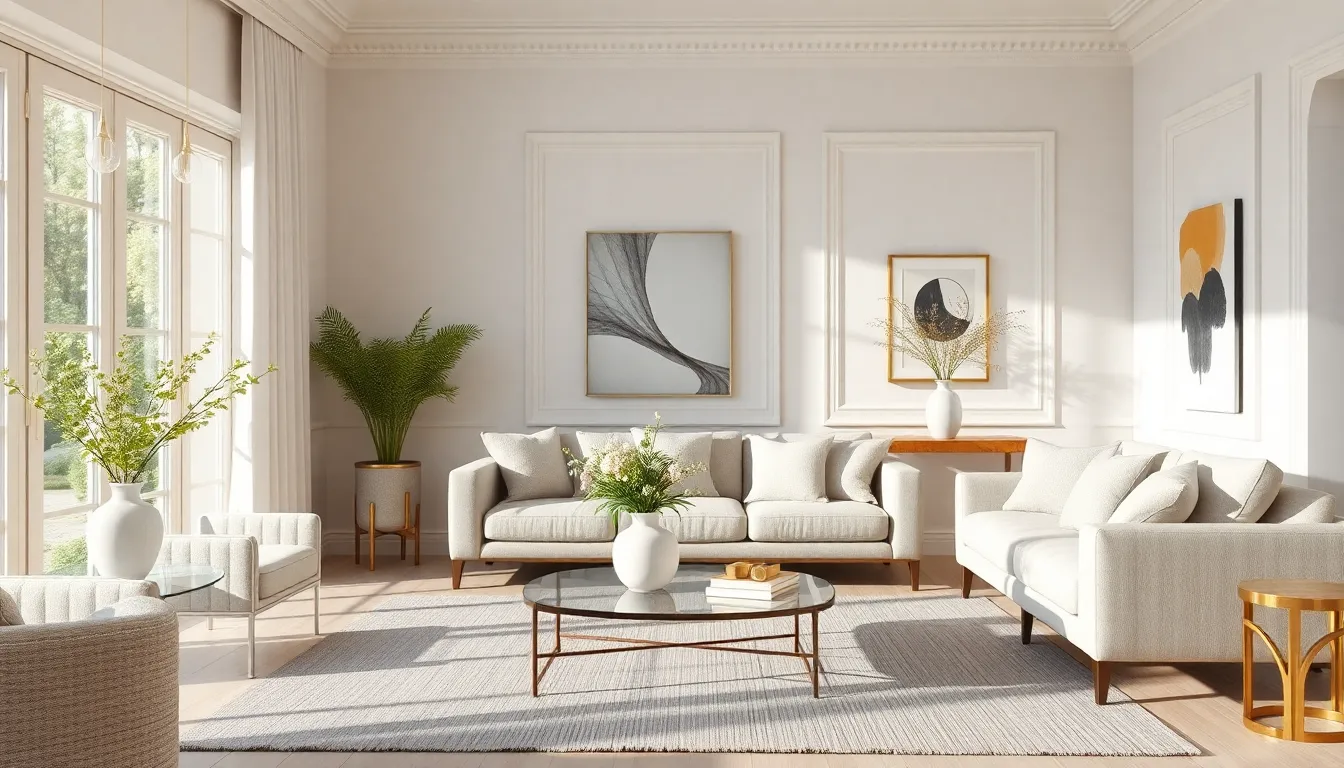
Table of Contents:
Create a Luxurious Spring Color Palette
A luxurious spring palette feels layered, not loud. Start with one calm base, add a soft secondary shade, then finish with a small number of rich accents. This approach keeps the room polished while still capturing the fresh energy of the season.
Try warm ivory, chalk white, or pale stone as the foundation. These tones reflect daylight and give decorative pieces room to breathe. Add one refined mid-tone, such as dusty sage, powder blue, or muted apricot. For depth, bring in accents of oxblood, aubergine, or aged brass. Used sparingly, darker notes make pale spring colors look more expensive.
For a balanced scheme, follow the 60–30–10 rule: use the main neutral across roughly 60 percent of the room, a supporting color across 30 percent, and a bold accent across the final 10 percent. The ratio is a useful guide, not a rigid formula. In a small room, even a few colored details can shift the mood.
- Soft and luminous: ivory, blush beige, sage, and brushed brass
- Fresh and tailored: warm white, mineral blue, olive, and dark walnut
- Romantic but grown-up: mushroom, dusty rose, plum, and antique gold
- Bright with restraint: pearl white, pale aqua, celadon, and coral
Check each color in morning, afternoon, and evening light before committing to paint or large furnishings. North-facing rooms often need warmer undertones, while sunny rooms can handle cooler shades. Also inspect the color beside your flooring and metal finishes; a blue that looks crisp on a sample card may appear icy beside gray stone.
Keep the palette consistent from room to room, but change the emphasis. Let the entryway introduce the accent color, use the living area for layered tones, and keep the bedroom quieter. The result feels intentional rather than decorated all at once.
Bring Fresh Flowers and Branches Indoors
Choose cut flowers and branches that suit the room’s scale, then give them a vessel with equal presence. A tall arrangement can anchor an empty corner, while a low bowl works better on a dining table where sightlines matter. The goal is not to fill every surface. One carefully placed arrangement often feels far more luxurious than scattered stems.
For lasting displays, combine flowers with different stem lengths and textures. Pair open blooms with unopened buds, slender branches, and a little foliage. Flowering quince, pussy willow, magnolia, and dogwood branches create height and sculptural movement. Snapdragons, ranunculus, anemones, and sweet peas add softer detail below. Cut the stems at an angle and remove any leaves that would sit beneath the waterline.
- Entryway: Use a narrow ceramic vessel with flowering branches to create height without blocking the passage.
- Dining area: Arrange low stems in several small bottles so guests can see across the table.
- Bedroom: Keep the display delicate, with a few fragrant stems in a compact glass vase.
- Bathroom: Choose moisture-tolerant greenery and a sealed vessel for a crisp, spa-like touch.
Clean water matters more than many people think. Wash the vase before use, trim the stems with a sharp blade, and refresh the water every two days. Keep flowers away from radiators, hot windowsills, and ripening fruit, which releases ethylene gas and can shorten their life. If pets share your home, check each plant with a veterinary or botanical reference first; lilies, for example, are highly dangerous to cats.
For a more opulent effect, let the container echo one architectural detail in the room, such as a bronze handle, marble surface, or dark wood frame. A hand-thrown vessel with a slightly irregular rim can look especially beautiful beside precise furniture. It is a small contrast, but it gives the display character rather than showroom stiffness.
Design a Sophisticated Spring Living Room
Build the room around comfort, proportion, and quiet detail. A sophisticated living room should feel ready for long conversations, not arranged like a display window. Begin by leaving clear walking paths of about 75 cm around major furniture. This simple measure makes the room feel calmer and more generous.
Place the sofa so it faces the room’s strongest architectural feature, such as a fireplace, built-in shelving, or a large window. Avoid pushing every piece against the wall. Even a small gap behind a sofa can create a more deliberate layout. Add one or two compact side tables, then vary their heights to give the arrangement a natural rhythm.
Use lighting in layers rather than relying on one ceiling fixture. A floor lamp beside a reading chair, a shaded table lamp, and discreet wall lighting can create separate pools of warmth. Choose bulbs between 2,700 and 3,000 Kelvin for a soft evening glow. Dimmers are worth fitting, especially in rooms used for both daytime gatherings and night-time relaxation.
- Anchor: Define the seating zone with a rug large enough for at least the front legs of each main chair or sofa to rest on it.
- Balance: Pair a visually heavy sofa with an open-leg table, a slim cabinet, or a lighter occasional chair.
- Scale: Hang artwork so its center sits close to eye level, usually around 145 to 155 cm from the floor.
- Breathing room: Leave some shelves and tabletops partly empty; restraint makes selected objects feel more valuable.
Introduce luxury through touch and craftsmanship. A hand-finished wood table, a wool throw, a honed stone tray, or a pleated lampshade adds sensory depth without visual clutter. Look for solid joinery, washable finishes, and fabrics with a clear fiber content. These details matter more than a high price tag.
Finish with one memorable focal point: a sculptural mirror, an heirloom chair, or a finely framed print. Keep nearby objects quieter so the feature can hold attention. The best spring living rooms feel fresh because they are edited, comfortable, and unmistakably personal.
Add Floral Accents to the Kitchen
Give the kitchen a floral note without placing fragile stems beside heat, steam, or food preparation. The most successful accents work as part of the kitchen’s working rhythm. Think of the shelf above a breakfast nook, the end of an open cabinet, or a small ledge near the dining area.
Use botanical detail in practical forms. A small framed herb illustration, a floral serving board, or a hand-painted tile can add pattern while staying easy to clean. For open shelving, group two or three useful pieces with one decorative item. This keeps the display refined and prevents dust from taking over the scene.
- Herb corner: Grow thyme, chives, mint, or rosemary in matching pots near a bright window.
- Cabinet detail: Line the back of one glass-front cabinet with removable botanical paper.
- Table setting: Use floral napkin rings or a small bud vase at each place setting.
- Island styling: Place a shallow tray with citrus, wooden utensils, and one decorative botanical object at the center.
Choose food-safe materials for anything that touches ingredients. Unglazed porous pottery can absorb oils and stains, while sealed stone and glazed ceramic are easier to maintain. Keep loose petals, soil, and plant fertilizer away from chopping boards and serving areas. A beautiful kitchen still needs sensible hygiene.
Fresh herbs offer both scent and function, but each plant has different needs. Mint spreads quickly, basil prefers warmth, and rosemary dislikes constantly wet soil. Use pots with drainage holes and place a saucer beneath them to protect the worktop. Rotate the containers every few days so growth stays even.
For a subtle seasonal change, replace only one kitchen detail: a fruit bowl, tea towel, pendant shade, or set of cabinet handles. A botanical motif repeated once in a nearby object can link the area together without making the kitchen feel themed. Small, useful, and just a bit charming—that is the sweet spot.
Layer Elegant Spring Cushions and Textiles
Layer cushions and textiles by contrast, not by quantity. Pair a smooth cover with a nubby weave, a fine stripe with a larger-scale motif, or a crisp edge with a relaxed shape. This creates depth without making the room look busy. A useful mix includes three textures and no more than two dominant patterns in one seating area.
Pay attention to insert quality. Feather-and-down fills give a softer, fuller profile, while recycled polyester keeps its shape and suits homes that need easy care. Choose an insert about 5 cm larger than the cover on each side for a plump finish. For a neater look, select the same size as the cover.
- Square cushions: Use 50–55 cm covers to support the back of a sofa.
- Lumbar cushions: Choose a 30 × 50 cm shape for a chair or the front of a layered arrangement.
- Bolsters: Place one narrow bolster at the center for a tailored, boutique-hotel feel.
- Throws: Fold one across an arm or seat corner instead of spreading it over the entire sofa.
Fabric performance matters in daily life. Cotton percale feels crisp, linen softens with use, and velvet adds depth but can show pressure marks. For busy households, look for removable covers, a Martindale rating of at least 20,000 double rubs, and care instructions that match your routine. Never assume a “natural” fabric is automatically stain-proof.
Use trim as a quiet luxury detail. Piping sharpens a cushion edge, while a narrow border can frame a plain textile. Keep the trim close in tone to the fabric if you want subtle elegance; choose a darker thread for a more tailored effect. The seam can do a lot of the talking.
Refresh the arrangement as the season changes by storing only the covers, not every insert. A labelled drawer or breathable cotton bag prevents creasing and makes the next change quick. Before storing, wash textiles according to the care label and let them dry fully to avoid trapped moisture.
Use Wallpaper, Patterns, and Art with Restraint
Use pattern as an architectural tool, not as background noise. A single patterned wall can define a dining nook, reading corner, or short hallway without demanding a full-room makeover. Choose a surface that already has a clear boundary, such as the wall behind a console or the recess inside a bookcase.
Scale is the key decision. Large motifs suit generous walls and open rooms because they remain readable from a distance. Smaller repeats work well in compact spaces, but they can look fussy when placed beside many small objects. Before ordering, tape a sample to the wall and view it from the doorway, not only up close.
Art needs breathing room. Hang one substantial piece above a cabinet rather than filling the entire wall with small frames. For a salon-style grouping, keep the outer edges aligned and leave roughly 5 to 8 cm between frames. A consistent frame finish can unite different subjects without making the display feel too matched.
- Choose one visual lead: Let either the wallpaper, artwork, or a patterned surface carry the strongest motif.
- Repeat one quiet detail: Echo a line, shape, or minor tone once elsewhere in the room.
- Protect sightlines: Keep busy designs away from doors, switches, and areas already crowded with furniture.
- Test the finish: Matte surfaces soften glare, while washable vinyl-coated papers suit high-contact areas.
For a temporary update, use removable paper on a framed panel or the back of a cabinet. This creates a decorative moment without committing to permanent adhesive. In rented homes, check the manufacturer’s removal instructions and test a hidden patch first; paint and plaster do not always behave politely.
Use artwork to introduce an unexpected pause. A botanical drawing is an obvious choice, but a still life of fruit, a textile fragment, or a small architectural study can feel more collected. Keep the subject personal and the arrangement edited. Luxury often comes from knowing when to stop.
Refresh Furniture with Color and Fine Fabrics
Give an old piece a spring update through its finish, shape, or upholstery rather than replacing it. A painted console, re-covered dining chair, or newly waxed sideboard can change the character of a room while preserving useful structure. This is often the smarter luxury: fewer items, better chosen.
Before painting, identify the material and existing coating. Sanded solid wood usually accepts water-based furniture paint well, while veneer needs a gentle keying coat to prevent damage. Clean the surface, repair loose joints, apply a suitable primer, and build color with two thin coats. Allow each layer to cure fully; rushing this part leads to chips and fingerprints.
- Dining chairs: Replace worn seat fabric with a durable cotton-linen blend or a patterned upholstery textile.
- Wooden cabinets: Use a low-sheen finish to soften reflections and make small flaws less visible.
- Metal tables: Remove rust, use a metal primer, and choose a coating rated for the intended indoor use.
- Drawer fronts: Change pulls only after measuring the existing hole spacing; common centers include 96 and 128 mm.
For upholstery, calculate the fabric before cutting. Measure the widest part of every panel, add pattern-repeat allowance, and include at least 10 cm extra on each edge for fastening. A professional upholsterer is worthwhile for sprung seats, antique frames, and pieces with complex curves. A simple removable seat pad, though, is a friendly weekend project.
Choose finishes by touch as well as appearance. Chalky matte paint feels relaxed, satin enamel is easier to wipe, and natural oil can reveal the grain of timber. Avoid coating valuable antique surfaces without advice, since the original finish may contribute to both character and resale value.
Keep the transformation focused. One newly upholstered armchair or one painted cabinet can supply enough change for the season. Let the rest of the piece remain visible: good proportions, carved details, and honest wear are part of its story.
Create Stylish Spring Displays and Vignettes
Build a spring vignette around one clear idea, then give each object enough space to be noticed. A small arrangement works best when it has a focal piece, a supporting object, and one quiet detail. This simple three-part structure prevents a shelf or console from turning into a jumble.
Vary height and shape to create movement. Place a rounded bowl beside a narrow candlestick, or set a small box in front of a taller frame. Odd numbers often look relaxed, but proportion matters more than counting. Keep the tallest item near the back and the smallest piece toward the front so the display reads easily from across the room.
- Entry console: Combine a shallow tray, a sculptural object, and a small stack of design books.
- Open shelf: Leave one section empty, then use a leaning frame or a single collected object in the next.
- Mantel or ledge: Arrange pieces along an invisible center line, with the heaviest form slightly off-center.
- Sideboard: Use a broad, low composition rather than several isolated items.
Give the display a practical boundary. A tray, shallow dish, or linen-covered box can visually group small pieces and makes dusting easier. Choose a tray that leaves at least 5 cm of visible surface around the objects. That margin creates polish and keeps the arrangement from looking cramped.
Mix old and new with intention. A vintage brass object can sit beside a modern stone form, while a handmade paper ornament adds a softer note. Avoid collecting items only because they match the season. Pieces with a personal story usually make the display feel richer than themed accessories bought in one trip.
Review the vignette from several angles and remove anything that competes with the focal object. Photographing it can reveal awkward gaps that are easy to miss in person. Refresh one element every few weeks rather than rebuilding the entire display; the room stays lively, and the arrangement never feels frozen.
Make Easy DIY Spring Decor
Turn simple materials into personal spring accents with projects that take an hour or less. The best DIY pieces are useful, easy to repair, and made from items you already own. Before starting, protect the work surface, measure twice, and let adhesives or finishes cure for the full time stated on the label.
- Pressed-botanical frames: Place fully dry leaves or small petals between sheets of absorbent paper. Press them under a heavy book for one to two weeks, then mount them on acid-free card inside a slim frame.
- Hand-painted candle holders: Clean plain wooden or ceramic holders, mark a simple border with painter’s tape, and use a water-based craft paint. Remove the tape while the paint is slightly soft for a sharper edge.
- Paper garland: Cut leaves from heavyweight paper, score a central vein, and attach them to linen cord with small clips. Store the garland flat so it can return next spring without creases.
- Decorative glass cloches: Place a miniature object, old key, or dried seed head beneath a glass dome. Add a felt pad underneath to protect delicate surfaces.
For a polished result, limit each project to two or three materials. Natural cord, heavyweight paper, and one metal detail can look more considered than a crowded mix of glitter, ribbon, and plastic. Slight irregularities are welcome; handmade does not need to look factory-perfect.
Use low-VOC, water-based products indoors where possible, and keep solvents, blades, and hot glue away from children and pets. Never place paper, dried botanicals, or fabric close to an open flame. LED candle inserts are a safer choice for enclosed lanterns and small decorative scenes.
Plan each DIY by its afterlife. Choose removable hooks for wall pieces, washable covers for fabric projects, and recyclable paper instead of laminated stock. When spring ends, dismantle the decoration and reuse the components. A clever project should leave behind charm, not a cupboard full of clutter.
Extend Luxury to the Patio, Garden, or Balcony
Extend the home’s refined mood outdoors by treating the patio, garden, or balcony as a real living area. Start with its function: dining, reading, morning coffee, or evening drinks. This decision determines the right furniture, lighting, and storage, so the space feels designed rather than filled.
Choose outdoor furniture for its construction, not only its appearance. Powder-coated aluminum is light and resists rust, teak handles changing weather well when maintained, and galvanized steel offers strength with a more industrial character. Check seat height, table clearance, and door access before buying. A beautiful chair that cannot pass through the hallway is a slightly expensive sculpture.
- For a balcony: Select foldable or stackable pieces, then use vertical planters to preserve floor space.
- For a small terrace: Choose a round table with a central pedestal, which gives chairs more legroom.
- For a garden: Create a defined seating zone with a weather-resistant outdoor rug or a change in paving.
- For evening use: Install warm, shielded lighting and place it at several heights to reduce harsh glare.
Outdoor lighting should be both beautiful and safe. Use products rated for exterior conditions, such as IP44 for sheltered areas and higher protection where rain can reach the fitting directly. Keep cables away from walking routes, and ask a qualified electrician to install permanent connections. Solar lanterns work well for soft accents, though their brightness depends on daylight and battery quality.
Make comfort last through changing weather. Select solution-dyed acrylic for cushions that face strong sun, store removable covers in a ventilated box, and allow wet fabric to dry fully before packing it away. Furniture covers should breathe; completely sealed plastic can trap condensation and encourage mildew.
Add one distinctive detail that gives the outdoor area a sense of occasion: a slender drinks trolley, a weatherproof ceramic side table, or a compact fire bowl where local rules allow it. Keep flame appliances on stable, non-combustible surfaces and follow clearance instructions. A restrained setup feels more luxurious than a patio crowded with accessories.
Finally, design for maintenance. Leave access around planters, choose washable surfaces, and reserve a dry place for delicate objects. When care is easy, the outdoor room stays inviting throughout spring instead of looking splendid for one weekend only.
Connect Indoor and Outdoor Spaces
Create a visual link between inside and outside by repeating structure, not by copying every detail. Align a doorway, window, or glazed wall with a clear outdoor feature such as a planter, sculpture, or seating point. This draws the eye outward and makes both areas feel more generous.
Use the same design language in small doses. A similar wood tone, metal finish, or geometric shape can appear on both sides of the threshold. Keep outdoor materials weatherproof and indoor materials protected; the connection should look natural, not forced.
- Frame the view: Place tall, narrow elements at the edges of a window or door so the central sightline stays open.
- Repeat rhythm: Match the spacing of planters or paving joints with nearby interior lines, such as shelving or floorboards.
- Choose a threshold: Use a flush transition where possible, or select a slim, low-profile strip that does not interrupt movement.
- Control glare: Add adjustable shading so reflections do not erase the view from inside.
Flooring deserves careful attention. Indoor wood should not be carried directly into an exposed area unless the material is rated for outdoor use. Instead, choose related tones or a shared directional pattern. In wet climates, provide drainage and maintain a small fall away from the building so rainwater cannot collect at the threshold.
Make the connection practical with dual-purpose storage. A narrow bench near the door can hold shoes, gardening gloves, or a tray of outdoor essentials. Add a washable mat inside and a scraper mat outside to reduce soil and moisture entering the home. It protects the whole design.
Consider temperature and privacy as part of the visual plan. Exterior shutters, trellis screens, or deciduous planting can soften summer glare while allowing winter light through. Where building changes affect structure, drainage, or shared property, check local planning rules before work begins.
A successful transition should feel effortless when you move through it. Keep door swings clear, avoid sudden changes in floor level, and test the route with baskets or serving trays. When the path works in real life, the indoor-outdoor relationship becomes more than a pretty view; it becomes part of how the home is used.
Conclusion: Welcome Spring with Thoughtful Luxury
Thoughtful luxury is less about adding more and more about choosing with care. A spring home feels finished when every detail supports daily life, from a durable surface that ages well to a display that carries a personal memory. The result should feel generous, calm, and lived in—not staged for a single photograph.
Before the season ends, review each change with three questions: Does it improve the room’s function? Will it last beyond one spring? Can it be repaired, stored, or reused? These questions reduce waste and help separate lasting style from quick novelty. A smaller number of well-made pieces often creates the strongest impression.
- Keep: objects with craftsmanship, meaning, or proven daily use.
- Adapt: pieces that need a new location, finish, or purpose.
- Release: items that create clutter, need constant care, or no longer suit the home.
- Record: note paint colors, fabric sources, plant names, and care dates for easier seasonal planning.
Luxury also includes responsible choices. Favor repairable furniture, certified timber where possible, durable finishes, and local makers who can explain materials and construction. For plants, select species suited to the light, temperature, and water available in your home. Beauty lasts longer when the conditions are right.
Let spring arrive in a measured way. Make one useful change, live with it for a few days, then decide what the room still needs. This slower rhythm leaves space for surprise and keeps the design unmistakably yours. The finest seasonal interiors do not shout; they welcome light, comfort, and the pleasure of coming home.
Luxurious Spring Decor: Frequently Asked Questions
How can I create a luxurious spring color palette?
Start with a calm foundation such as warm ivory, chalk white, or pale stone. Add a refined secondary shade like dusty sage, powder blue, or muted apricot, then introduce rich accents such as aged brass, aubergine, or oxblood in small amounts. The 60–30–10 rule can help balance the colors.
Which flowers and branches work well for elegant spring arrangements?
Flowering quince, pussy willow, magnolia, and dogwood branches add height and sculptural movement. Ranunculus, anemones, snapdragons, and sweet peas provide softer detail. Choose arrangements that suit the room’s scale and use a vessel with enough presence to balance the display.
How can I make a living room feel luxurious for spring?
Focus on comfortable proportions, clear walking paths, layered lighting, and carefully selected materials. Add tactile details such as a wool throw, honed stone tray, hand-finished wood, or a pleated lampshade. Complete the room with one memorable focal point, such as a sculptural mirror or finely framed print.
What are tasteful ways to add floral accents to a kitchen?
Use practical botanical details such as framed herb illustrations, floral serving boards, hand-painted tiles, or small herb pots. Keep decorative pieces away from heat and food preparation areas, choose food-safe materials, and group useful kitchen items with one carefully selected floral accent.
How can I extend luxurious spring decor to an outdoor space?
Treat the patio, balcony, or garden as an outdoor living room. Choose durable furniture, weather-resistant textiles, warm exterior lighting, and a few distinctive accessories. Connect the outdoor area with the interior through repeated wood tones, metal finishes, shapes, or colors while keeping maintenance and storage in mind.