
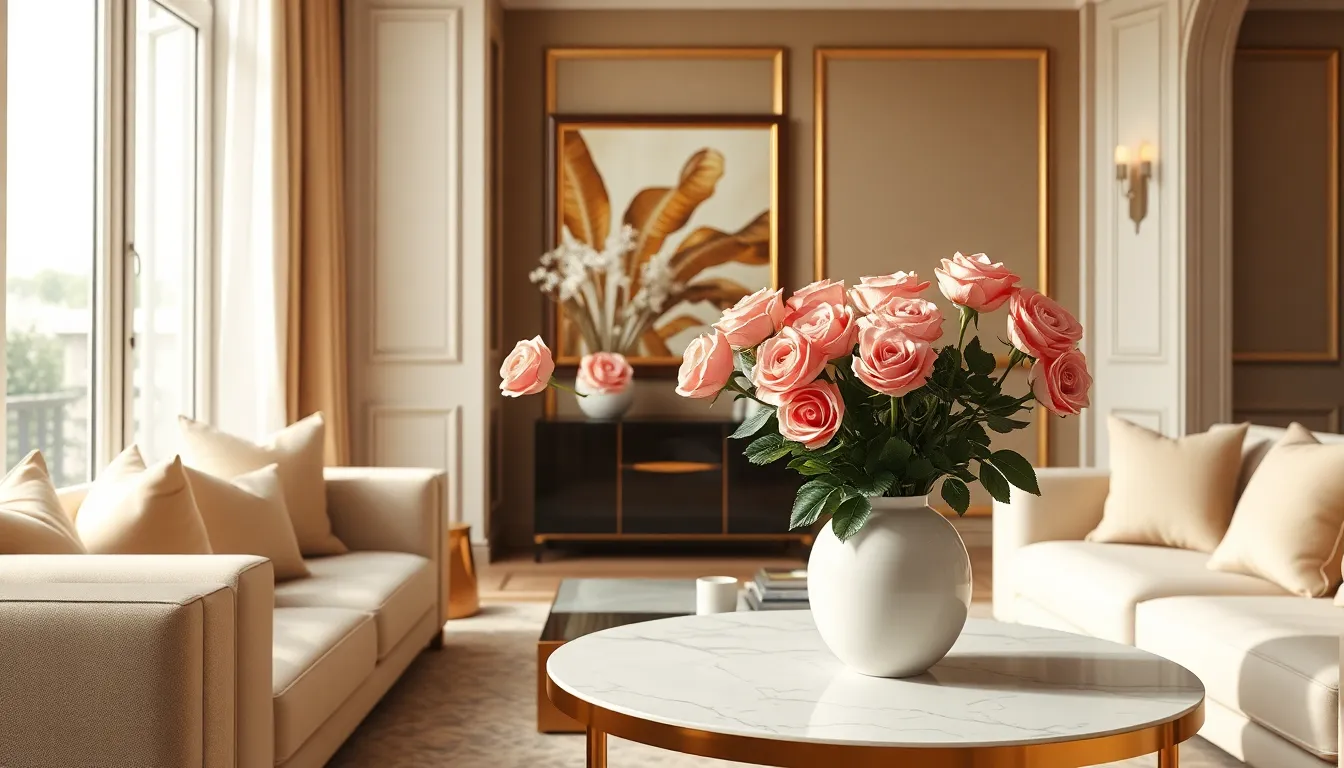
Table of Contents:
Choose Fresh or Preserved Roses for Your Space
The right rose type depends on how long you want the decoration to last, how much care you can provide, and where it will stand. Fresh roses bring natural fragrance and gentle movement to a room. Their changing petals also give the display a quiet sense of time. Choose them for dining tables, entryways, or rooms where you enjoy refreshing the look often.
Preserved roses suit spaces that need lasting color with little daily effort. They work well on consoles, shelves, bedside tables, and office desks. Because they do not need water, they can sit in containers that would not be practical for a fresh arrangement. An ivory display, for example, can soften dark wood or add warmth to a cool, modern interior.
Think about the room before choosing the arrangement. Fresh flowers need a stable surface, a clean vase, and protection from direct sun, heaters, and drafts. Preserved roses need a dry setting and gentle dusting, but no vase water. Neither type should be placed where moisture, heat, or constant handling can damage the petals.
- Choose fresh roses when scent, softness, and a short-term focal point matter most.
- Choose preserved roses when you want a steady decorative accent that remains in place for a longer period.
- Use fresh roses for events when the arrangement should feel lively and newly gathered.
- Use preserved roses in quiet corners where a permanent touch of color can balance the room.
A simple rule helps: select fresh roses for atmosphere and preserved roses for continuity. If you are unsure, combine the two in separate areas rather than mixing them in one vessel. That keeps each style clear and often looks more polished.
Create Elegant Rose Centerpieces
A refined rose centerpiece begins with proportion, not sheer volume. Let the table guide the scale: a low arrangement suits meals and conversation, while a taller design can anchor an empty console or entrance table. Keep the display narrow enough to preserve clear sight lines. A useful dining-table rule is to keep the floral mass below eye level when guests are seated.
Build the composition in layers. Start with a stable vessel, then place the strongest blooms slightly off-center. Add supporting roses at varied heights and leave small gaps between flower heads. This creates rhythm instead of a stiff, crowded block. Odd groupings—three, five, or seven focal blooms—often feel more natural than a perfectly mirrored layout.
- Use one dominant shape: rounded, elongated, or softly asymmetrical.
- Repeat one visual detail: a ribbon tone, metallic accent, or matching vessel finish.
- Leave breathing room: exposed stems, negative space, and a visible rim can make the arrangement look more considered.
- Stabilize the base: use floral foam, a grid, or weighted filler so the centerpiece stays balanced.
Color placement matters as much as flower count. Concentrate deeper shades near the center for visual weight, then move lighter tones toward the edges. For a quieter result, keep the roses within one color family and vary texture through foliage or a matte container. A glossy vase creates sharper contrast; ceramic or stone gives the display a calmer, sculptural feel.
Before setting the centerpiece in place, view it from every seat and from the room entrance. Remove one flower if the arrangement feels cramped. That final subtraction is often what makes the whole design breathe.
Style Ivory Roses in Decorative Boxes
Ivory roses in decorative boxes create a calm focal point with very little visual noise. Their soft tone works especially well with walnut, travertine, brushed brass, charcoal, and muted green. Instead of adding another bright accent, they soften strong materials and help a room feel composed.
Choose the box as carefully as the flowers. A rigid square box gives the display a clean, architectural feel, while a round box looks softer and more traditional. For a modern room, try a box with a plain lid, crisp edges, or a subtle fabric finish. A textured cover adds depth without making the arrangement seem busy.
- On a console: place the box slightly off-center and pair it with one low object, such as a stone tray.
- On a bookshelf: leave two or three open shelves around it so the pale flowers remain easy to see.
- In a bedroom: use a small box beside a lamp, keeping the display away from bedding and frequent contact.
- In an office: select a compact design that adds softness without taking up useful desk space.
Scale makes the arrangement feel intentional. A large box can anchor a broad sideboard, but it may overwhelm a narrow shelf. As a practical guide, keep the box no wider than about one-third of the surface beneath it. Leave a clear border around the base, too; that small margin makes the display look finished rather than dropped into place.
Keep the roses away from direct sunlight, damp rooms, and strong air vents. Dust the box and petals with a very soft brush or a cool stream of air. Do not spray polish, perfume, or water onto the flowers. The luxury is in the quiet detail.
Match Rose Colors with Your Interior
Rose color can change the mood of a room before any other detail does. Use the existing palette as your starting point: walls, upholstery, rugs, artwork, and metal finishes. The goal is not to match every shade exactly. A controlled relationship feels richer than a perfect color copy.
- Blush and dusty pink: soften cream, taupe, light oak, and warm gray interiors.
- Deep red: adds drama to ivory, charcoal, dark timber, and tailored rooms.
- White: sharpens colorful spaces and supports a clean, gallery-like look.
- Peach and coral: enliven beige, terracotta, and natural linen without feeling harsh.
- Lavender and mauve: pair well with cool gray, muted blue, and aged silver.
- Yellow: brings lift to navy, olive, and walnut, but works best in measured amounts.
For a reliable scheme, follow the 60-30-10 approach. Let the room’s main color cover roughly 60 percent of the visual field, use a secondary tone for about 30 percent, and reserve 10 percent for an accent such as roses. This is not a strict formula; it is simply a useful guardrail when the room starts to feel muddled.
Temperature matters, too. Warm rose shades contain hints of peach, orange, or brown, while cool shades lean toward blue, lilac, or raspberry. Place warm flowers beside cream, brass, or honey-colored wood. Set cool blooms near stone, chrome, blue-gray textiles, or black accents. The contrast will feel deliberate rather than accidental.
Test the flowers under the room’s real lighting before committing to a final position. Daylight can make pink look pale, while warm bulbs may deepen red and peach. Look at the arrangement in the morning, at dusk, and after the lamps are on. A small color shift can change the entire character of the space.
Use Rose Bouquets in Key Living Areas
Place each bouquet where it supports the room’s function, not where it merely fills an empty spot. A thoughtful location can improve balance, guide movement, and make everyday spaces feel more finished.
- Living room: Set a medium bouquet beside the sofa or on a side table to create a soft visual anchor without blocking artwork or screens.
- Entryway: Use a narrow arrangement on a console to greet guests and define the transition between the door and the main room.
- Dining area: Position the bouquet toward one end of the table or on a nearby cabinet, leaving the center free for serving dishes and conversation.
- Bedroom: Place a small arrangement on a dresser or reading table, away from areas where sleeves, bags, or bedding may catch the flowers.
- Bathroom: Choose a compact display for a dry, well-ventilated counter. Keep it clear of splashes and excessive steam.
- Home office: Put the bouquet behind or beside the monitor rather than directly in front of it. The color remains visible without reducing workspace.
Use visual sightlines to decide the final position. From the doorway, the bouquet should connect with a major feature such as a mirror, artwork, or lamp. In an open-plan room, two smaller arrangements can mark separate zones more gracefully than one oversized display.
Leave enough clearance for normal movement. On a walkway, keep the arrangement outside the path of elbows, coats, and doors. On a shelf, allow space above the flowers so the display does not appear compressed. Small measurements matter; luxury can look awkward when the room has to work around it.
Vary the height across the home. A low bouquet can calm a busy kitchen island, while a taller composition can add presence to a high-ceilinged entrance. Let the architecture do some of the styling, and the roses will feel placed rather than parked.
Add Luxury with Layered Rose Arrangements
Layered rose arrangements gain their luxurious look from depth, not excess. Combine flowers at three visual levels: a grounded lower ring, a fuller middle body, and a few taller blooms that rise above the shape. This creates movement and prevents the bouquet from looking like one flat surface.
Use more than one texture, but keep the palette disciplined. Pair open roses with tighter buds, delicate foliage, and one restrained structural element, such as dried branches or slender stems. The contrast gives the arrangement character without turning it into visual clutter.
- Base layer: add compact foliage or shorter blooms to hide mechanics and give the design weight.
- Middle layer: place the largest flowers where they can carry the main visual focus.
- Upper layer: add only a few taller stems to create height and a graceful outline.
- Finishing layer: use small buds or fine greenery to connect gaps and soften hard edges.
For a fuller arrangement, work from the outside toward the center. Turn the vessel as you go, checking that no single side becomes too dense. Keep the tallest stems slightly away from the exact middle when you want a more organic silhouette. A centered peak feels formal; an offset peak feels relaxed and editorial.
Layering also works across a room. Place a generous arrangement near a lower piece of furniture, then echo its shape with a smaller rose accent on a nearby surface. Keep the second display clearly lighter in scale. Repeating one element at different heights can make separate furnishings feel connected without making the room look staged.
Use floral wire or discreet supports when stems lean under the weight of large blooms. Cut each stem at a different length rather than trimming everything evenly. That small difference creates shadow, air, and a more convincing sense of abundance.
Select Bouquets for Special Occasions
The occasion should shape the bouquet’s message, scale, and finish. A thoughtful choice feels personal without becoming overly literal. Consider the relationship, the setting, and the emotion you want the flowers to carry.
- Anniversaries: Choose a generous arrangement in a romantic color family. Red suggests devotion, while blush can feel intimate and gentle.
- Birthdays: Select lively tones such as coral, peach, pink, or yellow. A mixed bouquet suits a cheerful celebration better than a formal monochrome design.
- Congratulations: Use upright, energetic flowers in clear colors. Pink, orange, and white can express joy without the solemn tone sometimes associated with darker shades.
- Thank-you gifts: Choose a graceful, medium-sized bouquet. Soft pink, peach, or cream feels warm while remaining easy to display.
- Romantic gestures: Deep red or richly colored roses communicate strong feeling. A restrained arrangement may feel more sincere than an enormous one.
- Sympathy: Favor quiet compositions in white, ivory, pale pink, or muted lavender. Avoid flashy combinations and choose a simple silhouette.
- Mother’s Day: Full bouquets in pink, peach, or mixed pastel tones offer warmth and affection without looking too formal.
Personal details make the gift more meaningful. Match the recipient’s favorite color, home style, or vase collection when you know it. If the bouquet travels to an office, choose a manageable size and avoid heavy fragrance. For a formal dinner or event, coordinate the flowers with the table linens and stationery rather than copying them exactly.
A short handwritten note can clarify the intention, especially when color symbolism may differ between cultures. The flowers set the mood; the message supplies the meaning. Keep both aligned, and the arrangement will feel deliberate from the first glance.
Example: Build a Soft Romantic Table Display
Build the display around an intimate dinner for two. Use a small, low vessel near the center of the table, then leave enough open space for plates, glasses, and serving pieces. The arrangement should frame the meal, not compete with it.
- Start with the textile: choose a linen runner or placemats in cream, blush, warm gray, or another quiet shade.
- Add soft lighting: place two or three unscented candles at different distances from the flowers. Keep flames well away from petals and packaging.
- Create a gentle focal point: arrange the roses slightly toward one side, leaving the opposite side open for tableware.
- Repeat one detail: echo the bouquet’s color in napkins, a small ribbon, or a single ceramic accent.
- Protect conversation: keep the floral outline low and avoid sharp branches or crowded decorations.
For a polished finish, use warm-white light rather than strong overhead illumination. Candlelight can alter rose colors, so check that the display still looks balanced before guests arrive. A matte plate, clear glassware, and one metallic detail are usually enough; adding more can make the table feel fussy.
Keep fragrance restrained. Strongly scented candles may overwhelm the flowers and the food, especially in a small dining room. Choose unscented candles or a very light scent, and keep heat sources at least 30 centimeters from dry floral material.
Finish the setting with one personal element, such as a handwritten card or a favorite dessert plate. The result should feel prepared but not staged: soft light, comfortable spacing, and roses that quietly hold the scene together.
Order Fresh Roses with the Right Delivery Details
When ordering fresh roses for a home or event, enter the delivery details before choosing the final arrangement. Availability, currency, delivery timing, and shipping options may change with the destination. This step prevents a beautiful selection from becoming unavailable at checkout.
For deliveries along the US East Coast, select the correct location and confirm the full address carefully. Include the street number, apartment or suite, city, state, ZIP code, and country. An incomplete address can cause delays, especially in buildings with shared entrances or controlled access.
- Check the country and region: the available catalog may differ by shipping market.
- Add apartment, floor, or suite details: use the address line for information the courier needs.
- Confirm the recipient’s name: match it to the mailbox, reception desk, or building directory.
- Review delivery access: note gates, concierge instructions, business hours, or a safe drop-off point when the service allows it.
- Verify the local currency: the displayed price can depend on the selected destination.
- Recheck the address before payment: changing it later may affect the available roses and shipping method.
Use automatic location detection only as a starting point. It may identify the general area but miss an apartment number, unit letter, or regional abbreviation. Manual entry is safer for offices, hotels, campus buildings, and new developments. If the system offers an address suggestion, compare it with the recipient’s exact details rather than accepting it without review.
For a surprise, confirm the recipient’s availability without revealing the gift. Fresh roses are time-sensitive, so avoid sending them to a location that may remain unattended for long periods. A staffed reception area or a trusted neighbor may be more practical than an exposed doorway.
Before placing the order, check the final summary for destination, currency, product availability, delivery option, and any stated timing. Then confirm that the selected location is the one you actually want. This quick review takes less than a minute, but it can protect the whole arrangement from an avoidable delivery problem.
Protect the Beauty of Your Rose Decorations
Protect the beauty of rose decorations by controlling the small environmental stresses that slowly weaken petals, color, and structure. Place arrangements away from strong ultraviolet light, radiators, fireplaces, cooking steam, and air-conditioning outlets. Sudden changes in heat or humidity can cause petals to curl, fade, or become brittle.
Handle roses by the container or lower stems, not by the flower heads. When moving a display, support the base with both hands. Never lift a large arrangement by decorative wrapping, ribbons, or foliage. These details may look secure but can loosen under the weight.
- Fresh roses: remove leaves that sit below the waterline, keep the vessel clean, and trim stems with a sharp blade at an angle. Replace the water every two days and remove fading flowers promptly.
- Preserved roses: keep them in a dry room with steady temperature. Remove dust with a soft artist’s brush, working from the center outward with almost no pressure.
- Boxed arrangements: keep the lid, base, and lining dry. Do not place heavy objects on top, even for short periods.
- Mixed displays: inspect supports and stems once a month. Tighten loose elements before they bend or fall.
Do not use hairspray, furniture polish, essential oils, or household cleaners on rose petals. These products can leave a film, alter the surface, or attract dust. If a fresh arrangement shows mold, cloudy water, or a sour smell, discard the affected material and clean the vessel thoroughly before using it again.
For long-term storage, preserve the original box or use a breathable cover that prevents crushing. Avoid sealed plastic, which can trap condensation. Keep spare decorations in a cool, dry cupboard, and separate delicate flower heads with acid-free tissue paper rather than ordinary newspaper.
A short inspection each week is enough to catch most problems early. Look for faded edges, leaning stems, moisture marks, loose petals, and dust in the center of the arrangement. Careful attention keeps the display elegant without making maintenance feel like a chore.
Conclusion: Choose, Place, and Maintain Your Roses Wisely
Luxury rose décor works best when every choice serves the room: the flower form, the vessel, the color story, and the amount of visual space around it. The most successful display is not always the largest one. It is the arrangement that feels intentional, suits the architecture, and remains practical in daily life.
Before buying, assess the surface, lighting, traffic, and purpose of the area. A display for a quiet reading corner can be delicate, while one in a busy family room needs a stable base and durable construction. This check helps prevent beautiful flowers from becoming an obstacle or a fragile afterthought.
Use the final result as a design signal. Repeated rose tones can link separate rooms, while one distinctive arrangement can mark an important area. Review the display after a few days, not just on installation day. Rooms change with daylight, movement, and use, so a small adjustment may improve the balance considerably.
- Evaluate the setting: consider scale, traffic, light, and nearby materials.
- Prioritize function: keep useful surfaces and pathways clear.
- Refine over time: adjust position, spacing, or supporting accents when the room feels unsettled.
- Choose with restraint: one convincing floral statement often has more impact than several competing displays.
Rose decorations should add pleasure without creating needless work. Choose a design you can live with, place it where it improves the room, and let its character develop naturally. The result is a space that feels richer, calmer, and unmistakably yours.
Frequently Asked Questions About Luxurious Rose Decorations
How can rose decorations enhance a living space?
Rose decorations add color, texture, and an elegant focal point to a room. Their placement can help define areas, complement existing furnishings, and create a refined atmosphere in living rooms, bedrooms, entryways, dining areas, and home offices.
Should I choose fresh or preserved roses for home décor?
Choose fresh roses when fragrance, softness, and a temporary display are important. Preserved roses are better suited to long-lasting decoration with minimal maintenance, particularly on shelves, consoles, bedside tables, and office desks.
How should I style ivory roses in a decorative box?
Place ivory roses in a box that matches the room’s style and scale. They pair well with walnut, travertine, brushed brass, charcoal, and muted green. Keep the box away from direct sunlight, moisture, heat, and strong air vents, and dust it gently with a soft brush.
How can I match rose colors with my interior?
Use the room’s walls, furniture, textiles, artwork, and metal finishes as a guide. Blush and dusty pink suit cream and warm gray, deep red adds contrast to ivory and charcoal, while white roses create a clean, gallery-like effect. Consider the room’s lighting before choosing a final color.
How do I keep rose decorations looking beautiful?
Keep roses away from direct sunlight, heat, moisture, drafts, and frequent handling. For fresh roses, use a clean vase, replace the water regularly, and trim the stems. For preserved roses, maintain a dry environment and remove dust gently without applying water, polish, perfume, or household cleaners.