
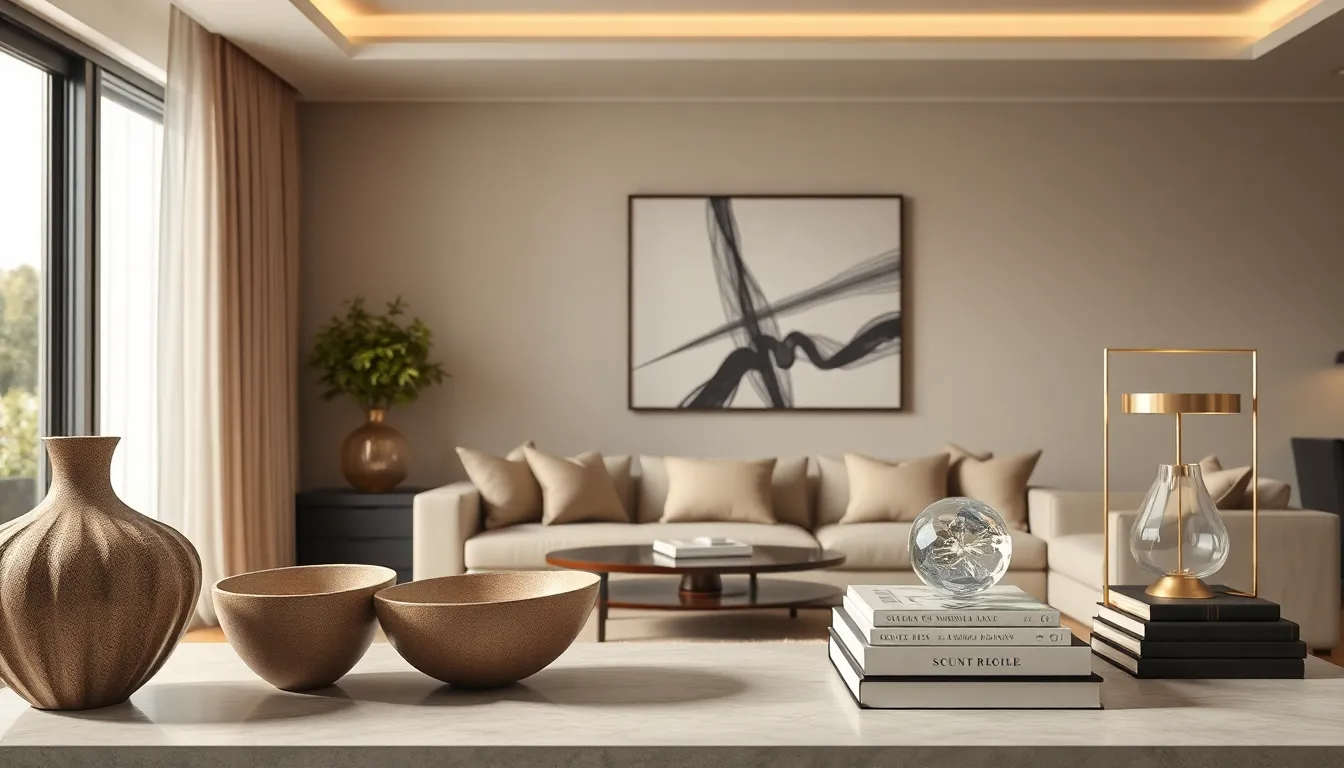
Table of Contents:
Choose Statement Lighting to Create a Refined Focal Point
Statement lighting can shape a room before any other decorative object is noticed. A sculptural pendant above a dining table, a tall floor lamp beside a sofa, or a pair of striking lamps on a console adds height, rhythm, and visual focus. The fixture becomes part of the room’s architecture, not merely a source of light.
Begin with the room’s main sightline. In an open-plan space, place the strongest fixture where it can anchor a zone without blocking movement or views. Over a dining table, keep the lower edge of a pendant about 30 to 36 inches above the tabletop. In rooms with standard 8-foot ceilings, a flush or semi-flush design often feels more balanced than a long drop. Taller ceilings allow greater scale, but proportion still matters: a dramatic piece should command attention without swallowing the furniture below it.
Consider light quality as carefully as form. A warm color temperature near 2700K creates a soft, intimate atmosphere for living and dining areas. Dimmability adds control, allowing one fixture to support morning tasks, evening conversation, and late-night calm. For artwork or reflective surfaces, shielded bulbs reduce glare and keep the effect polished rather than harsh.
Material choice changes the mood. Aged metal brings depth and a slightly storied character. Glass spreads brightness and keeps a compact room visually open. Natural fibers soften modern interiors, while polished finishes introduce a crisp glimmer. Pair the fixture with one or two quiet echoes elsewhere—perhaps a metal edge, a curved silhouette, or a related tone—rather than matching every object exactly. Too much coordination can make a room feel staged; a little tension gives it life.
Layer Modern Furniture with Sculptural Decorative Accents
Modern furniture gains character when sculptural accents interrupt its clean geometry. A low sofa, streamlined console, or simple side table creates a calm foundation. Decorative objects then add the irregular shapes, tactile contrast, and small moments of surprise that keep the arrangement from feeling flat.
Start with scale. Place one larger object near a substantial piece of furniture instead of scattering many small items across the room. A broad ceramic form suits a generous console, while a slender metal piece works better on a narrow shelf. As a practical guide, keep tabletop objects below eye level when the furniture sits in a main walkway. This protects the room’s visual flow and makes the composition feel deliberate rather than crowded.
Use the rule of three with flexibility: combine different heights, silhouettes, or textures, then leave enough negative space for each item to breathe. A smooth stone-like form beside a ridged vessel creates useful friction. A dark object can ground pale upholstery; a warm metallic detail can bridge wood and neutral fabric. Exact matching is not the goal. Repeated undertones create unity, while contrasting profiles provide energy.
Furniture layout matters just as much as the objects placed on it. Keep at least 18 inches of walking space around frequently used seating routes, and avoid placing fragile pieces where elbows, bags, or pets may catch them. On open shelving, vary the depth of objects instead of lining everything along the front edge. The result feels layered, almost collected over time—though, honestly, it may have taken only one thoughtful afternoon.
- Choose one dominant sculptural form for a large furniture surface.
- Balance hard materials with upholstery, timber, or woven textures.
- Keep delicate pieces away from edges, passageways, and unstable shelves.
- Repeat a color or finish subtly, without making every item identical.
Elevate Walls with Artful Frames and Decorative Displays
Walls offer a powerful way to add luxury without taking up valuable floor space. A carefully chosen frame, relief, or decorative arrangement can give an empty wall structure and make the room feel finished. The strongest displays do not simply fill a blank area; they create a visual pause that supports the architecture around them.
Before hanging anything, measure the wall and identify its natural center. In most rooms, the midpoint of the display should sit about 57 to 60 inches above the floor, close to average eye level. Above a console or cabinet, leave roughly 6 to 10 inches of breathing room. These distances are useful starting points, not strict laws. Low furniture, high ceilings, and unusual wall shapes may call for a different rhythm.
For a gallery arrangement, place the frames on the floor first. Begin with the largest piece, then build outward with smaller works. Keep the gaps consistent—around 2 to 4 inches usually feels intentional—while allowing one subtle variation if the composition needs movement. A paper template taped to the wall can prevent unnecessary holes and makes it easier to judge the balance from across the room.
Frame design changes how the artwork is read. A wide border gives a small image more authority. A narrow profile keeps a dense arrangement light. Matting can add visual breathing space, especially when the artwork contains strong color or fine detail. When several pieces share a wall, repeat one element such as frame tone, mat color, or line quality. The collection will feel related without becoming a showroom grid.
Decorative wall objects need extra care. Check the wall type, anchor rating, and the object’s weight before installation. Masonry, plaster, and drywall require different fixings. Keep valuable or fragile pieces away from direct sunlight, radiators, damp areas, and doors that swing into the display. For heavy installations, a qualified professional is the sensible choice—no heroics required.
- Use the wall’s architecture to guide the display rather than forcing a preset layout.
- Measure gaps and sightlines before drilling.
- Choose archival-quality glazing for valuable artwork when light exposure is a concern.
- Secure heavy objects with hardware rated well above their actual weight.
- Leave some wall visible; restraint often makes a luxury display feel more considered.
Style Vases, Bowls, and Trays for Sophisticated Surfaces
Vases, bowls, and trays give horizontal surfaces a clear visual language. They can frame an entry console, organize a coffee table, or turn an unused shelf into a quiet display. Their value lies not only in decoration but also in proportion, containment, and everyday function.
Begin with the surface itself. A long console benefits from a wide tray or an elongated arrangement, while a small side table needs one compact form with a strong outline. On a coffee table, leave enough clear space for cups, books, and conversation. A useful starting point is to keep roughly one-third of the tabletop open. It prevents the display from becoming a beautiful nuisance.
Use trays to group objects that might otherwise look scattered. A tray creates a visual boundary and makes seasonal changes easy: replace flowers with branches, candles, or a small bowl without rebuilding the entire arrangement. Choose a material that adds contrast to the surface beneath it. Smooth metal against timber feels crisp; stone or ceramic against glass creates a quieter, more grounded effect.
Vases need not always hold flowers. An empty vessel can act as a vertical note, while a filled one introduces movement and color. For fresh stems, cut them at different lengths and remove foliage that would sit below the water line. Clean water, a washed vessel, and regular trimming usually extend flower life more effectively than a crowded bouquet. Dried branches require less care, but keep them away from heat sources and open flames.
Bowls bring a lower, broader shape into the composition. Use one for natural elements such as citrus, shells, or smooth stones, provided the contents suit the room and remain easy to remove. For a more formal setting, leave the bowl empty and let its interior finish do the work. A reflective lining can catch daylight; a matte surface offers a softer, more discreet presence.
- Match the object’s footprint to the furniture’s scale, not only to its color.
- Keep functional surfaces usable by leaving clear landing zones.
- Vary height through the vessel, its contents, or a low supporting book.
- Check that trays have stable bases and that bowls will not slide on polished surfaces.
- Rotate contents by season, but retain one enduring piece for continuity.
Add Character with Decorative Objects, Boxes, and Desk Accessories
Decorative objects, boxes, and desk accessories can make a room feel personal without adding visual clutter. They introduce small stories: a carved form on a bookcase, a lidded box on a bedside table, or a refined paperweight beside a writing pad. These pieces are modest in size, yet their finish and symbolism can change the mood of an entire corner.
Give each object a role. Use a decorative box to hide keys, cables, or spare matches. Reserve a sculptural piece for a place where its outline can be seen from more than one angle. On a desk, combine beauty with daily use: a pen cup, letter opener, tray for loose items, or well-weighted paperweight should feel pleasant in the hand, not merely attractive from across the room.
Material contrast adds richness. Lacquer reflects light and feels polished; wood brings warmth; stone has a quiet permanence; metal introduces precision. Do not place similar finishes side by side without a reason. A glossy box beside a matte object creates depth, while two strongly patterned pieces may compete. One distinctive detail often has more presence than five busy ones.
Boxes are especially useful in compact rooms because they conceal visual noise. Measure the items they need to hold before buying, and check whether the lid opens fully in its intended position. Felt or fabric lining can protect jewellery, eyewear, and delicate accessories. Keep moisture-sensitive materials away from bathrooms and sunny windows, where heat and humidity may cause warping or fading.
Desk accessories deserve ergonomic attention. A frequently used item should sit within easy reach, while decorative pieces can move to the outer edge of the work zone. Keep the central writing area clear and leave enough room for a laptop, notebook, or document. Luxury feels far more convincing when the arrangement supports real habits rather than pretending nobody ever works there.
- Choose objects that offer a practical use, a memorable shape, or both.
- Check storage capacity, opening clearance, and lining before selecting a box.
- Protect delicate finishes from moisture, direct sun, and abrasive cleaning products.
- Use one focal accessory per small surface to preserve calm.
- For work areas, place function first and let ornament occupy the remaining space.
Create a Luxury Outdoor Setting with Coordinated Accessories
A refined outdoor setting needs pieces that can withstand the elements without looking purely utilitarian. Treat the terrace, balcony, or garden room as an extension of the home, but select every decorative item for its exposure level, maintenance needs, and intended use.
Begin by dividing the space into practical zones. A dining area needs stable surfaces and clear serving paths. A lounge area can support softer textiles, lanterns, and low tables. Near a pool or uncovered garden, choose accessories that tolerate moisture, ultraviolet light, and sudden temperature changes. Covered spaces offer more freedom, yet they still experience humidity and airborne dirt.
Outdoor scale often differs from indoor scale. Small pieces can disappear against a broad patio, while oversized accessories may overwhelm a narrow balcony. Use the architecture as a measuring guide: repeat a terrace’s linear edges with rectangular planters or tables, or soften hard masonry with rounded forms and woven textures. Keep at least 36 inches for main walking routes where possible, especially around dining furniture.
Weather resistance depends on material and construction, not appearance alone. Powder-coated aluminium resists rust better than untreated steel. Teak can age well outdoors when maintained, while porous stone may absorb water and stain in freeze-thaw climates. Stainless steel near salt air needs regular cleaning, and outdoor fabrics should be checked for UV performance, removable covers, and drying time.
Coordinate through a restrained palette rather than a complete matching set. Repeat one tone across cushions, planters, and tableware, then add a contrasting texture through rope, stone, or glazed ceramic. For coastal homes, salt, wind, and intense sun demand more frequent care. In colder regions, store fragile ceramics and textiles before freezing weather. A handsome object that survives five seasons is a better luxury choice than one that looks impressive for five weeks.
- Check the manufacturer’s outdoor rating before placing an accessory in an uncovered area.
- Use weighted pieces in exposed locations where wind can move light objects.
- Provide drainage for planters and never block furniture ventilation points.
- Clean salt, pollen, and standing water before they damage finishes.
- Store cushions, delicate ceramics, and portable lighting during severe weather.
Match Decorative Pieces to Each Room’s Function and Mood
Decorative pieces work best when they respond to the way each room is used. A formal object may suit a quiet sitting room, while a durable, easy-to-clean accent makes more sense in a busy family space. Luxury feels more convincing when beauty and daily life agree.
In the entryway, choose a welcoming piece with a clear silhouette and modest depth. The area should remain easy to pass through, with no fragile item positioned where coats, bags, or keys are likely to land. A decorative bowl can support arrival rituals, while a small object on a shelf creates a memorable first impression without demanding attention.
The living room allows more narrative. Select objects that encourage conversation, such as a curious sculpture, an unusual vessel, or a finely made game. Keep personal and social zones distinct: expressive pieces can sit near seating, while quieter accents work better beside reading chairs. The room should feel collected, not curated to exhaustion.
Bedrooms benefit from restraint. Favor tactile finishes, rounded forms, and objects that create calm at the end of the day. Avoid sharp projections near the bed and keep unstable pieces away from areas where they could be knocked over. A small decorative box can hold private essentials, giving the bedside surface a composed, useful character.
Dining rooms call for objects that support hosting without obstructing sightlines. Low centerpieces preserve conversation across the table, while a sideboard can carry more expressive decoration. Choose finishes that tolerate occasional food splashes and can be wiped clean without special treatment. In a dining space, practicality is not the enemy of elegance; it is what keeps elegance intact.
Bathrooms require a stricter filter. Humidity can damage untreated wood, paper, porous stone, and some metal finishes. Favor sealed surfaces, washable vessels, and accents placed well away from direct water. In a home office, meanwhile, decorative objects should reinforce concentration. One meaningful piece may be more effective than a collection of small distractions.
- Entryway: choose compact accents that support arrival and movement.
- Living room: use expressive objects to create conversation points.
- Bedroom: favor quiet textures and stable, low-risk forms.
- Dining room: preserve clear sightlines and easy table service.
- Bathroom: select finishes suited to humidity and frequent cleaning.
- Home office: keep decoration purposeful and visually calm.
Explore L’OBJET Collections for Distinctive Luxury Styling
L’OBJET collections can give a room a distinct point of view. Instead of treating luxury decoration as a single look, use each collection as a visual language. This approach helps you choose pieces with a shared mood while avoiding an interior that feels overly matched.
Begin with the collection that best reflects the room’s character. Timna, Fortuny, Lito, and Douro are listed as decorative collections, each offering a different starting point for styling. The navigation also includes newer areas such as Ojai + Alento, Delphes, Grand Tour, and Prism Glassware. These names can guide exploration, but they should not be treated as product descriptions. Specific materials, dimensions, prices, and finishes are not provided.
For a refined result, select one anchor item from a collection, then add only a few supporting pieces. A collection can supply continuity through shape, pattern, or surface treatment. Keep the surrounding room quieter so the chosen object has room to speak. This is especially useful when working with ornate designs, rich color, or highly detailed finishes.
Themed collections can also support a hosting scheme. Summer Hosting and Prism Glassware suggest a natural direction for entertaining spaces, while desk accessories, games, boxes, and trays can extend the same design language into smaller rituals. Let the use of the room determine the selection. A beautiful object that serves no purpose may still work, but too many such pieces can make a home feel more like a display cabinet.
New-arrival sections provide another way to refresh an established interior. Review “All New Arrivals” alongside focused areas such as L’OBJET Jessica McCormack, Ojai + Alento, or Delphes. Compare the new piece with what you already own before buying. Ask whether it adds a new material, scale, or cultural reference—or merely repeats an existing accent.
- Choose one collection as the main visual direction for a room.
- Use a single anchor piece to prevent a themed display from becoming dense.
- Extend the collection through function, such as hosting, games, or desk rituals.
- Check official specifications before relying on a collection name to judge suitability.
- Use new arrivals to introduce contrast, not automatic replacement.
Use New Arrivals and Seasonal Pieces for Fresh Visual Interest
New arrivals and seasonal pieces can refresh a mature interior without forcing a complete redesign. The key is to treat them as controlled updates, not impulse purchases. A new object should add a fresh color, material, cultural reference, or seasonal function that your existing collection does not already provide.
Before introducing anything, photograph the room in daylight and note which surfaces already feel visually busy. This simple record makes comparison easier and reduces accidental duplication. Review the new piece at different times of day, since glossy finishes, translucent materials, and saturated colors may change markedly under artificial light.
Seasonal styling works best when it follows the calendar’s mood rather than relying on obvious symbols. Spring may call for lighter textures and botanical tones; autumn can support deeper hues and tactile surfaces. For winter entertaining, reflective accents may add ceremony, while summer hosting benefits from pieces that are easy to move, clean, and store. Keep permanent foundations neutral enough to accept these shifts.
Use a rotation system instead of displaying every acquisition at once. Store replaced objects in padded containers, label them by season, and keep an inventory with purchase dates and care notes. Rotate only a few items at a time. This protects fragile finishes and makes each return feel intentional rather than repetitive.
New arrivals also deserve a waiting period. Leave the item boxed for a day, then test it in two possible locations before removing labels or arranging nearby objects. Consider return rules, delivery risks, packaging, and long-term care. No specific product details, prices, or descriptions are available for the listed collections, so verify these points with the relevant retailer.
L’OBJET groups new offerings under areas such as All New Arrivals, Summer Hosting, Prism Glassware, Delphes, and Grand Tour. These sections can help structure browsing, but their names alone do not confirm materials, dimensions, or intended use. Arteriors Home also offers a “Showroom finder” for in-person review.
- Compare every new piece with your existing inventory before buying.
- Use seasonal accents to change mood, not to replace durable foundations.
- Photograph and label stored pieces for easier future rotation.
- Check return conditions and care requirements before opening delicate goods.
- Confirm current availability and specifications directly with the retailer.
Shop Arteriors Home Categories and Plan Your Next Step
Arteriors Home offers a practical category path for planning a luxury interior. Start with the room that needs the greatest change, then compare related sections instead of browsing without a clear purpose. Lighting, furniture, wall décor, outdoor pieces, accessories, and room-based products make it easier to build a focused shortlist.
Use the room filter when you know the setting but not the object. Choose the product category first when you have a specific need, such as a table lamp, console, wall accent, or outdoor accessory. This two-step approach reduces unsuitable results and helps you compare items by role rather than by appearance alone.
Before contacting the company, prepare a concise specification sheet. Record the available width, height, depth, preferred finish, intended location, and any access limits such as narrow stairways or lift dimensions. For lighting, add ceiling height, electrical requirements, and installer details. Clear measurements make showroom advice more useful and prevent costly surprises.
Arteriors Home lists a showroom finder and a trade-program application. A showroom visit may be valuable when surface texture, true color, or physical scale matters. Trade professionals can also ask about business account processes and project support. For direct assistance, the listed telephone number is 1-800-338-2150.
Important purchasing note: the customer account is currently locked, and orders cannot be placed through it. Available account areas include the dashboard, account information, address book, transaction history, portfolio, company users, tax-exemption details, saved payment methods, order status, customer support, and newsletter settings. Treat these sections as account-navigation features, not confirmation that purchasing is presently available.
The site advertises free shipping on lighting, subject to its terms. Confirm eligibility, delivery timing, installation responsibility, return conditions, and current stock before relying on the offer. No product-specific prices, dimensions, materials, or descriptions are available here, so a final decision should wait until those details are verified.
- Measure the intended location before opening a product category.
- Save only items that meet your size, use, and finish requirements.
- Use the room filter to check whether a piece suits its setting.
- Contact the showroom or customer support for details not shown online.
- Confirm account status, shipping terms, and order availability before payment.
Fazit: Build a Cohesive Luxury Look with Carefully Chosen Objects
A cohesive luxury interior is built through editing, not excess. The most successful rooms allow each decorative object to support a wider visual idea while still retaining its own character. Before adding anything new, remove pieces that compete, repeat the same function, or no longer suit the room. A little subtraction can reveal the quality of what remains.
Use a simple final review. Walk through the home from the main entrance and note where the eye pauses, where movement feels restricted, and where the design loses momentum. Check the arrangement from seated and standing positions. Then assess the practical details: stability, cleaning access, child and pet safety, material care, and the effect of daylight over time.
Luxury also depends on provenance and transparency. Keep invoices, care instructions, authenticity documents, and material information for valuable objects. Ask retailers about warranties, returns, delivery damage, and restoration support before committing to a purchase. These details may feel administrative, but they protect both the object and the investment.
Arteriors Home can be explored through lighting, furniture, wall décor, outdoor, accessories, and room-based categories. L’OBJET presents luxury decorative and lifestyle objects across frames, vases, bowls, games, desk accessories, decorative objects, trays, and boxes. Neither the supplied information nor the listed navigation confirms individual prices, dimensions, materials, or product availability, so verify those facts directly.
For Arteriors Home, the customer account is currently locked, and orders cannot be placed through it. Its listed support number is 1-800-338-2150. The site also provides a showroom finder and a trade-program application. Free shipping on lighting is advertised, subject to applicable terms. Treat these service details as points to confirm before planning a purchase.
- Edit before you add.
- Review the room from several viewpoints and at different times of day.
- Keep records for valuable or fragile decorative objects.
- Confirm specifications, delivery terms, care requirements, and availability.
- Choose pieces that will remain meaningful after seasonal trends pass.
The final measure is simple: does the home feel more considered, more comfortable, and more like its occupants? Exquisite decoration should not create a museum effect. It should sharpen the atmosphere, support daily rituals, and leave enough quiet space for the people who live there.
Frequently Asked Questions About Luxury Decorative Objects
How can luxury decorative objects enhance a home?
Luxury decorative objects add character, texture, visual focus, and a sense of refinement. Carefully selected vases, bowls, trays, sculptures, boxes, frames, and desk accessories can complement furniture while supporting the room’s function.
How should decorative objects be arranged for a cohesive look?
Begin with one dominant piece, then add a limited number of supporting objects in varied heights, shapes, and textures. Repeat selected colors or finishes subtly, preserve negative space, and avoid overcrowding surfaces or matching every item too precisely.
Which decorative objects are suitable for different rooms?
Entryways benefit from compact bowls or welcoming accents, living rooms from expressive sculptures and vessels, bedrooms from calm and stable forms, dining rooms from low centerpieces, bathrooms from moisture-resistant pieces, and offices from functional desk accessories.
What should be considered when choosing outdoor decorative accessories?
Check the manufacturer’s outdoor rating, resistance to moisture and ultraviolet light, material durability, drainage, maintenance requirements, and stability in windy conditions. Fragile ceramics and textiles should be stored during severe weather.
Where can luxury decorative collections and products be explored?
L’OBJET offers decorative categories including frames, vases, bowls, games, desk accessories, decorative objects, trays, and boxes, as well as collections such as Timna, Fortuny, Lito, and Douro. Arteriors Home offers lighting, furniture, wall décor, outdoor products, accessories, and room-based categories. Product specifications and availability should be confirmed directly with the retailer.