
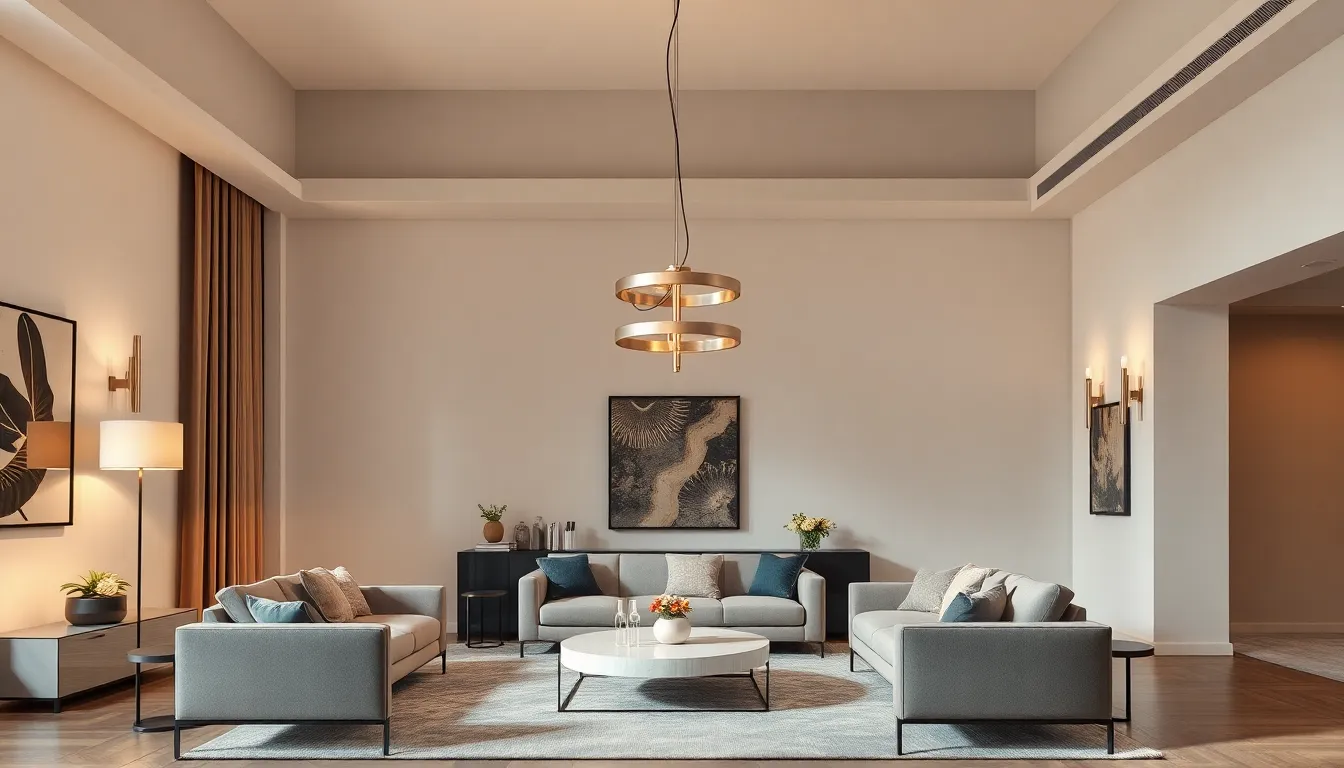
Table of Contents:
Design, Technology, and Well-Being at the Heart of Vibia
Vibia treats contemporary lighting as part of the architecture, not as an afterthought. Its approach links clean forms, controlled illumination, and human comfort. A lamp should look considered when it is switched off, then change the character of a room when light begins to travel across its surfaces.
This idea places design and technology on equal footing. Precise optics help direct light where it is needed, while adjustable systems give designers greater control over glare, contrast, and visual rhythm. The result is not simply a brighter interior. It is a space with hierarchy: pathways feel clearer, focal points gain weight, and quiet areas remain calm.
Well-being enters through nuance. Soft diffusion can reduce harsh shadows. A restrained halo can make a wall feel less distant. Warm light may support a relaxed evening mood, while focused illumination can improve concentration during work or reading. These effects are modest, but they shape how people use a room. Good lighting often works in the background; you notice the atmosphere before you notice the fixture.
Material choice adds another layer. Recyclable materials, durable construction, and adaptable components can extend a product’s useful life and reduce the need for frequent replacement. This is where sustainability becomes more than a label. It becomes a design decision that affects maintenance, future layouts, and the long-term visual value of an interior.
Vibia’s strength lies in this balance: technical control without visual noise, expressive design without excess, and comfort without sacrificing architectural clarity. The most successful schemes leave room for change. Morning work, afternoon conversation, and evening rest can all belong to the same space when its lighting is carefully composed.
Closer, Pro, Asia, and Alba: Four Distinct Lighting Moods
Closer brings a softer language to outdoor lighting. Its enveloping glow can make a terrace, courtyard, or balcony feel more settled after sunset. Rather than treating the exterior as a separate zone, the design supports slow moments: a conversation, a quiet drink, or a pause beneath the open sky.
Pro takes the opposite route. Its precise, adjustable light suits spaces where visual control matters. Designers can direct illumination toward work surfaces, circulation paths, displays, or architectural details. This makes the collection useful when one room must serve several functions without looking cluttered.
Asia works with restraint. Its delicate form and carefully guided light create a quieter presence, suited to bedrooms, lounges, dining areas, and intimate hospitality settings. The effect is less about spectacle and more about a fine visual cadence—small shifts in brightness that make daily rituals feel composed.
Alba is defined by its subtle halo effect. Light seems to gather around the fixture, creating a gentle visual softness on nearby surfaces. This approach can temper hard lines and add warmth to minimalist interiors, especially where the goal is comfort rather than strong contrast.
These four collections offer different answers to one design question: what should a space feel like at a particular moment?
- Closer: welcoming and relaxed outdoor settings
- Pro: focused illumination with architectural precision
- Asia: quiet light for everyday rituals
- Alba: a calm atmosphere shaped by a soft halo
Together, they show how contemporary lighting can change the mood of a place without changing its structure. The choice is not only about size, finish, or position. It is about selecting the right visual tempo for the people who use the space.
Nexum by Arik Levy: Rethinking the Contemporary Chandelier
Nexum, designed by Arik Levy, treats the chandelier as an open architectural system rather than a fixed centrepiece. Its modular structure can extend through space, allowing the composition to respond to a room’s scale, ceiling height, and circulation. The result feels less like a single object and more like a continuous line drawn through the interior.
This shift changes how a chandelier operates. Traditionally, a chandelier gathers attention around one central point. Nexum distributes that presence across a wider field. It can mark a dining table, connect two zones, or create a visual bridge within a large hall. The ceiling becomes active, not merely a surface from which a fixture hangs.
Its modular logic also supports more thoughtful planning. Designers can consider the rhythm between nodes, the distance from walls, and the balance between open and dense sections. A restrained layout may suit a private interior, while a more expansive arrangement can give hospitality or commercial spaces a distinctive spatial signature.
The collection is especially effective where architecture benefits from a sense of continuity. Long tables, stairwells, galleries, and reception areas can all gain a stronger visual direction when the lighting follows the geometry of the room. It does not need to dominate. In fact, its power often comes from how quietly it organises the eye.
Arik Levy’s approach makes the chandelier adaptable to contemporary interiors without losing its symbolic role. Nexum still creates a focal presence, but it does so through structure, repetition, and proportion. That is the clever bit: the fixture can be expressive while remaining closely tied to the architecture around it.
Composing Pendants and Duo: Personal Expression Through Materials
Composing Pendants turns pendant lighting into a design exercise. Instead of relying on one fixed shade, designers can combine multiple elements and adjust their relationship to the room. Varying heights, intervals, and alignments can create a measured canopy above a dining table, a lively arrangement in a stairwell, or a restrained line over a reception desk.
This approach gives the ceiling a more personal voice. A balanced composition may follow the geometry of a long table, while an irregular grouping can soften a rigid floor plan. The key is proportion: the installation should relate to the furniture below and leave enough visual space around each pendant. Too much density feels heavy; too little can appear accidental.
It also supports change over time. A composition can be planned around a room’s current use while retaining enough flexibility for future layouts. That makes the pendant less like a final gesture and more like a set of design decisions that can evolve with the interior.
Duo explores personal expression through material contrast. Its new American walnut interior introduces a deeper, warmer note inside the fixture. The wood does not merely add decoration; it changes the way the pendant is read. From below or at an angle, the inner surface becomes a quiet focal detail, balancing the outer form with a sense of tactility.
American walnut is valued for its rich brown tone and varied grain. Within a light fixture, those qualities can bring visual depth to pale interiors, stone surfaces, or restrained monochrome schemes. It also creates a useful connection with nearby timber furniture, without requiring an exact match. A little variation often feels more natural than a perfect set.
- Choose Composing Pendants when the layout needs rhythm, variation, or a custom scale.
- Choose Duo in American walnut when the interior benefits from warmth and a tactile inner detail.
- Combine materials carefully so the lighting supports the room rather than competing with its furniture and finishes.
Both collections show how a pendant can carry more than illumination. One offers freedom through arrangement; the other adds character through material. Together, they make personal taste visible in the details—quietly, but with real presence.
Bind and Circus: Flexible Tools for Layered Atmospheres
Bind is designed for rooms that refuse to stay in one mood. Its hybrid lighting system can move between broad, diffuse illumination and more focused accents, giving one interior several distinct readings. A lounge may feel open during a gathering, then become more intimate when attention shifts to a table, artwork, or reading corner.
The value lies in the transition. Instead of dividing a room into rigid lighting zones, Bind allows the atmosphere to change with the activity. This is useful in open-plan homes, restaurants, hotel interiors, and work settings where boundaries are often fluid. Light can follow the moment, not just the floor plan.
- Diffuse output supports an even, comfortable base.
- Focused illumination gives selected areas greater visual importance.
- Soft transitions help avoid a harsh jump between general and accent lighting.
Circus takes a more graphic approach. Its defining conductive rail creates a clear visual line, while contrasting elements add movement to the composition. The system can be read as both a technical structure and a design gesture, which makes it particularly suited to interiors with strong geometry.
Its strength is not decoration for decoration’s sake. The rail can help organise a long room, underline a circulation route, or connect separate areas through a repeated visual motif. In a gallery, retail setting, or hospitality interior, that continuity can guide the eye without relying on signs or barriers.
Bind and Circus solve different design problems. Bind is about changing the atmosphere within a space; Circus is about giving the space a visible order. Used thoughtfully, either system can support a more responsive interior—one that feels deliberate, but never frozen.
Emotion and Materiality: Warmth, Texture, and Human Comfort
Emotion and Materiality focuses on a simple but powerful design question: how should a room feel when people enter it? Instead of treating light as a neutral utility, this approach uses softness, surface, and material presence to create a more welcoming experience.
Diffuse light is central to that effect. It spreads gently rather than producing a sharp beam, helping nearby surfaces appear calmer and more continuous. On plaster, fabric, frosted glass, or pale wood, the result can feel almost tactile. The eye reads fewer hard edges, while the room gains a quieter visual rhythm.
Materiality matters because every surface responds differently. Matte finishes absorb more light and create a muted impression. Glossy surfaces reflect it, sometimes adding sparkle or visual tension. Textured materials produce subtle gradients, revealing their grain, weave, or relief as the light moves across them. In this sense, a luminaire does not work alone; it activates the interior around it.
Warmth should also be used with care. A warm tone can support rest and conversation, but too much warmth may make colours appear dull or distort the appearance of artwork, food, and finishes. For residential and hospitality projects, a colour temperature around 2700–3000 K is often comfortable, while the correct choice still depends on the materials, daylight, and task.
- Use diffusion where the goal is softness and reduced visual strain.
- Pair textured surfaces with grazing light to reveal depth without flattening the material.
- Check colour rendering before specifying finishes, artwork, or textiles.
- Keep warmer light near areas of rest, such as lounges, bedrooms, and intimate dining spaces.
The most convincing result is rarely dramatic. It is felt through small details: a fabric that looks richer, a wall that seems less stark, or a seating area that invites people to stay a little longer. That is the beauty of material-led lighting. It gives emotional character to the room while allowing the architecture and its finishes to remain visible.
How Vibia Shapes Homes, Offices, Hospitality, and Outdoor Spaces
Vibia adapts its lighting language to the demands of each setting. In a home, the aim may be a calm transition from morning to evening. In an office, light must support focus without making the workplace feel severe. Hospitality spaces need a memorable identity, while outdoor areas require fixtures that remain inviting after daylight fades.
In residential interiors, Asia can suit quieter rooms where delicate illumination supports daily routines. Alba works well near walls, beds, and seating areas, where its halo effect adds softness without filling the whole room with glare. For a larger dining zone, Nexum can create a strong overhead presence and connect the table with the wider architecture.
Offices benefit from a more task-aware strategy. Pro can help define desks, meeting areas, display walls, and circulation routes through adjustable light. This allows one floor plate to support different activities without relying on physical partitions. The practical test is simple: can people work comfortably, move safely, and shift between tasks without the lighting becoming distracting?
Hospitality projects use lighting to shape memory. A restaurant may need intimacy at tables and clearer illumination at service points. A hotel lobby may require a recognisable ceiling composition that remains elegant during busy periods. Here, Composing Pendants or Nexum can give a space a distinctive visual signature while supporting its operational needs.
Outdoor design extends the experience beyond the building. Closer can make terraces, gardens, and courtyards feel connected to the social life indoors. Its enveloping light is especially useful where the goal is to encourage lingering rather than simply mark a boundary. Placement matters, though: avoid direct views of the light source and preserve darker areas so the landscape keeps its depth.
- Homes: match the fixture to routines, scale, and moments of rest.
- Offices: separate task needs from circulation and shared zones.
- Hospitality: balance brand character with comfort and service demands.
- Outdoor spaces: create continuity while protecting visual calm and night-time atmosphere.
The strongest Vibia schemes do not impose one solution on every project. They build a lighting vocabulary from the room’s purpose, proportions, and pace of use. That flexibility lets the same design philosophy feel intimate in a home, precise in a workplace, expressive in hospitality, and welcoming beyond the façade.
Snøhetta’s Hong Kong Offices: Defining Workplaces Through Light
In Snøhetta’s Hong Kong offices, lighting is treated as part of the workplace structure. It helps distinguish areas, mark movement, and give shared spaces a clearer identity. This matters in a studio environment, where focused work, informal exchange, and team discussion may happen within a single open setting.
The project shows how light can define a workplace without building more walls. A brighter working zone may support concentration, while softer illumination can signal a place for conversation or pause. Changes in intensity, direction, and height create visual cues that people understand almost instinctively.
Hong Kong adds a specific challenge. Dense urban surroundings, strong daylight, and changing weather can make interior contrast difficult to control. A successful office scheme must respond to those shifts rather than depend on one fixed setting. Layered lighting helps maintain comfort as daylight moves across the floor.
The project also reflects the character of a design practice. Lighting is not used only to meet technical requirements; it becomes part of the studio’s visual language. It can reveal models, drawings, material samples, and the activity of collaboration. At the same time, the system must avoid glare on screens and reflections on glossy surfaces.
- Work areas need stable, comfortable illumination for extended visual tasks.
- Meeting zones benefit from light that supports faces and conversation.
- Circulation routes can use changes in brightness to clarify movement.
- Shared spaces need enough flexibility for both exchange and informal retreat.
The lasting lesson is spatial rather than decorative. When lighting follows the way people work, an office becomes easier to read and more adaptable in daily use. Snøhetta’s Hong Kong workplace demonstrates that illumination can shape behaviour, atmosphere, and identity at the same time.
CENTER’s “A Sanctuary of Light”: Lighting as an Immersive Experience
At 3daysofdesign, CENTER’s “A Sanctuary of Light” presented illumination as an experience shaped by place, movement, and attention. Set within a church, the installation used the existing architecture as more than a backdrop. Its height, rhythm, and sense of quiet gave the light room to unfold slowly.
The setting created a useful contrast. A church carries memory, ceremony, and strong vertical lines. Contemporary lighting placed inside such a space must respond with care. It should not compete with the architecture or turn the building into a showroom. Instead, it can reveal details that daylight often passes over: a curve in the vault, the texture of a wall, or the depth between columns.
“A Sanctuary of Light” also shows why scale matters in exhibition design. A fixture can be impressive on its own, yet feel disconnected when placed in a vast interior. Grouping, spacing, and sightlines help establish a relationship between the object and the room. Visitors do not simply look at the lighting; they move through its effect.
- Architecture becomes part of the composition, not a neutral exhibition shell.
- Movement changes perception, because the light shifts as visitors cross the space.
- Silence and restraint add meaning, giving the installation time to register.
- Scale connects product and place, especially in historic or monumental interiors.
The exhibition’s most valuable lesson is that immersive lighting does not require spectacle. A measured glow, a carefully framed view, or a pause between illuminated areas can create a stronger response than constant brightness. In this context, Vibia’s design language becomes spatial and almost contemplative: light directs attention, but the building retains its voice.
For architects and interior designers, the project offers a practical insight. When a lighting installation is planned as a sequence rather than a collection of isolated objects, visitors remember the atmosphere as much as the products. That is where contemporary lighting becomes truly experiential—less an item to admire, more a place to inhabit for a moment.
From Planning to Installation: Support for Design Professionals
Professional lighting support begins before a product is selected. Vibia’s project approach gives architects and designers a practical path from the first concept to the moment people use the finished space. Each stage connects creative intent with technical detail, helping teams make decisions that remain clear during later project phases.
During planning and design, the project team can define the role of light within the architecture. Room dimensions, ceiling conditions, mounting positions, control needs, and maintenance access all affect the final result. Early coordination also reduces costly changes when electrical layouts, joinery, or ceiling systems are already fixed.
The next step is light composition. Here, the focus moves from individual fixtures to the relationship between sources, surfaces, and movement through the room. Designers can compare direct and indirect effects, establish visual priorities, and decide where light should remain discreet. A clear composition makes the design easier to communicate to clients, contractors, and consultants.
Technical documentation supports that shared understanding. Product specifications, installation instructions, photometric data, dimensional drawings, and finish information help professionals check whether a proposal is suitable for the project. These documents are especially useful when several disciplines must coordinate around suspended elements, recessed fittings, drivers, or control systems.
Installation then turns the drawing into a physical environment. Correct positioning, secure fixing, clean cable management, and accurate aiming all influence the intended effect. On-site checks may also reveal conditions that were difficult to judge in plans, such as unexpected reflections, ceiling tolerances, or changes in furniture placement.
The final stage is use and interaction. Lighting should remain understandable for the people who occupy the space, not only for the team that designed it. Controls need clear logic, scenes should match real activities, and maintenance access should be considered from the start. A technically impressive installation can still disappoint if everyday operation feels complicated.
- Planning: align lighting goals with architecture, services, and project constraints.
- Composition: organise light by function, hierarchy, and visual direction.
- Documentation: give every project partner reliable information for coordination.
- Installation: protect the design intent through accurate execution and on-site review.
- Use: make controls and lighting scenes practical for everyday occupants.
Catalogues and technical downloads support this workflow by bringing design references and project data into one process. For professional teams, that continuity is valuable: it helps preserve the original idea while adapting it to budgets, construction details, and the realities of use.
Choosing a Vibia Lighting Approach for Your Next Project
Choosing a Vibia lighting approach starts with the project’s character, not with a product list. Ask what the room must support, what should remain visually quiet, and where a stronger gesture would add meaning. This creates a clear brief before style, finish, or collection enters the discussion.
For a calm, welcoming scheme, consider Closer, Asia, or Alba. Closer suits outdoor areas where people gather after dark. Asia works with a lighter visual touch in intimate interiors. Alba is a useful choice when a soft halo should frame a wall or nearby object. The decision depends on the desired presence: enveloping, delicate, or gently radiant.
For architectural control, Pro offers a more exact route. It fits projects where light must respond to artwork, work surfaces, circulation, or changing layouts. Specify it when adjustment and visual precision matter more than a decorative centrepiece.
For a strong spatial statement, look at Nexum, Composing Pendants, or Circus. Nexum can extend across a ceiling as a continuous structure. Composing Pendants supports a custom arrangement above tables and shared areas. Circus adds a graphic rail and a clear linear order. Each option expresses structure in a different way.
For material-led warmth, Duo with an American walnut interior can introduce depth without adding another large colour field. Bind is more suitable when one room must shift between broad illumination and selected emphasis. These choices are less about matching a trend and more about deciding how the interior should change during the day.
- Begin with the room’s purpose: define the activities, users, and time of use.
- Choose the visual role: decide whether the light should recede, guide, frame, or attract attention.
- Check the architecture: review ceiling height, wall finishes, furniture scale, and sightlines.
- Plan the future: allow for furniture changes, maintenance, and new patterns of use.
- Compare atmosphere, not only appearance: assess how each option changes the experience of the room.
A practical selection often combines approaches rather than relying on one collection throughout a project. A precise system may serve functional zones, while a softer fixture gives a lounge or entrance more identity. Outdoor lighting can then extend that language beyond the building. The best result feels coherent because each choice has a distinct job.
Use Vibia’s product, outdoor, annex, and technical catalogues to verify dimensions, installation requirements, finishes, and available configurations before final specification. This small step prevents a beautiful concept from becoming awkward on site. In lighting design, the right choice is the one that fits the room’s behaviour as well as its appearance.
Conclusion: Use Light to Build Atmosphere, Comfort, and Clarity
Contemporary lighting reaches its full value when it is judged by daily experience, not by appearance alone. The right Vibia concept should make a room easier to read, more pleasant to use, and faithful to the character of its architecture. That requires a clear balance between visual identity and practical performance.
Before approval, review the complete lighting scene at different times of day. Check how finishes appear in daylight, how people move after sunset, and whether controls remain simple for every user. This final review can reveal small issues—unwanted reflections, exposed light sources, or dark thresholds—that drawings may miss.
Long-term value also depends on responsible specification. Confirm energy use, replaceable components where available, material information, cleaning access, and compatibility with the project’s control system. A durable fitting is only truly useful when it can be maintained and adapted without unnecessary waste.
- Observe the room in use: judge comfort from the user’s point of view.
- Protect visual balance: keep focal areas intentional and avoid competing highlights.
- Verify technical fit: check dimensions, mounting, controls, and maintenance before ordering.
- Plan for change: allow the scheme to support new furniture, activities, or future refurbishment.
Vibia’s contemporary lighting is most compelling when it becomes part of the room’s logic rather than a separate layer placed on top. A carefully chosen fixture can frame architecture, support human routines, and give materials a more articulate presence. The result is not simply a well-lit interior. It is an environment with a clearer pulse—comfortable, adaptable, and quietly memorable.
That is the central promise of design-led lighting: use light to shape how a place is understood and felt. When atmosphere, comfort, clarity, and responsible performance meet, contemporary illumination becomes more than a finishing touch. It becomes an enduring part of the architecture.
Frequently Asked Questions About Contemporary Vibia Lighting
What makes Vibia contemporary lighting distinctive?
Vibia combines refined design, precise lighting technology, adaptable systems, and human comfort. Its fixtures are intended to shape atmosphere, support architectural clarity, and respond to different activities within a space.
Which Vibia collections are suitable for creating calm atmospheres?
Asia and Alba are particularly suited to calm interiors. Asia provides delicate, carefully guided illumination, while Alba creates a subtle halo effect that adds warmth and visual softness to walls and surrounding surfaces.
How can Vibia lighting be used in offices and professional spaces?
Collections such as Pro can provide precise, adjustable illumination for desks, meeting areas, circulation routes, displays, and architectural details. This allows one space to support different tasks while maintaining visual comfort and a clear design language.
What is special about Nexum by Arik Levy?
Nexum reinterprets the chandelier as a modular, expandable structure rather than a single central fixture. Its continuous composition can follow the scale, geometry, and circulation of spaces such as dining areas, stairwells, galleries, and reception halls.
What should be considered when planning contemporary lighting?
Consider the room’s purpose, ceiling height, surface finishes, furniture scale, sightlines, glare control, lighting controls, installation requirements, and future maintenance. The most effective scheme balances atmosphere, visual comfort, architectural clarity, and adaptability.