
Table of Contents:
Digital Design Tools and Software That Transform Professional Workflows
The gap between a mediocre design presentation and one that wins clients has narrowed down to software proficiency. Designers who master the right digital toolkit don't just work faster — they communicate ideas with a precision that hand-drawn sketches simply can't match. The industry has shifted dramatically: according to a 2023 survey by the American Society of Interior Designers, over 78% of professional designers now use at least three distinct software platforms in a single project lifecycle, from initial concept through to final client approval.
CAD and 3D Visualization: The Foundation of Modern Design Practice
AutoCAD remains the industry standard for technical floor plans and construction documentation, but it's increasingly paired with SketchUp Pro for rapid 3D massing and spatial exploration. SketchUp's learning curve is remarkably shallow compared to its output quality — a competent designer can produce a photorealistic walkthrough within hours of concept development. For firms handling high-end residential or commercial contracts, Revit adds BIM (Building Information Modeling) capabilities that allow real-time coordination with architects and contractors, eliminating costly change orders downstream. Understanding which core instruments belong in every designer's arsenal saves time and prevents expensive software redundancy.
Lumion and Enscape have fundamentally changed how designers present concepts. Both render directly inside modeling environments, cutting the traditional export-render-import workflow from hours to minutes. Enscape's real-time rendering inside Revit or SketchUp means a client can literally walk through a virtual version of their space during a meeting — a closing technique that independent designers report increases project approval rates by up to 40%.
Project Management and Specification Tools
Visual software alone won't run a profitable studio. Studio Designer and Ivy (now part of Houzz Pro) handle procurement, client invoicing, and product sourcing within integrated platforms specifically built for interior design workflows. Designers using dedicated planning systems built for interior projects consistently report fewer specification errors and faster invoice turnaround — typically cutting administrative overhead by 6 to 10 hours per project. Design Manager remains the choice for larger studios with complex multi-phase projects requiring detailed purchase order tracking.
For mood boarding and client communication, Canva Pro and Adobe InDesign serve different needs. Canva excels at fast, polished concept presentations that non-technical clients immediately respond to, while InDesign produces the kind of branded, detailed design packages that justify premium fees. Designers building their skills online will find that developing fluency through digital learning platforms accelerates software adoption significantly faster than traditional workshops.
Budget-conscious professionals shouldn't assume they're locked out of professional-grade output. Several capable platforms offer robust functionality without licensing costs, and understanding which free software tools actually deliver professional results can preserve thousands in annual overhead for solo practitioners and small studios. Planner 5D and Roomstyler 3D, for instance, produce client-ready visuals that genuinely compete with entry-level paid alternatives — particularly for residential staging and quick concept validation.
- Prioritize interoperability: Choose tools that export to IFC, DWG, or PDF natively to avoid compatibility friction with contractors
- Stack deliberately: One CAD tool + one renderer + one project management platform covers 90% of professional workflows without bloat
- Version control matters: Use cloud-based platforms like BIM 360 or simple shared drives with strict naming conventions to prevent costly file confusion on collaborative projects
AI and Technology Integration in Modern Interior Design Practice
The design industry has undergone a fundamental shift in the last three years. Where designers once spent 8–12 hours manually producing mood boards, concept renderings, and material specifications, AI-driven platforms have compressed that workflow to under two hours for comparable output quality. This isn't incremental improvement — it's a structural change in how design practices operate and compete. Firms that adopted tools like Midjourney, DALL-E 3, and specialized platforms such as Planner 5D or Roomstyler by mid-2023 reported client acquisition rates roughly 30% higher than peers who hadn't, largely because faster concept visualization shortens the sales cycle dramatically.
From Concept Generation to Spatial Planning: Where AI Delivers Real ROI
The practical value of leveraging machine learning to accelerate the design process concentrates in three specific phases: initial concept exploration, materials sourcing, and client communication. AI image generators allow designers to present four or five distinct stylistic directions in a first client meeting rather than one or two, which measurably reduces revision rounds. Tools like Autodesk's Forma and the AI features embedded in SketchUp Pro 2024 now offer real-time daylight simulation and spatial flow analysis — capabilities that previously required a separate lighting consultant billed at $150–$250/hour.
Parametric design is another area where the technology gap between early adopters and laggards is becoming commercially significant. Parametric modeling allows designers to define spatial rules — ceiling height ratios, traffic flow clearances, fixture proportions — and then algorithmically generate layout variants that all satisfy those constraints simultaneously. What used to require an architect's involvement for technically complex residential projects can now be handled in-house, and understanding where structural and design logic intersect in practice has become a baseline competency rather than a specialization.
Building a Technology Stack That Actually Works
The most common mistake designers make when integrating AI tools is platform fragmentation — subscribing to six different services that don't communicate with each other. A cohesive technology stack in 2024 typically anchors around one primary 3D environment (usually SketchUp, Revit, or Rhino), one AI image generation tool for client presentations, and one project management platform with integrated client portals such as Studio Designer or Houzz Pro. Adding tools beyond that threshold without clear workflow justification creates more administrative overhead than value.
Hardware matters as much as software. Running complex rendering pipelines or point cloud processing from LiDAR scans demands at minimum a workstation with 32GB RAM and a dedicated GPU — NVIDIA RTX 3060 or better. Designers who try to run these workflows on standard consumer laptops lose hours weekly to render queues and software crashes. Getting the foundational hardware and software infrastructure right is a prerequisite before any AI layer adds consistent value.
- AI image generators: Midjourney v6, Adobe Firefly (for commercial licensing clarity), DALL-E 3 via API
- Spatial planning tools: SketchUp Pro 2024 with AI extensions, Autodesk Forma, RoomSketcher Pro
- Client presentation platforms: Canva Pro with brand kits, Morpholio Board, Houzz Pro client portal
- Project and procurement management: Studio Designer, Design Manager, Ivy by Houzz
The designers extracting the most value from these technologies aren't necessarily the most technically sophisticated — they're the ones who've mapped their specific workflow bottlenecks and matched tools precisely to those friction points rather than chasing every new release.
Education Pathways: Degrees, Certifications, and Free Learning Resources
The education landscape for interior designers has never been more varied — or more strategically important. Whether you're entering the field fresh out of high school or pivoting from architecture, graphic design, or real estate, the credentials you pursue will directly shape which projects you can take on, which clients trust you, and how much you can charge. A four-year accredited degree remains the gold standard in most markets, but it's far from the only viable route.
Formal Degrees and Professional Certifications
A Bachelor of Fine Arts or Bachelor of Science in Interior Design typically spans 120–130 credit hours and covers structural systems, materials science, building codes, CAD drafting, and professional practice. Programs accredited by CIDA (Council for Interior Design Accreditation) in North America are particularly significant: only graduates of CIDA-accredited programs are eligible to sit the NCIDQ examination, which is the licensing benchmark in 26 U.S. states and several Canadian provinces. Without it, you legally cannot call yourself a licensed interior designer in those jurisdictions.
Beyond the degree, professional credentials function as currency. The NCIDQ credential requires a combination of education and 3,520 hours of documented work experience before you can even register for the three-part exam. Understanding which qualifications actually move the needle in hiring decisions saves you from investing time in certifications that look impressive on paper but carry little weight with commercial clients or high-end residential firms. LEED AP, WELL AP, and IIDA membership are consistently cited by hiring managers as differentiating factors for mid-career candidates.
Specialty education deserves its own strategic consideration. Lighting, for instance, is a discipline where focused training produces measurable results — both creatively and professionally. The LC (Lighting Certified) credential from NCQLP and the coursework required to understand photometric data, CRI values, and daylighting simulations represent exactly the kind of specialized lighting education that separates designers who guess from those who specify with confidence.
Free and Low-Cost Learning That Actually Delivers
Formal education costs between $40,000 and $120,000 depending on institution and location — a serious barrier for career changers or designers in markets without strong salary returns. The good news is that a well-curated self-study path can fill genuine knowledge gaps without the debt. Platforms like Coursera, Skillshare, and YouTube channels from firms like Snøhetta or Gensler offer legitimate technical content. If you're mapping out where to start, there's a solid curated breakdown of free online courses worth your time that covers both foundational theory and software skills.
The most effective free resources target specific competencies rather than trying to replicate a full degree program:
- SketchUp's free tier with YouTube tutorials — sufficient for concept modeling and client presentations
- Autodesk's free educational licenses for AutoCAD and Revit, available to students and independent learners
- Canva Design School — underrated for building presentation and mood board literacy
- ASID and IIDA webinar archives — free for members, covering code updates, sustainability standards, and emerging materials
- Pinterest and Houzz Pro not as inspiration boards, but as market research tools to track what's actually selling in different regional markets
The practical advice here is to treat free resources as targeted skill supplements, not substitutes for structured learning. Use them to build software proficiency, stay current on trends, and explore specializations before committing to paid coursework. Stack credentials deliberately: a CIDA-accredited degree, NCIDQ licensure, and one specialty certification in a high-demand area like healthcare or sustainable design creates a professional profile that commands premium project fees.
Visual Learning Platforms: YouTube Channels and Online Inspiration Sources
The shift toward video-based learning has fundamentally changed how designers develop their aesthetic vocabulary and technical skills. YouTube alone hosts thousands of interior design channels, but only a fraction deliver the depth and production quality that serious practitioners actually need. The difference between a channel worth following and one that wastes your time comes down to three factors: the creator's professional background, the specificity of the content, and the consistency of the output. Channels run by working designers, architects, or developers with active project portfolios consistently outperform those created purely for content marketing purposes.
Building a Curated YouTube Ecosystem
Rather than passively consuming whatever the algorithm serves, treat your YouTube subscriptions as a deliberate professional library. The most effective approach is to segment channels by function: some for technical execution (how to detail a built-in, how to read a floor plan), others for aesthetic development, and a third category for business and client management insights. If you want a structured starting point, a deep dive into the most followed voices shaping the field on YouTube will reveal which creators consistently push substantive content over surface-level tours.
For those working at the upper end of the market, the learning curve includes understanding the visual language of high-end projects — the restraint, the materiality, the spatial proportions. Channels focused on luxury residential and hospitality design operate at a different register entirely. Spending time with YouTube channels dedicated to high-end design practice exposes you to project scales, supplier relationships, and specification standards that don't appear in mainstream content. This matters because your eye calibrates to what you consume regularly.
Beyond YouTube: Blogs, Books, and Curated Online Spaces
Video is powerful for process and atmosphere, but long-form written content still carries the analytical weight that video rarely achieves. Industry blogs maintained by practicing designers or architectural journalists often break down the reasoning behind spatial decisions, material selections, and client brief negotiations in ways that 10-minute videos simply cannot. The leading luxury design blogs function less as inspiration dumps and more as case study archives — particularly useful when you're preparing for a specific project typology or client demographic.
Print remains an underutilized resource in an era dominated by screens. The discipline of working through a monograph or design compendium forces a different kind of engagement with visual material — slower, more considered, without the distraction of related thumbnails. Curated books focused on luxury interiors and decor often document projects with a completeness that no online platform matches, including full room sequences, material specifications, and the designer's own commentary on intent.
The most effective professionals cross-reference all of these sources rather than relying on any single channel. A workflow that moves from YouTube for initial project research, to specialist blogs for analytical context, to books for deep visual immersion creates a richer knowledge base than passive scrolling ever will. Set aside two to three hours weekly specifically for structured consumption across these formats — treat it as billable professional development, because the investment compounds directly into the quality of your spatial thinking and client presentations.
Lighting Design Resources: Knowledge Testing, Education, and Career Tools
Mastering lighting design requires more than intuition — it demands a structured understanding of photometric principles, material behavior, control systems, and spatial psychology. Whether you're a practitioner looking to sharpen your credentials or a student building foundational knowledge, the right educational resources can compress years of trial-and-error into focused, measurable learning. The gap between a competent electrician and a certified lighting designer often comes down to exactly this: systematic knowledge acquisition and self-assessment.
Structured Self-Assessment and Knowledge Testing
Self-testing is one of the most underutilized learning tools in the profession. If you want a solid baseline of where your knowledge actually stands, working through a comprehensive set of frequently asked lighting design questions with detailed answers is an efficient starting point — particularly for areas like color rendering index interpretation, lumen depreciation curves, and beam angle calculations. These aren't abstract concepts; they directly affect specification decisions on every project.
For a more diagnostic approach, interactive formats work exceptionally well. Taking a self-assessment quiz that benchmarks your lighting expertise against real-world scenarios forces you to apply knowledge rather than just recall it — the difference between recognizing a correct answer and being able to derive it from first principles. Industry data suggests that active recall through quizzing improves long-term retention by up to 50% compared to passive review, making this format particularly valuable for NCQLP exam preparation.
Flashcard-based platforms remain a staple for terminology-dense material. If you're working through concepts like mesopic vision thresholds, unified glare rating (UGR), or the nuances of ASHRAE 90.1 lighting power density requirements, structured digital flashcard sets can help you build rapid-recognition fluency. A targeted lighting design concept review using spaced repetition methods is particularly effective in the two to three weeks before certification exams or client presentations requiring technical depth.
Product Knowledge as a Professional Competency
Technical education and product literacy aren't separate tracks — they're deeply intertwined. A lighting designer who can't translate photometric data into real product performance is limited in their specification accuracy. This is especially true in residential and hospitality projects where aesthetic coherence, airflow integration, and luminous output must be balanced simultaneously. Reading manufacturer data sheets critically — checking for TM-21 lumen maintenance projections, CCT tolerance, and driver compatibility — is a skill that separates competent from exceptional specifiers.
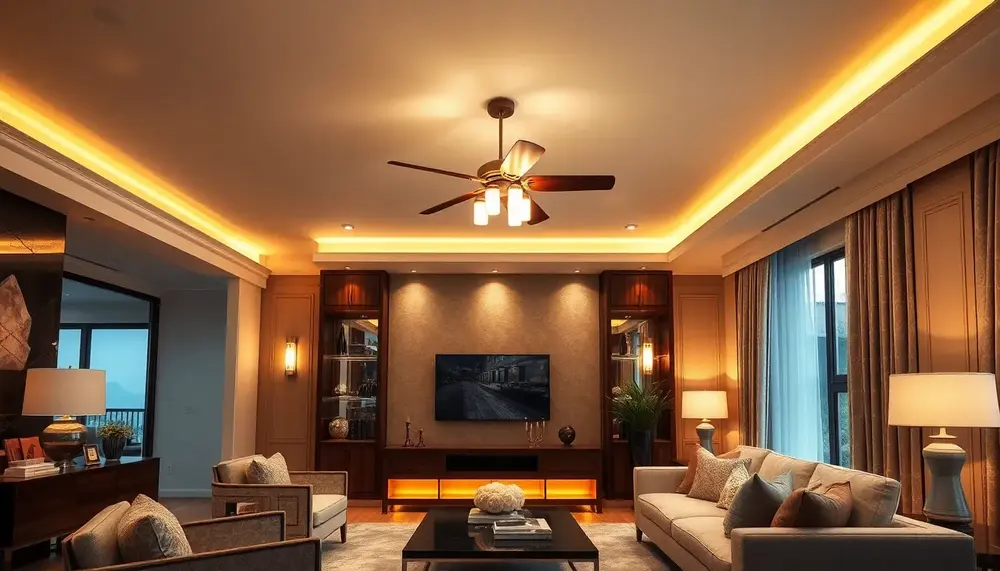
For practitioners navigating the increasingly complex intersection of decorative and functional lighting, thorough evaluation of combined lighting and ceiling fan systems through professional product reviews can significantly reduce specification errors and client dissatisfaction. Practical review resources that assess real-world performance metrics — not just marketing claims — are worth bookmarking as reference tools throughout a project's design development phase.
- NCQLP LC exam: Requires demonstrated competency across 7 core domains including daylighting, controls, and energy codes
- IESNA Lighting Library: Over 30 technical publications covering everything from roadway lighting to healthcare environments
- AGi32 and DIALux training modules: Vendor-provided certification pathways with hands-on photometric simulation exercises
- Manufacturer training portals: Lutron, Cree, and Acuity all offer free CEU-accredited courses through their professional programs
Continuing education requirements — typically 12 to 18 CEU hours annually for credentialed designers — create a built-in framework for staying current. The professionals who treat this requirement as an opportunity rather than an obligation consistently outperform peers in both technical accuracy and client trust-building.
Global Designer Furniture Markets: Sourcing, Quality, and Regional Expertise
Knowing where to source designer furniture is as critical as knowing what to buy. Each major production and retail hub around the world brings distinct manufacturing traditions, price points, and aesthetic philosophies to the table. Experienced buyers and interior designers routinely triangulate between multiple global markets — not because one region is superior, but because different markets solve different problems in a project.
Manufacturing Hubs: Where Quality Meets Scale
Asia's production capabilities have matured far beyond the low-cost manufacturing stereotypes of the 1990s. Chinese workshops producing pieces for brands like Restoration Hardware and Minotti replicas now operate CNC cutting centers with tolerances under 0.1mm, and lacquer finishing lines that rival Italian production quality. If you want to understand what modern Chinese furniture workshops can actually deliver, the gap between expectations and reality often surprises even seasoned trade buyers. Lead times typically run 45–90 days for custom production, with MOQs starting as low as one piece for premium workshops in Guangdong and Zhejiang provinces.
India operates differently — its strength lies in artisanal handwork, solid hardwood construction, and inlay techniques that are genuinely irreplaceable at any price point. Jodhpur alone exports over $300 million in furniture annually, with sheesham and mango wood forming the backbone of its output. Buyers who explore the depth of India's designer furniture sector quickly realize that hand-carved credenzas, bone inlay consoles, and block-printed upholstery represent categories where Indian workshops have no serious competition globally.
Western Retail Markets: Curation, Service, and Design Intelligence
Western markets function less as production centers and more as curation and specification hubs — places where material samples, brand representatives, and contract service teams concentrate. London's design district, centered on the Brompton Design District and Chelsea, houses over 350 showrooms within a 1.5-mile radius. Designers working on European residential or hospitality projects who navigate London's showroom ecosystem strategically gain access to exclusive fabric libraries, COM (customer's own material) programs, and project pricing structures unavailable through standard retail channels.
Houston's furniture market is frequently underestimated by designers outside the American South, yet the city's design district on Westheimer and along the Washington corridor contains serious contract-grade resources. The local market benefits from proximity to the oil and gas industry's ongoing demand for high-specification commercial interiors. Those who take time to explore Houston's independent furniture specialists often find exclusive regional dealers for European brands with shorter wait times than coastal US markets.
Emerging markets deserve equal attention from resourceful designers. Johannesburg has developed a sophisticated local design industry built on African hardwoods, hand-welded steel fabrication, and textile collaboration with local weavers. Sourcing from studios in Johannesburg's Maboneng Precinct or Kramerville design quarter means accessing genuinely original work — pieces where buyers who dig into Johannesburg's furniture scene discover custom fabrication capabilities at 40–60% below equivalent European production costs, with turnaround times under six weeks for bespoke metalwork.
- Verify production certifications: FSC chain-of-custody for wood, REACH compliance for finishes used in EU projects
- Request physical samples before committing: digital photography consistently misrepresents texture, weight, and finish quality
- Factor in total landed cost: customs duties, freight insurance, and port handling typically add 18–35% to FOB pricing depending on origin and destination
- Build relationships with freight forwarders specializing in oversized or fragile cargo — general forwarders routinely damage upholstered goods through improper blocking and bracing
FAQ on Essential Resources and Tools for Professionals
What is the most important tool for project management?
The most important tool for project management varies by profession, but platforms like Studio Designer and Ivy are highly regarded for their integration of procurement, client invoicing, and project tracking tailored to interior design workflows.
How can AI improve design processes?
AI can significantly speed up design processes by automating tasks such as mood board creation and concept renderings, reducing time spent from hours to under two hours while maintaining quality.
Are there affordable tools for design professionals?
Yes, platforms like Planner 5D and Roomstyler offer robust functionality at no cost, allowing budget-conscious designers to create professional-grade visuals without the financial burden of expensive software.
What is the benefit of using cloud-based tools?
Cloud-based tools facilitate version control and collaboration, reducing the risk of file confusion and enabling teams to work together seamlessly, regardless of their physical location.
How do I choose the right tools for my workflow?
To choose the right tools, assess your specific workflow needs, prioritize interoperability, and select a balanced stack of tools that cover core functions without adding unnecessary complexity.