Table of Contents:
The Foundation of High-End Furniture: Materials, Craftsmanship, and What Sets Luxury Apart
Walk into any showroom selling furniture at $10,000 per chair and you'll immediately notice something beyond the price tag: a density of presence that mass-produced pieces simply cannot replicate. That quality comes from a convergence of raw material selection, joinery technique, and finishing processes that together define what true luxury in furniture actually means — and why it commands a fundamentally different investment than anything found in a big-box retailer.
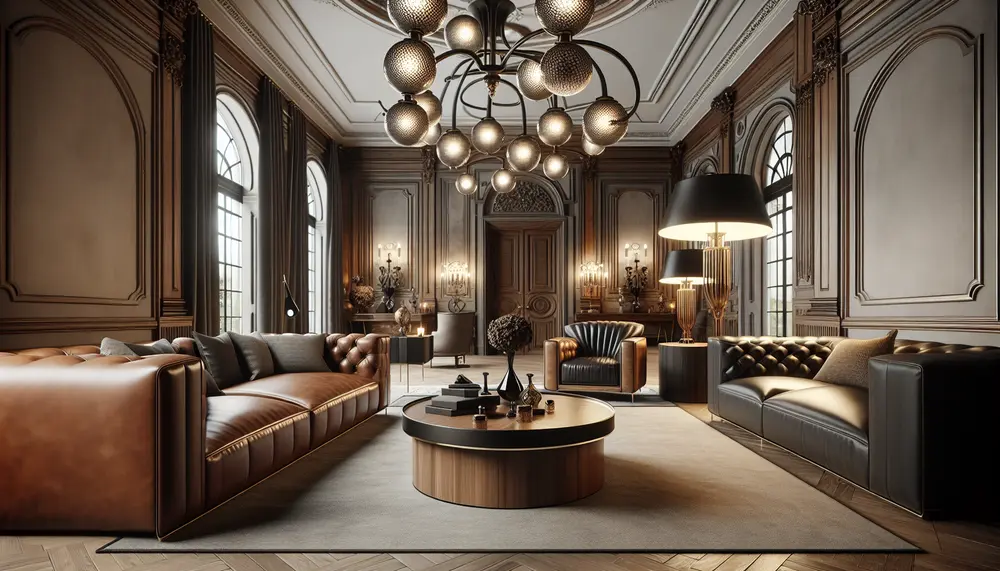
The distinction starts before a single tool touches a workbench. High-end manufacturers source materials with a specificity that borders on obsessive. European walnut is graded by figure and grain consistency; full-grain leather is selected hide by hide, rejecting skins with healed scars or uneven thickness. A house like Poltrona Frau inspects leather at the tannery level, accepting roughly 30% of what producers offer. This upstream discipline is invisible in the finished piece but accounts for much of why luxury furniture ages gracefully rather than degrading within a decade.
Wood: The Material That Demands the Most from Craftspeople
Solid hardwood remains the benchmark material in high-end furniture, and for good reason. When a cabinetmaker works with quarter-sawn white oak or air-dried black walnut, they are managing a living material — one that expands, contracts, and responds to humidity across its entire lifespan. Mastering wood as a furniture material requires understanding moisture content tolerances (typically 6–8% for interior furniture in climate-controlled spaces), grain direction during cutting, and how different species accept stain and finish. A dovetail joint cut by hand with a 1:8 ratio in hardwood is not decorative nostalgia — it is mechanically superior to machined alternatives under the lateral stress that drawer boxes experience daily.
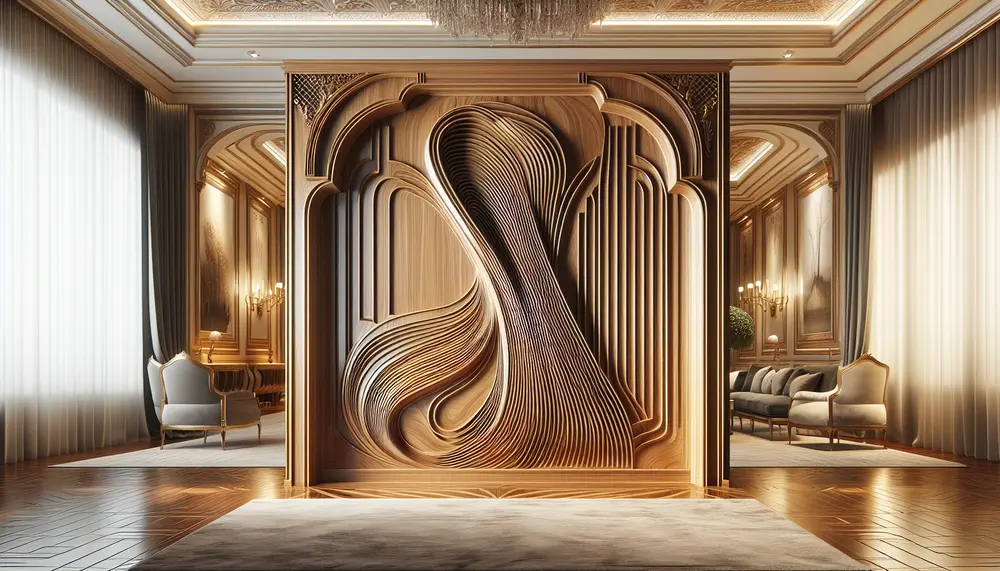
Wood furniture elevates interiors precisely because no two pieces are identical. The medullary rays in a bookmatched walnut tabletop, the live edge of a single slab sourced from a 200-year-old tree — these are features that synthetic materials attempt to simulate but cannot duplicate. Workshops producing at this level invest in kiln drying cycles of 6 to 12 months rather than the 48-hour industrial alternative.
Beyond Wood: The Material Palette of Serious Luxury
The range of materials available in luxury interior design extends well beyond timber. Stone, hand-blown glass, bronze, shagreen, and performance-engineered fabrics each carry distinct behavioral properties that craftspeople must understand deeply before incorporating them into furniture. Calacatta marble, for instance, requires specific adhesive chemistry and support structures when used as a tabletop — improper installation leads to cracking within 18 months regardless of stone quality.
What unites every material category in the luxury tier is the concept of honest construction: joinery, blocking, and structural elements are built to last 50 to 100 years, not to pass a manufacturer's 5-year warranty threshold. Dowels are replaced by mortise-and-tenon joints; corner blocks are glued and screwed, not stapled; upholstery springs are eight-way hand-tied rather than sinuous wire. These choices add 40–60% to production time but produce pieces that retain structural integrity and resale value across generations.
- Seasoned solid hardwood (minimum 12 months air-drying) for primary structural components
- Full-grain or top-grain leather sourced from single-origin tanneries with traceable hides
- Natural stone with professionally engineered support to prevent stress fractures
- Hand-applied finishes — lacquer, oil, or wax — built up in 6–10 layers rather than spray-sealed in one pass
- Traditional joinery such as mortise-and-tenon, dovetail, and bridle joints for load-bearing connections
Modern Furniture Trends Shaping Interior Spaces Today
The furniture market has shifted dramatically over the past three years. Post-pandemic living fundamentally changed how people relate to their homes — and manufacturers, designers, and retailers responded with collections that prioritize adaptability, material honesty, and emotional resonance over pure aesthetic novelty. Understanding where these trends originate and where they're heading gives you a decisive edge when making purchasing or design decisions.
The Dominant Material and Form Language
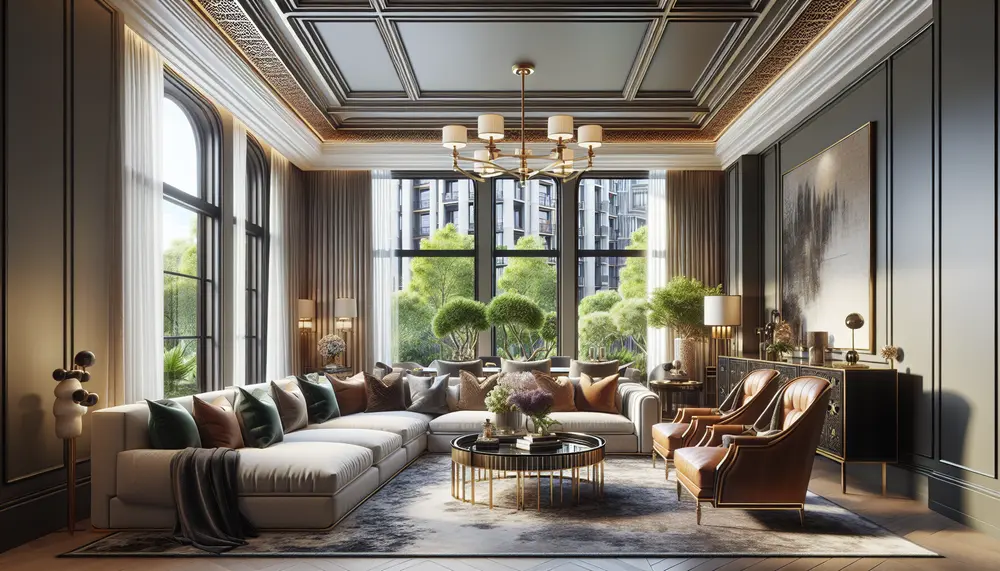
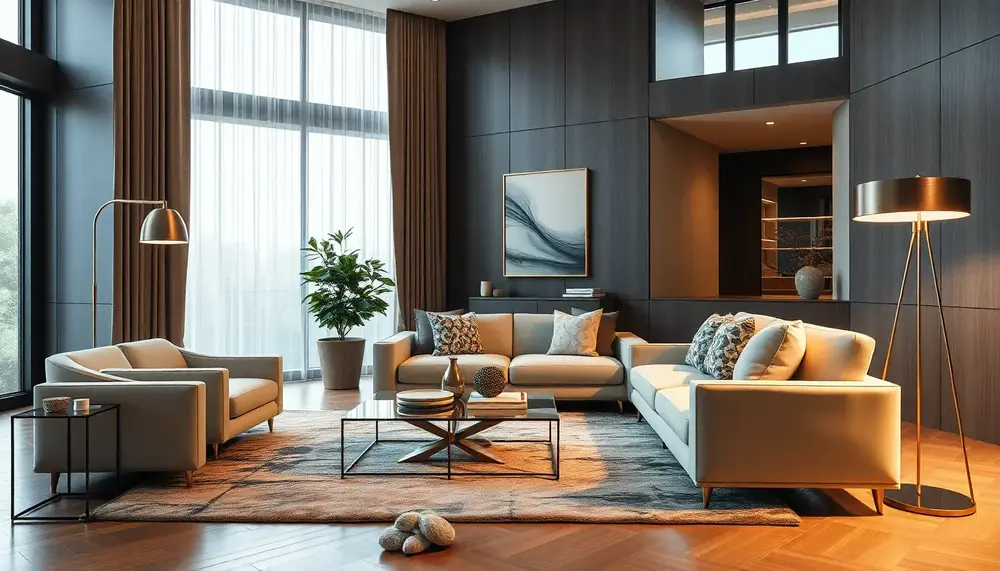
Organic modernism has firmly displaced the cold minimalism that dominated the 2010s. Curved silhouettes — think kidney-shaped sofas, arched shelving units, and rounded dining tables — now account for a significant share of premium furniture launches. Brands like Bolia, Menu (now Audo Copenhagen), and Poliform have leaned heavily into this vocabulary, and their commercial success confirms that buyers are responding. If you're updating a living room in 2024, a piece with at least one curved element will anchor the space far more effectively than boxy alternatives.
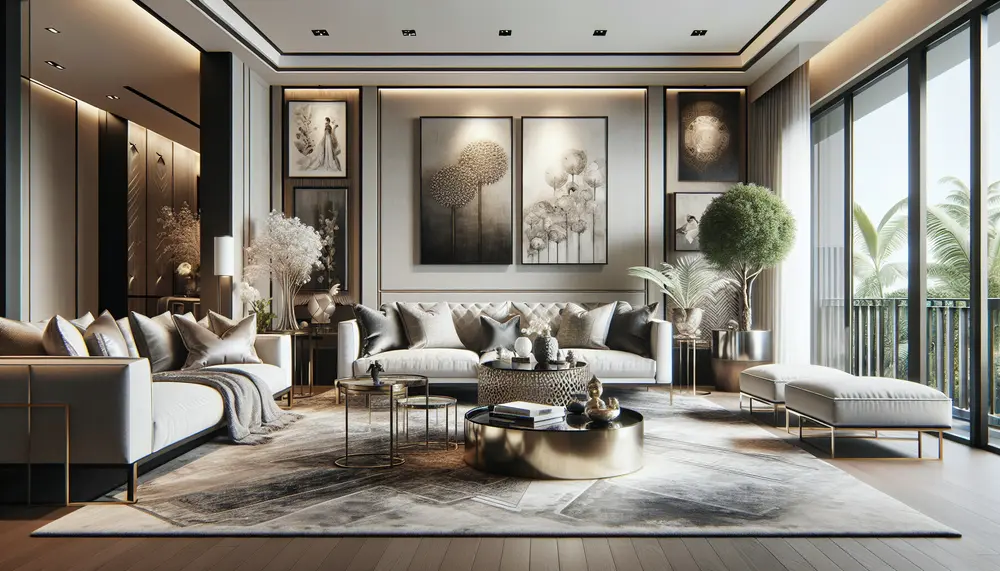
Material layering is the other defining characteristic: travertine tops paired with walnut bases, bouclé upholstery combined with blackened steel frames, rattan woven into powder-coated aluminum structures. These combinations aren't accidental — they create visual tension that holds attention in larger rooms. For those tracking what's defining contemporary furniture design right now, the intersection of natural and industrial materials remains the most commercially viable territory.
Functionality Driving Form at Every Price Point
Modular systems have crossed from contract interiors into residential spaces with real momentum. Sofa systems like the Flexform Groundpiece or IKEA's VALLENTUNA — separated by a €15,000 price gap but sharing the same core principle — demonstrate that configurability is no longer a luxury feature. Consumers are increasingly unwilling to replace entire pieces when their living situations change; they want to reconfigure, add, or subtract components instead. This shift has practical implications: always evaluate a piece's expandability before committing to a modular investment.
The work-from-home legacy continues reshaping furniture categories that were previously considered purely decorative. Storage has become sophisticated — integrated cable management in sideboards, hidden charging stations in bedside tables, and desk-to-dining convertibles are all mainstream product offerings now. Emerging shifts in the premium segment show that even high-end manufacturers now treat functional integration as a baseline expectation rather than an optional feature.
Sustainability claims, once largely marketing language, are facing scrutiny — and that's productive. Certifications like FSC for wood, Global Recycled Standard for textiles, and Cradle to Cradle for full product lifecycles are becoming meaningful differentiators. Brands that can document their supply chains transparently are gaining shelf space and consumer trust in measurable ways.
- Biophilic materials: live-edge wood, cork surfaces, and stone veneers are being specified in residential projects at a rate 40% higher than five years ago
- Quiet luxury palette: warm whites, deep terracottas, slate grays, and moss greens dominate new collections across all price tiers
- Scaled-up proportions: oversized lounge chairs and deep-seat sofas (90cm+ seat depth) reflect a cultural prioritization of physical comfort
For those who want to move beyond trend-chasing into genuinely distinctive spaces, the case for investing in furniture with authorship and design intent becomes compelling — particularly when you understand the designers and studios whose work has lasting relevance beyond seasonal cycles. The pieces that hold their value — financially and aesthetically — are almost always the ones rooted in a coherent design philosophy rather than a trend forecast.
Designer Furniture by Origin: Italian Mastery, European Heritage, and Global Hotspots
Where a piece of furniture comes from is rarely just geography — it's a shorthand for accumulated technique, material philosophy, and cultural attitude toward the object itself. Buyers who understand origin can decode quality signals that go far beyond brand names or price tags. A chair produced in the Brianza district north of Milan carries embedded knowledge from generations of woodworkers; a sofa from a Danish workshop reflects a 70-year obsession with ergonomic proportion. Knowing these distinctions separates informed acquisition from expensive guesswork.
Italy: The Benchmark Against Which Others Are Measured
No conversation about high-end furniture origin is complete without a serious reckoning with Italy. The country produces roughly 40% of Europe's luxury furniture output, anchored in three distinct industrial clusters: Brianza (upholstered seating and case goods), Pesaro-Urbino (kitchen systems and modular units), and the Venetian foothills (carved and gilded antique-revival pieces). What makes Italian production genuinely exceptional is the integrated supply chain — tanneries, sawmills, metal fabricators, and finishing ateliers often sit within a 30-kilometer radius of the assembly workshop. This proximity allows for quality control iterations that offshore manufacturing simply cannot match. Brands like Poltrona Frau, Molteni&C, and Cassina don't outsource their critical processes; they own them.
The Salone del Mobile in Milan — attended by over 300,000 trade professionals annually — functions as a global barometer for where Italian design is heading. Watching which materials debut on the Eurocucina floor in April reliably predicts what hits the broader luxury market 18 to 24 months later. Fluted oak panels, for instance, moved from Milanese concept showrooms to international retail within exactly that window.
The Broader European Landscape: Distinct Schools, Distinct Strengths
Beyond Italy, Europe's luxury furniture ecosystem encompasses radically different design philosophies that serve different interior ambitions. Scandinavian producers — HAY, Carl Hansen & Søn, Fredericia — prioritize material honesty and structural minimalism, typically working with certified sustainably sourced oak, walnut, and beech. French houses like Roche Bobois and Liaigre sit at a different register: architectural mass, tactile contrast, and an emphasis on the room as a composed tableau. German manufacturers such as Rolf Benz and Walter Knoll bring precision engineering to upholstery, using multi-layer foam systems with 15-year resilience guarantees that Italian soft seating rarely matches on technical specification alone.
- Italy: Unmatched leather work, lacquer finishing, and modular kitchen engineering
- Scandinavia: Structural joinery, responsible sourcing, understated longevity
- France: Decorative authority, mixed-material experimentation, interior narrative
- Germany: Upholstery engineering, contractual durability standards, precise mechanisms
Emerging markets are producing increasingly credible luxury alternatives. Islamabad's high-end residential sector, for example, has developed a sophisticated local ateliers scene where custom furniture crafted for Islamabad's design-forward clientele combines European silhouettes with regional materials like sheesham wood and hand-knotted textile details — at lead times and price points that European commissions cannot match. Savvy international designers are already sourcing accent pieces from these workshops.
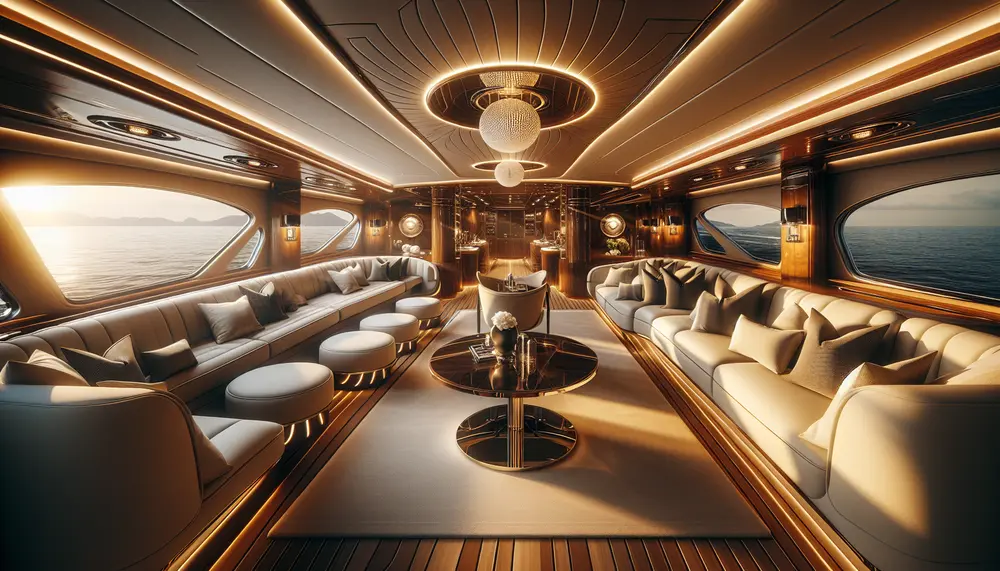
The most specialized origin category remains maritime: furniture engineered specifically for superyacht interiors operates under entirely different constraints — IMO fire ratings, vibration tolerance, salt-air material stability — making Dutch and Italian boatbuilding regions the acknowledged centers for this demanding niche. A piece that performs at sea, under those specifications, often outlasts comparable land-based furniture by a decade.
Selecting and Investing in High-End Furniture: A Strategic Buyer's Guide
Acquiring high-end furniture is fundamentally different from standard retail purchasing — it demands the same analytical rigor you'd apply to any significant capital allocation. A single Knoll Barcelona Chair retails around $8,000; a custom Poltrona Frau sofa can exceed $25,000. At these price points, impulse decisions are costly mistakes. The buyers who consistently build exceptional interiors treat each acquisition as part of a coherent, long-term strategy rather than a series of disconnected purchases.
Establishing a Hierarchy of Investment Pieces
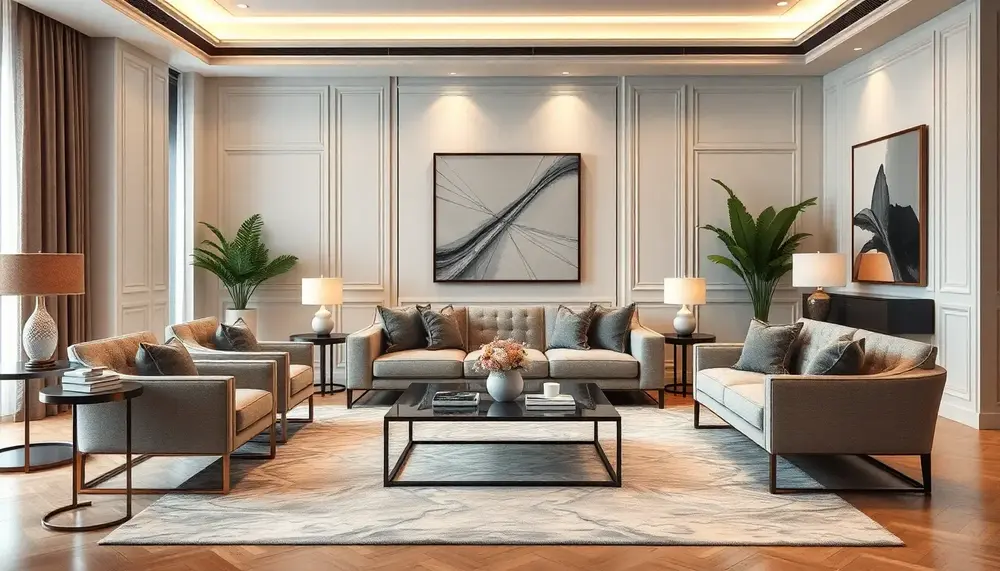
Not every piece in a room deserves equal financial commitment. Experienced designers apply what's known as the anchor-and-complement principle: identify one to three statement pieces per room that receive the majority of the budget, then build supporting elements around them. In a living room, for example, the sofa and a primary lounge chair typically serve as anchors. If you're working on transforming your living space with designer-grade seating and tables, invest 60–70% of your room budget there and source accent pieces from secondary tiers. This approach prevents the common trap of spreading budget too thin across every category and ending up with nothing truly exceptional.
When evaluating anchor pieces, examine the following quality markers with genuine scrutiny:
- Frame construction: Kiln-dried hardwood frames (beech, ash, walnut) resist warping for decades; avoid pieces with engineered wood in load-bearing joints
- Joint techniques: Mortise-and-tenon or dovetail joinery indicates craftsmanship; stapled or glued-only connections signal compromised longevity
- Upholstery grade: Full-aniline leather and Grade 5+ performance fabrics justify premium pricing through 15–25 year lifespans
- Suspension systems: Eight-way hand-tied spring systems in seating dramatically outperform sinuous spring alternatives in comfort retention
Reading the Market: Timing and Sourcing Channels
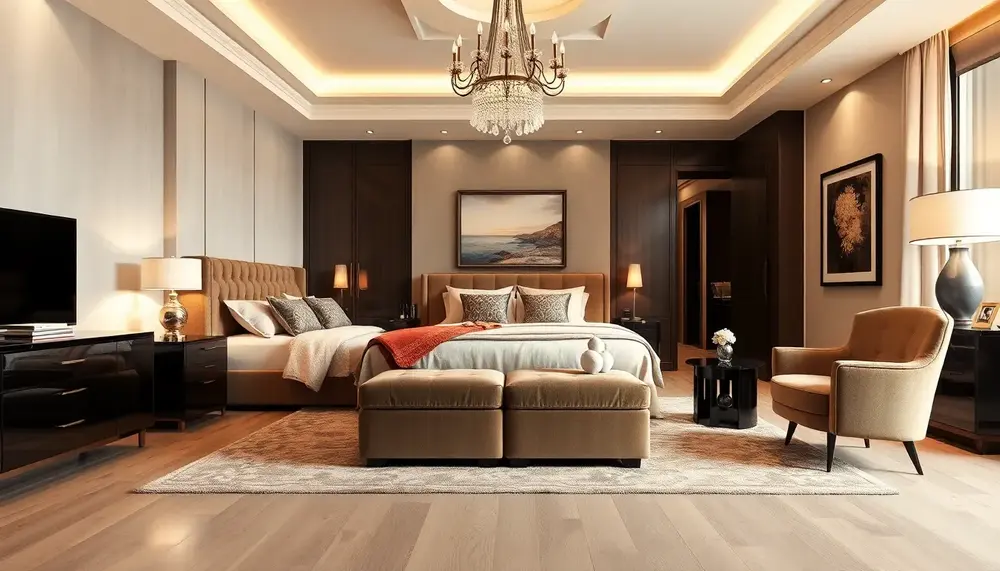
The luxury furniture market operates on distinct cycles that informed buyers can exploit. Major trade shows — Salone del Mobile in Milan, High Point Market in North Carolina — typically precede collection releases by six to nine months. Ordering during this window through trade-access designers often yields 30–40% below retail, with first access to limited production runs. If you're building out a high-specification master bedroom suite, coordinating your purchase timeline around these cycles can fund an additional piece from the savings alone.
For buyers working without a designer, the most reliable sourcing channels include authorized brand showrooms, established auction houses (Wright, Phillips, Rago for 20th-century design), and direct-from-manufacturer programs for brands like Flexform or Carl Hansen & Søn. Be acutely skeptical of online gray-market listings for brands like Herman Miller or Cassina — counterfeit production has become sophisticated enough to deceive non-specialists. Authentication certificates and provenance documentation are non-negotiable.
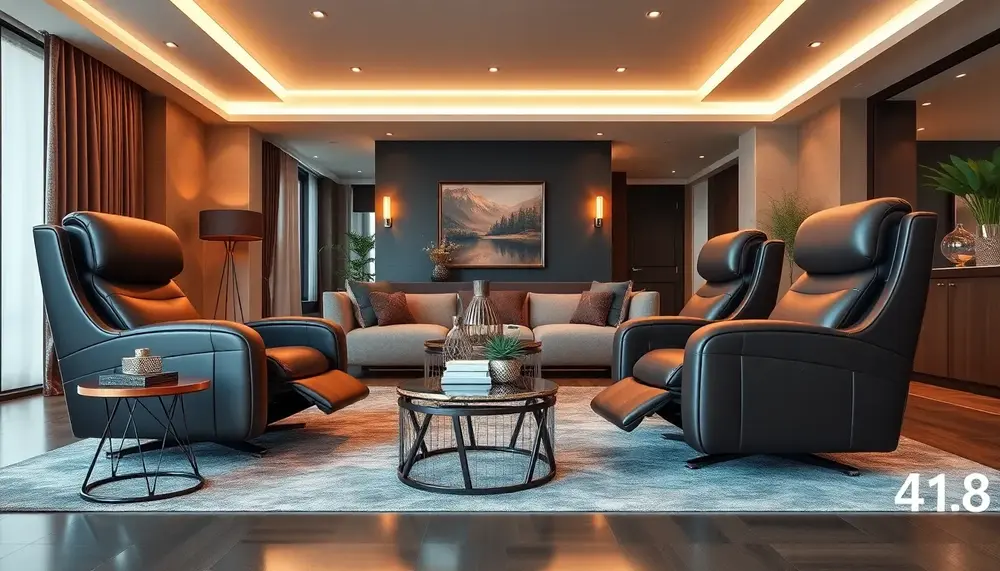
Functional pieces that integrate deeply into daily life warrant particular scrutiny. A well-engineered recliner designed for long-term ergonomic comfort represents a different value proposition than a display-oriented accent chair — evaluate both the aesthetic credentials and the mechanical warranty terms, which for premium manufacturers typically run 10–25 years on the mechanism. For a comprehensive framework on evaluating specific luxury categories and matching them to spatial requirements, a detailed methodology for selecting the right luxury pieces covers material grading, brand positioning, and room-specific considerations in practical depth.
The defining discipline of strategic high-end purchasing is patience. Buying the wrong piece at a discount is always more expensive than waiting for the right piece at full price.
Luxury Decor by Material and Texture: Fabrics, Velvet, and Surface Choices
Material selection separates genuinely luxurious interiors from expensive-looking ones. The tactile experience of a room — how surfaces feel under your fingertips, how light moves across a woven textile, how a stone countertop reads both visually and physically — determines whether a space communicates true refinement or merely mimics it. Designers working at the highest level spend as much time specifying materials as they do planning layouts, and for good reason: a single wrong texture can undermine an otherwise flawless scheme.
Fabric Selection: Building Layers of Tactile Richness
The foundation of any luxury textile program lies in thread count, fiber content, and weave structure working together. Performance silk blends with a thread count above 600 maintain the visual depth of pure silk while tolerating the humidity fluctuations that cause natural fibers to contract and expand. Belgian linen, woven on traditional rapier looms, produces a surface irregularity that machine-processed alternatives cannot replicate — and that irregularity is precisely what gives it its handcrafted credibility. Understanding how to select fabrics that genuinely transform a room's atmosphere means going beyond thread count to consider how each textile responds to light at different times of day.
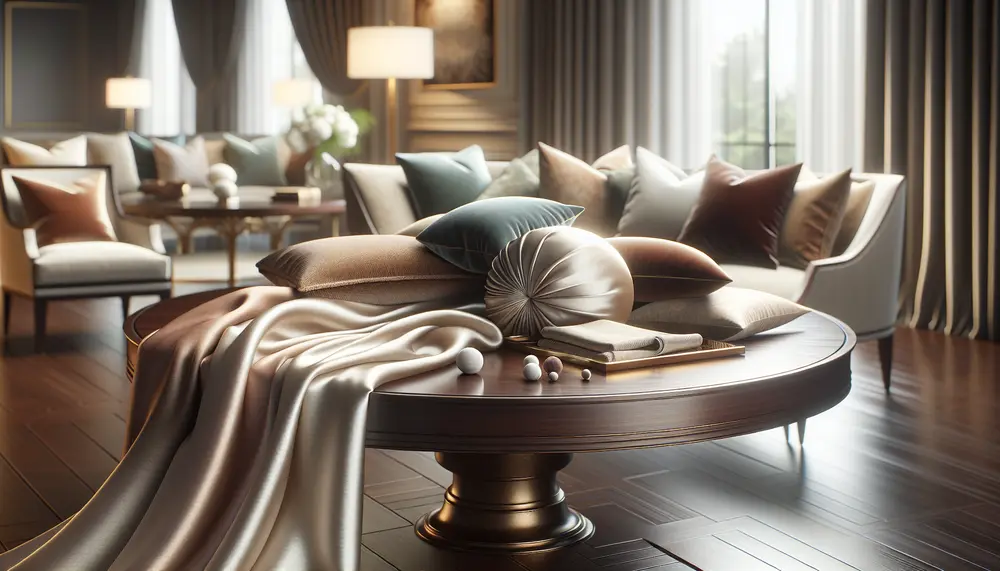
Layering is the operative principle. A sofa upholstered in Dedar or Rubelli fabric gains depth when paired with throws in contrasting weights — a chunky wool bouclé against a smooth jacquard, for instance. Window treatments in a single fabric rarely read as luxurious; leading designers typically combine a blackout lining, an interlining for thermal mass and drape, and a face fabric, resulting in curtains that hang with the architectural presence of a sculptural element rather than a mere window covering.
Velvet, Stone, and the Logic of Surface Contrast
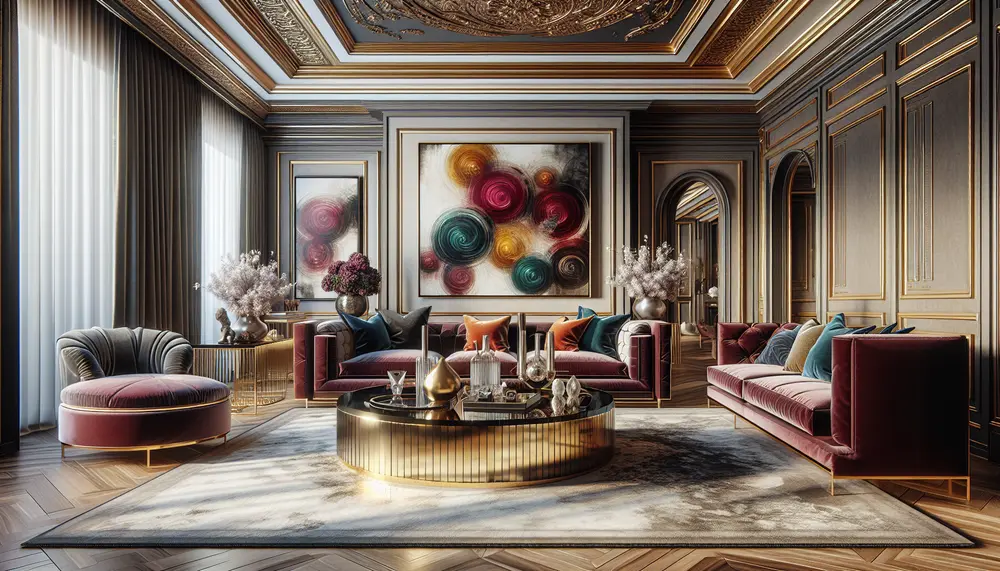
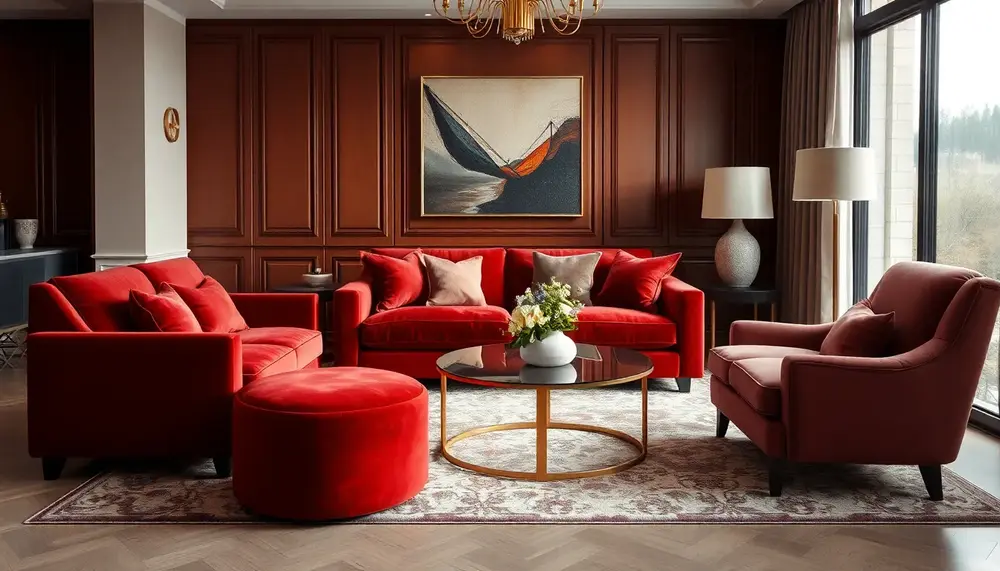
Velvet deserves its own category. Few materials shift so dramatically between light and shadow, creating what interior designers call directional shading — a visual movement that makes a static surface appear alive. The specific role velvet plays in high-end interiors goes well beyond upholstery: applied to wall panels, headboards, or even stair risers, it introduces an acoustic softness alongside its visual warmth. Cut velvet with a pile height of 3–4mm on a cotton or silk backing offers the best balance of durability and light response for furniture that sees regular use.
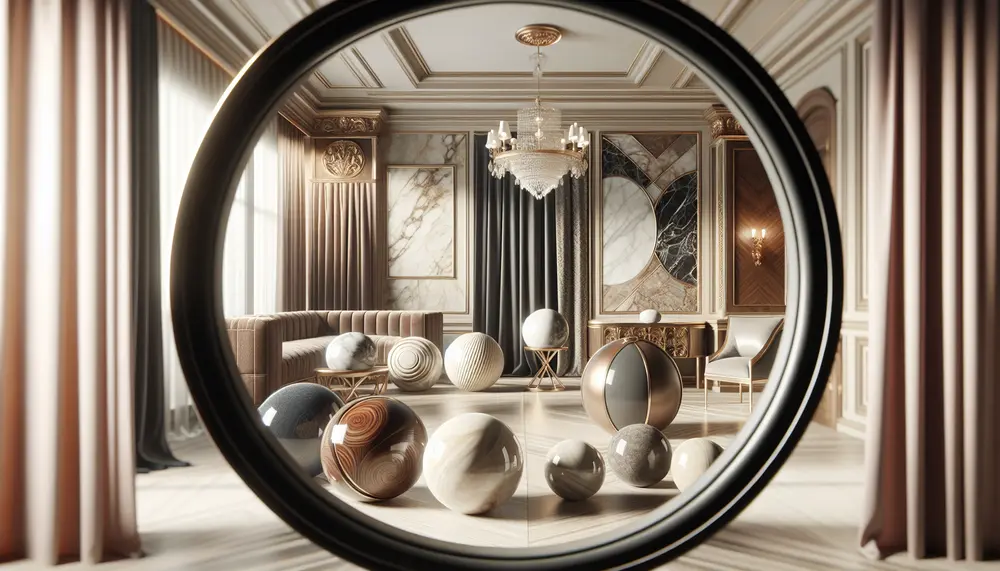
Hard surfaces require equal precision. Calacatta Borghini marble commands three to four times the price of standard Carrara because its gold-veined pattern is genuinely unrepeatable — no two slabs are identical. Pairing polished stone with honed or leathered finishes on adjacent surfaces prevents the visual monotony that makes large stone installations feel clinical rather than opulent. The interplay between matte and gloss surfaces is one of the most powerful tools in a luxury decorator's kit.
Brands set the benchmark here. The range of materials available at the upper tier of interior design now includes engineered alternatives — sintered stone panels, performance velvets with 100,000 double-rub ratings — that perform better than their natural counterparts in high-traffic applications without sacrificing the visual language of luxury. Knowing which leading decor houses source their textiles and surfaces from gives you a reliable shortlist: Élitis, Pierre Frey, and Armani/Casa consistently deliver materials that photograph well and age even better.
- Pile direction matters: install velvet upholstery so the pile runs downward for consistent color and reduced wear marks
- Stone slab matching: always book-match or sequence slabs from the same quarry block for continuity across large installations
- Fabric backing: unbacked upholstery fabric will stretch and sag within 18–24 months — specify woven or paper backing on all seating applications
- Texture rhythm: limit a single room to three distinct surface textures to avoid visual noise while maintaining material interest
FAQ zu Furnishings and Decor: Your Ultimate Guide
What factors contribute to the perceived value of a space?
Furnishings and decor account for roughly 30–40% of a space's perceived value, with quality materials, craftsmanship, and intentional design choices playing key roles.
How can I create a cohesive design in my space?
Start by planning your space carefully, paying attention to scale, material hierarchy, and the relationship between negative space and focal points before making any purchases.
What type of materials are best for high-end furniture?
High-end furniture is often made from seasoned solid hardwood, full-grain leather, natural stone, and hand-applied finishes, which ensure longevity and durability.
What current trends are shaping the furniture market?
Recent trends include organic modernism, material layering, modular systems, and a focus on functionality in furniture design, as well as increased attention to sustainability.
How can I strategically invest in high-end furniture?
Establish a hierarchy of investment pieces by identifying anchor items that deserve a larger budget and support those with complementary elements, while focusing on quality and craftsmanship.